

Looming spate of U.S. tariffs could weaken Canada’s stance in CUSMA talks: economist
Advertisement
Read this article for free:
or
Already have an account? Log in here »
To continue reading, please subscribe:

Digital Subscription
One year of digital access for only $205*
- Enjoy unlimited reading on winnipegfreepress.com
- Read the E-Edition, our digital replica newspaper
- Access News Break, our award-winning app
- Play interactive puzzles
*First annual payment billed as $205.00 + GST for one year. This annual subscription will automatically renew at $233.00 + GST every 52 weeks (10% off the regular annual price of $259.35). Offer available to new and qualified returning subscribers only. Cancel any time.
To continue reading, please subscribe:
Add Free Press access to your Brandon Sun subscription for only an additional
$1 for the first 4 weeks*
- Enjoy unlimited reading on winnipegfreepress.com
- Read the E-Edition, our digital replica newspaper
- Access News Break, our award-winning app
- Play interactive puzzles
*Your next Brandon Sun subscription payment will increase by $1.00 and you will be charged $17.95 plus GST for four weeks. After four weeks, your payment will increase to $24.95 plus GST every four weeks.
Read unlimited articles for free today:
or
Already have an account? Log in here »
The latest bevy of threatened U.S. tariffs could spell trouble for the renegotiation of the Canada-U.S.-Mexico trade agreement, says a new report from Capital Economics.
The duties set to come into effect this week risk stalling CUSMA talks by “reigniting a tit-for-tat trade war, hurting business confidence and slowing growth,” Bradley Saunders, the firm’s North America economist, wrote in the report published Monday.
“And if the two sides do reach a last-minute deal, Ottawa would likely give up much of its already-limited leverage in the process, raising the chances of an unfavourable CUSMA down the line.”
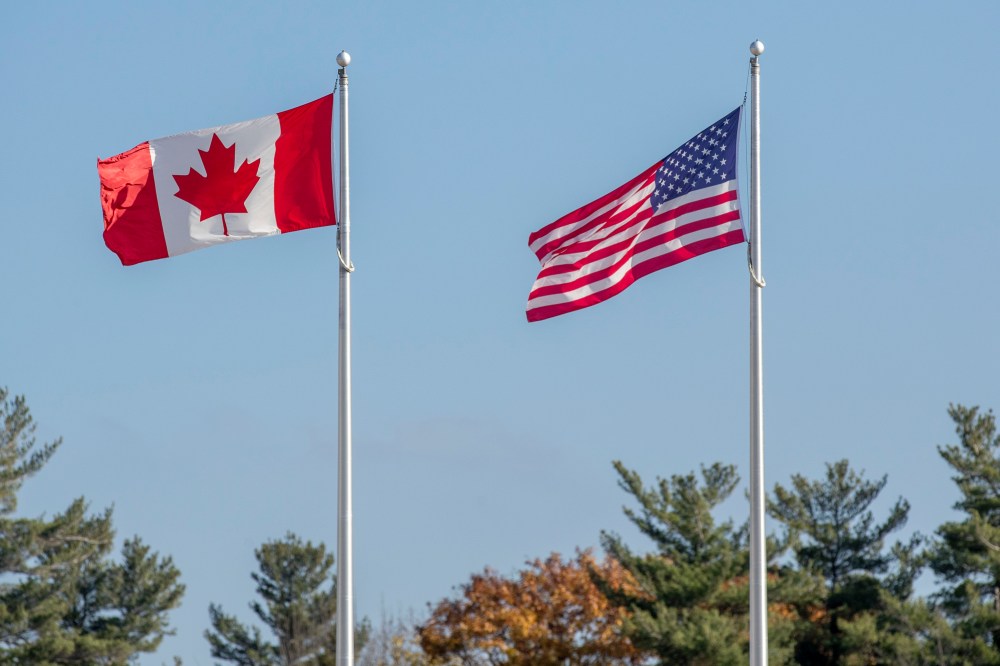
The U.S. government announced a plan last month to hit Canada with a 50 per cent tariff on hundreds of categories of goods worth a total of roughly US$20 billion, amounting to about five per cent of Canada’s exports to the U.S. last year. They were in response to Canada’s provincial bans on American alcohol, the supply-managed dairy system and quotas on some U.S. vehicles.
The bans on U.S. liquor — which remain in place in eight provinces — and vehicle quotas were put in place in retaliation for Trump’s early rounds of tariffs.
The latest volley is slated to take effect at 12:01 a.m. on Wednesday and would be imposed using an obscure legal tool dating back to the Great Depression, Section 338 of the Tariff Act of 1930. They’re targeted at specific Canadian industries, including exports of honey, hockey sticks, cement and wine.
They would be on top of another spate of U.S. tariffs imposed last year in the name of national security on a narrower array of Canadian goods — softwood lumber, autos and aluminum, among others — under Section 232 of the Trade Expansion Act of 1962.

The impending Section 338 tariff barrage was meant to pressure Ottawa into remedying issues the U.S. Trade Representative viewed as preconditions for CUSMA talks, Saunders said, adding there has been some progress, such as Canada scrapping its levy on U.S. streaming giants.
“But other issues like provincial bans on the sale of American alcohol are proving more of a sticking point as they require the co-operation of premiers seeking sweeping Section 232 relief, which the U.S. is reluctant to offer,” Saunders wrote.
“Indeed, the U.S.’s targeting of specific industries has massively shaped relative growth between provinces, leaving the First Ministers divided over how best to respond.”
Saunders said in the report that Canada’s near-term gross domestic product would likely suffer if the Section 338 tariffs take effect, but a recession is unlikely.
This report by The Canadian Press was first published Aug. 17, 2026.
Related Articles
Manitoba honey industry buzzing as U.S. tariff clock ticks
Advertisement Advertise With Us
Advertisement Advertise With Us