

Manitoba honey industry buzzing as U.S. tariff clock ticks

Advertisement
Read this article for free:
or
Already have an account? Log in here »
To continue reading, please subscribe:

Digital Subscription
One year of digital access for only $205*
- Enjoy unlimited reading on winnipegfreepress.com
- Read the E-Edition, our digital replica newspaper
- Access News Break, our award-winning app
- Play interactive puzzles
*First annual payment billed as $205.00 + GST for one year. This annual subscription will automatically renew at $233.00 + GST every 52 weeks (10% off the regular annual price of $259.35). Offer available to new and qualified returning subscribers only. Cancel any time.
To continue reading, please subscribe:
Add Free Press access to your Brandon Sun subscription for only an additional
$1 for the first 4 weeks*
- Enjoy unlimited reading on winnipegfreepress.com
- Read the E-Edition, our digital replica newspaper
- Access News Break, our award-winning app
- Play interactive puzzles
*Your next Brandon Sun subscription payment will increase by $1.00 and you will be charged $17.95 plus GST for four weeks. After four weeks, your payment will increase to $24.95 plus GST every four weeks.
Read unlimited articles for free today:
or
Already have an account? Log in here »
Canadian honey is being rushed to the United States ahead of a threatened 50 per cent tariff on the industry.
Manitoba — the country’s biggest honey exporter — could feel a “profound impact” if the U.S. levy is put in place, said Rod Scarlett, the Canadian Honey Council’s executive director.
Raw honey joins a broad range of Canadian imports to the U.S. set to face a 50 per cent tariff beginning Wednesday. Trade negotiations between Canada and the U.S. are ongoing.
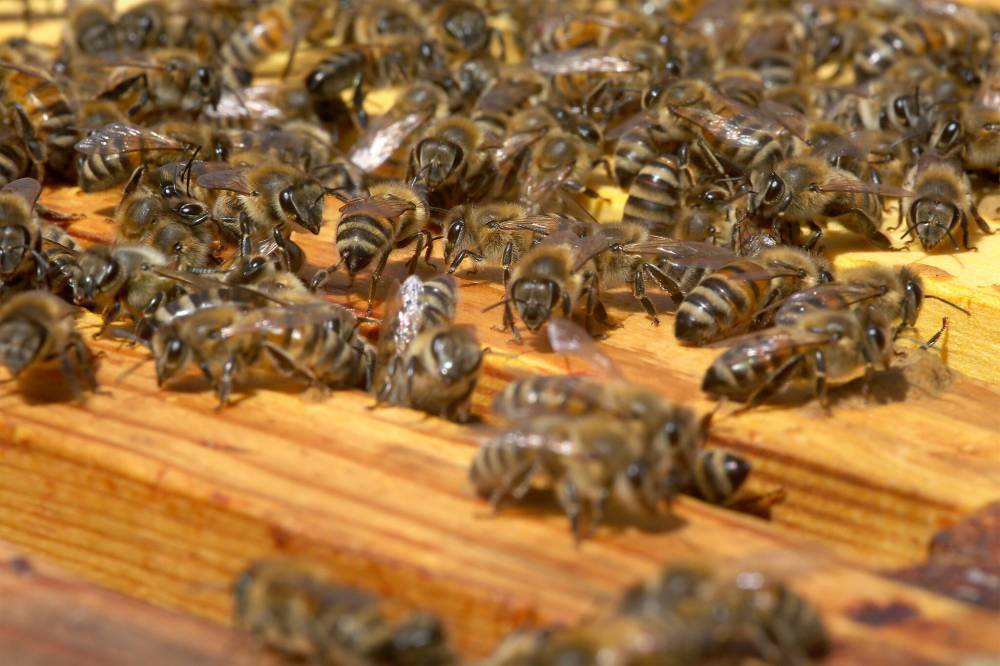
Manitoba accounted for more than half of the country’s honey exports last year. Some $28.7 million worth of product left the keystone province, federal government data show.
Meanwhile, the United States has taken the lead for Canadian honey imports. It consumed 52.9 per cent — or $28.4 million worth of honey — in 2025.
It’s unclear how much Manitoba honey enters the southern country. Scarlett expects it’s a lot: many U.S. honey packers have operations in and around North Dakota and South Dakota.
“Most Manitoba beekeepers rely on honey sales alone,” Scarlett said. “The impacts, I think, will be particularly hard on Manitoba beekeepers if this tariff stays in place for any extended period of times.
“It could put some operations in financial dire straits.”
Canadian honey has been shielded from tariffs under the Canada-United States-Mexico Agreement on trade. However, the new levy could halt trade, Scarlett said.
“Any beekeeper listening to the headlines, we are all nervous,” said Paul Gregory, who keeps about 800 colonies in Fisher Branch.
“The impacts, I think, will be particularly hard on Manitoba beekeepers… It could put some operations in financial dire straits.”
He’s watching market prices: if a tariff dampens trade with the U.S., it could push them lower.
However, there seems to be a shorter crop this year — and less available honey could keep prices stable, said Gregory, the Manitoba Beekeepers’ Association’s vice-chair. “Because of the weather conditions, we’re not hearing of any bumper crops anywhere.”
Gregory usually keeps about 1,200 colonies. A warmer fall in 2025 led to trouble with mites; May was cold, and some bees failed to build up. A hot summer has stressed canola, which affects honey production, Gregory said. (Honeybees feed on canola.)
Gregory will keep selling to Bee Maid Honey, a Winnipeg-based co-operative that sells internationally. The entity seems to be actively looking for members and more honey, Gregory said.
Bee Maid declined to comment on the threatened tariff.
In 2024, it would intake about 55,000 barrels per week from Prairie farmers; it expanded its production facility that year.
Its business likely contributes to Manitoba’s high honey export share, Scarlett said.
Manitoba accounts for 21 per cent of Canada’s total honey production; Alberta, by contrast, consumes 40 per cent of production.
Manitoba counted 119,000 colonies in 2025; Alberta had 329,000.
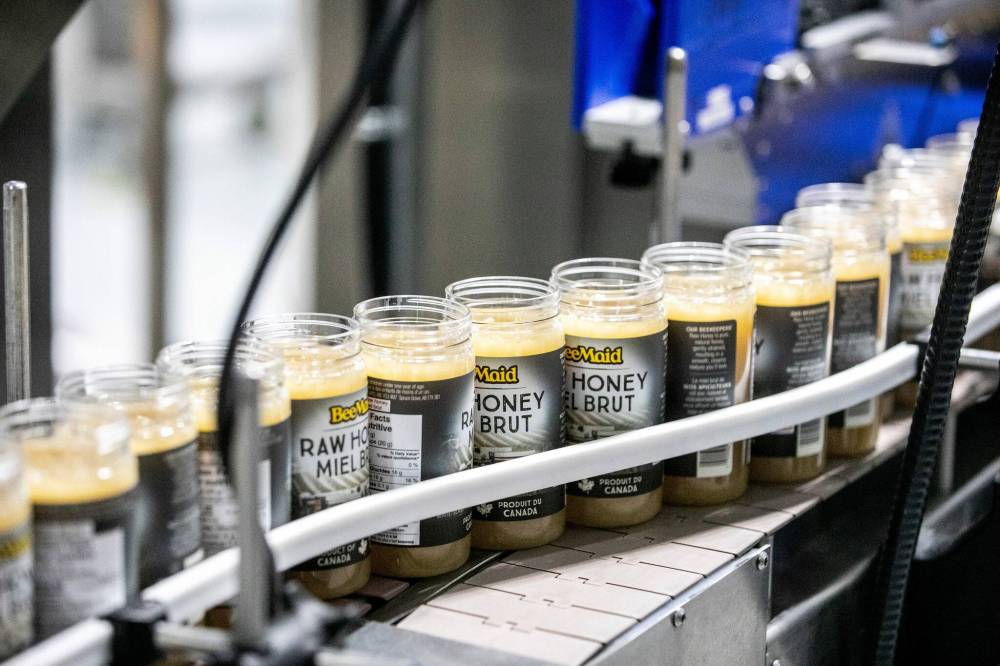
Honey sellers across the country have been shipping what they can to the U.S. ahead of the looming tariff deadline, Scarlett said.
Some won’t be able to fulfill their orders before Wednesday, he added: “We just don’t know how many and how much.”
Southbound shipments usually leave in the fall, Scarlett said. Producers may be selling recently produced honey or crop they’ve kept from a past season, he added.
Canada had sold 11 million pounds of honey to the U.S. by the end of June — an “above-normal” pace for the country, Scarlett said.
Canada sold a total 11.8 million pounds to the U.S. last year.
Business planning will become difficult if a 50 per cent tariff lingers, Scarlett noted: “Manitoba specifically, where there are large commercial operations which are highly dependent on U.S. sales — what does that mean? Where are they going to go?”
Japan has fallen from Canada’s largest honey export market to second place. Sales have shrunk because of a recent testing change; Japan has raised issue with the residue of quinclorac, a herbicide, in Canadian honey.
The beekeeping industry is looking to increase exports to other markets, such as Singapore, Gregory said.
Meantime, U.S. tariff uncertainty has made it hard to prepare for honey purchases, said John Russell, founder of John Russell Honey Company.
“We will continue to work together to protect Manitoba jobs, support affected industries and stand up for our economy.”
The business sells honey in Manitoba and Ontario shops. It produces about 40 barrels of honey and buys another 90 annually. It generally pays 20 to 30 cents above the going rate per pound, Russell said.
“What’s going to happen? Nobody knows,” he added.
The Canadian Honey Council has been sending its concerns to the federal government.
Manitoba is staying in “close contact” with Ottawa, a ministerial spokesperson wrote in a statement Monday. “We will continue to work together to protect Manitoba jobs, support affected industries and stand up for our economy.”
Canada exported 21 million pounds of honey in 2025, drawing $53.7 million. It imported $73.4 million worth of honey.
In 2023 and 2024, Canada imported more than $10.2 million worth of queen bees from the United States.
gabrielle.piche@winnipegfreepress.com
Gabrielle Piché reports on business for the Free Press. She interned at the Free Press and worked for its sister outlet, Canstar Community News, before entering the business beat in 2021. Read more about Gabrielle.
Every piece of reporting Gabrielle produces is reviewed by an editing team before it is posted online or published in print — part of the Free Press‘s tradition, since 1872, of producing reliable independent journalism. Read more about Free Press’s history and mandate, and learn how our newsroom operates.
Our newsroom depends on a growing audience of readers to power our journalism. If you are not a paid reader, please consider becoming a subscriber.
Our newsroom depends on its audience of readers to power our journalism. Thank you for your support.
Gabrielle Piché reports on business for the Free Press. She interned at the Free Press and worked for its sister outlet, Canstar Community News, before entering the business beat in 2021. Read more about Gabrielle.
Every piece of reporting Gabrielle produces is reviewed by an editing team before it is posted online or published in print — part of the Free Press‘s tradition, since 1872, of producing reliable independent journalism. Read more about Free Press’s history and mandate, and learn how our newsroom operates.
Our newsroom depends on a growing audience of readers to power our journalism. If you are not a paid reader, please consider becoming a subscriber.
Our newsroom depends on its audience of readers to power our journalism. Thank you for your support.
Related Articles
Alcohol, autos among key irritants in Canada-U.S. trade talks







Advertisement Advertise With Us
Advertisement Advertise With Us