Renovations and repairs, rent and reality Low-income residents of 114-year-old downtown block staggered by proposed hikes; new owner says he has no choice
Read this article for free:
or
Already have an account? Log in here »
To continue reading, please subscribe:

Digital Subscription
One year of digital access for only $205*
- Enjoy unlimited reading on winnipegfreepress.com
- Read the E-Edition, our digital replica newspaper
- Access News Break, our award-winning app
- Play interactive puzzles
*First annual payment billed as $205.00 + GST for one year. This annual subscription will automatically renew at $233.00 + GST every 52 weeks (10% off the regular annual price of $259.35). Offer available to new and qualified returning subscribers only. Cancel any time.
To continue reading, please subscribe:
Add Free Press access to your Brandon Sun subscription for only an additional
$1 for the first 4 weeks*
- Enjoy unlimited reading on winnipegfreepress.com
- Read the E-Edition, our digital replica newspaper
- Access News Break, our award-winning app
- Play interactive puzzles
*Your next Brandon Sun subscription payment will increase by $1.00 and you will be charged $17.95 plus GST for four weeks. After four weeks, your payment will increase to $24.95 plus GST every four weeks.
Read unlimited articles for free today:
or
Already have an account? Log in here »
Marcel Blanchette’s life has not travelled down a smooth road.
In 2014, he was violently assaulted in his home, an unprovoked attack that left him with severe injuries, including permanent brain damage. He underwent months of hospitalization and rehabilitation. During that time, he learned his possessions had been sold off when the Office of The Public Guardian and Trustee took over his affairs.
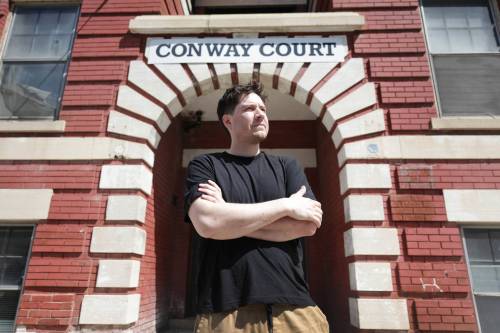
Twelve years later, he finds himself in another fight. This time, it comes in the form of a proposal from the new owners of the Conway Court apartment block that would nearly double his monthly rent. While he’s been able to live in the Kennedy Street unit with the support of disability income assistance for nearly five years, the sudden spike, he said, could leave him homeless.
MALAK ABAS / FREE PRESS Marcel Blanchette, in his apartment at the Conway Court block, says his landlord's proposed rent increases could leave him homeless.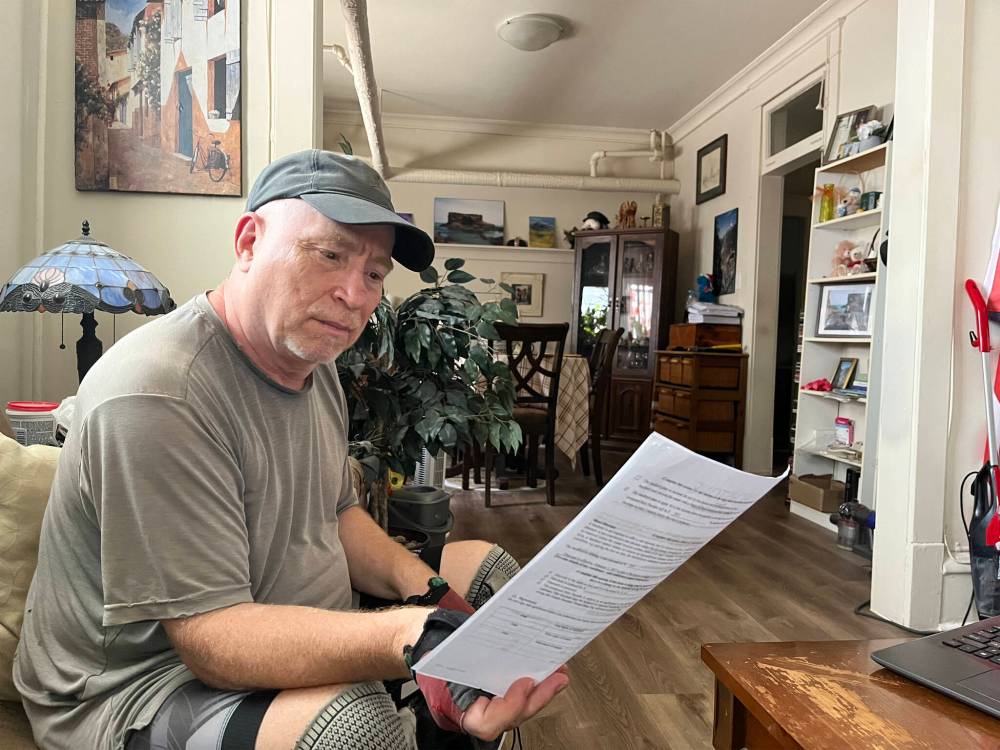
“To go through that, and now I’m going through this, it’s another obstacle,” Blanchette told the Free Press. “I fought the Public Guardian and Trustee, and I’ll fight this too, with whatever I have.”
Blanchette, 61, and the building’s other tenants received notice earlier this summer that ownership was applying for an above-guideline rent increase to help pay for repairs.
The lease agreement he received indicated his rent, if the increase is approved, will jump from $1,008 to $1,911 per month, starting Feb. 1. The landlord has offered a rent discount of $411, putting Blanchette’s final monthly rent at $1,500.
“It’s sort of shady in a way, because they’re basically asking us to get out.”
Blanchette relies on his $1,360 in monthly disability income assistance to survive, and receives rent assist payments from the province. If the owners get the green light, his new rent amount will exceed his total monthly income.
“They know everybody that’s in here. They know who’s on disability, what they can afford, and what they’re asking from them,” Blanchette said. “To me, it’s sort of shady in a way, because they’re basically asking us to get out, in an indirect way.”
He said he recognizes the need for repairs, but wonders why they have to come at his expense and that of his low-income neighbours.
“At the minimum, they should be spreading the costs of improvements over a longer period of time, instead of coming and saying to the tenants, ‘You pay for this.’”
Several other residents in the building told the Free Press they were in similarly dire straits.
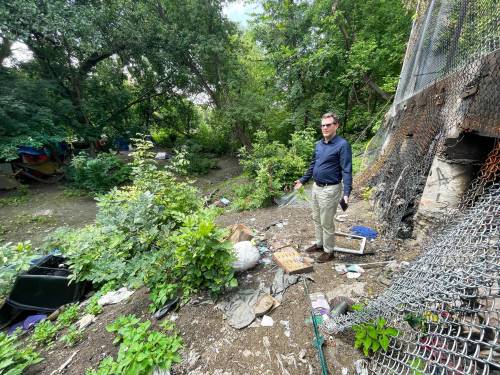
Terry Engelberg, who also receives disability income assistance, said the owners want to increase the monthly rent for his studio apartment from $565 to $1,265 after a discount.
Ruth Bonneville / Free Press Terry Engelberg says Conway Court's owners want to increase the monthly rent for his studio apartment from $565 to $1,265.
That represents most of his net monthly income and he’s worried about finding a place to live.
“I’m on disability, I have a very fixed income, and I can’t just move on a whim,” Engelberg, 45, said. “I don’t have the resources for that, or have another place to go, even. There’s not a lot of places that are even affordable.”
Aaron Pridham, another tenant, pointed to burn marks on the ground floor of the three-storey building, where he said people had broken in and set a fire about six months ago. When he received notice of the proposed rent hike, he said he wondered why they hadn’t bothered to fix the most urgent security issues first.
“I can’t just move on a whim… I don’t have the resources for that, or have another place to go.”
Pridham, 36, is moving out after buying a house with his partner. His mortgage is less than the increase proposed for his two-bedroom suite.
“It’s an epidemic, and it’s feeding the houseless issue that we have here… (it’s) absolutely disgusting,” he said. “That shouldn’t be allowed to happen.”
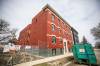
The 23-unit Conway Court, on the east side of Kennedy Street between York and St. Mary avenues, was built in 1912. While its brick and stone base is strong, its facade is peppered with broken windows, chipped stairways and other obvious damage.
Adam Tougas owns Birchstone Properties, which purchased the building and formally took it over in April. He also owns Bosk Construction and Power Driven Electric Ltd., the companies doing what he describes as expensive but necessary repairs.
He said the building has not been upgraded since it was first built. He pointed to the work now underway: cleaning out asbestos, renovating bathrooms, overhauling the electrical service, replacing water lines and the old boiler system with new fan coil HVAC equipment.
“We can’t consciously well-manage a building that is in this condition,” he said.
Ruth Bonneville / Free Press Conway Court tenant Aaron Pridham says he is moving out after buying a house and his mortgage is less than the increase proposed for his two-bedroom apartment.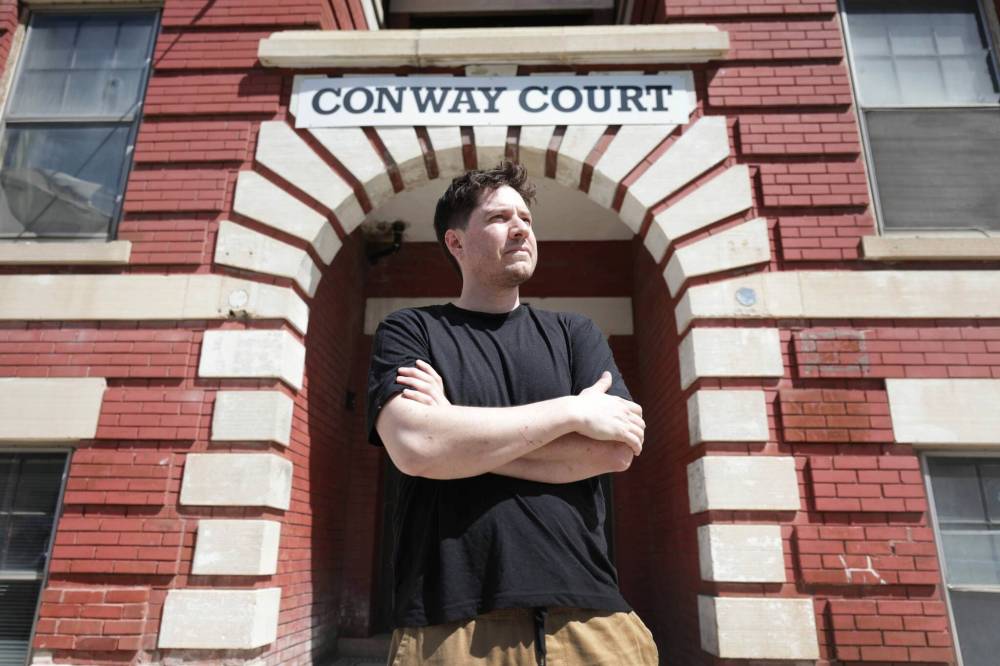
The total cost of renovations, including permits, is approximately $3 million, Tougas said. Even after taking advantage of loans with the Canada Mortgage and Housing Corp., “the project barely makes sense” financially, he said.
“I really struggle with that. We do it because we enjoy bringing life to these old buildings, and not a lot of people want to take that project on,” he said. “And at the same time, that cost has to get recouped somewhere.”
The above-guideline rent increase proposal will be reviewed by the Residential Tenancies Branch. Some tenants, like Toby Hughes, who is moving out after about 10 years, asked how Tougas could be fairly held to account if he also owns the construction and electrical companies.
“(It’s) absolutely disgusting… That shouldn’t be allowed to happen.”
“If you’re writing cheques to yourself, you can inflate it as much as you want,” Hughes said.
Doing the construction and electrical work is a way to avoid paying extra markup, Tougas said, and suggested the provincial authority is likely being more discerning with his companies.
Tougas suggested that without a developer like him the block would fall further into disrepair, eventually be deemed unlivable and become one of downtown’s many vacant buildings or a tear-down, giving way to a new build with luxury-price rentals.
“I don’t think we’re doing bad. I think we’re doing good for the buildings,” he said.
“It’s unfortunate that some of the tenants don’t see it that way and, understandably, it is their home, and we are disrupting what they’re used to, which is just the reality, you can’t hide that. But I also don’t think that we are gouging or charging unreasonable prices.”
A contentious rent-legislation bill brought forward by the NDP government and delayed by the Progressive Conservatives is set to revisited in the fall.
“I don’t think we’re doing bad. I think we’re doing good for the buildings.”
Bill 13 would expand the number of rental units subject to rent control, double fines against negligent landlords to $10,000 and require them to provide more information about themselves, their property managers and rental units to the province.
PC housing critic MLA Josh Guenter said the legislation makes it harder for developers to build desperately needed rental stock.
“The proposed bill will help exactly zero renters, but it will create more bureaucracy without improving the life of a single Manitoban,” he said in a statement Wednesday.
MIKE DEAL / FREE PRESS FILES Public Service Delivery Minister Mintu Sandhu
Minister Mintu Sandhu, who is responsible for public service delivery and the RTB, accused the Opposition of “forcing tenants to wait longer for important protections.”
“This critical legislation is part of our government’s plan to make life more affordable, which includes the largest expansion to rent control in decades,” he said in an email Wednesday.
He said the RTB had yet to receive an above-guideline rent increase request from Tougas but promised it would “undergo the same rigorous assessment” as all other applications.
The NDP has also suggested a regulatory change that would shift the way landlords file capital repair costs to the RTB. Instead of the current system, where costs can be recouped through above-guideline rent increases over four to eight years, it would take twice as much time and halve the amount of rent increases for repairs placed on tenants.
The regulatory change, brought on after feedback from the public through an Engage MB survey, could happen any time, regardless of Bill 13, said Yutaka Dirks of the Right to Housing Coalition.
“So for (the Conway) tenants right now, if that was in place…. The rent increase would be halved. That would make a huge difference” he said. “And that’s something that the minister could do right away.”

Right to Housing has advocated for a recoup rate of between 10 and 25 years, similar to what is currently done in B.C. and Ontario, both of which have similar, but stricter, legislation.
Manitoba has a wider list of expenses that are eligible to put toward applications for above-guideline rent increases and a higher percentage of each capital expense landlords can claim than either of those provinces.
And while approved above-guideline increases are permanent in Manitoba, rent increases can be reduced or reversed in Ontario.
Dirks said Manitoba’s current regulations favour landlords, not people who need safe, affordable housing.
“The system is set up in that way, and so landlords have been using, it because it’s perfectly legal for them,” he said.
malak.abas@freepress.mb.ca

Malak Abas is a city reporter at the Free Press. Born and raised in Winnipeg’s North End, she led the campus paper at the University of Manitoba before joining the Free Press in 2020. Read more about Malak.
Every piece of reporting Malak produces is reviewed by an editing team before it is posted online or published in print — part of the Free Press‘s tradition, since 1872, of producing reliable independent journalism. Read more about Free Press’s history and mandate, and learn how our newsroom operates.
Our newsroom depends on a growing audience of readers to power our journalism. If you are not a paid reader, please consider becoming a subscriber.
Our newsroom depends on its audience of readers to power our journalism. Thank you for your support.
Related Articles
Planned Elmwood Hub project combines 115 mixed-income housing units, social supports, programs