As workplace surveillance grows, experts say it’s good to know the ways your employer is watching
Advertisement
Read this article for free:
or
Already have an account? Log in here »
To continue reading, please subscribe:

Digital Subscription
One year of digital access for only $205*
- Enjoy unlimited reading on winnipegfreepress.com
- Read the E-Edition, our digital replica newspaper
- Access News Break, our award-winning app
- Play interactive puzzles
*First annual payment billed as $205.00 + GST for one year. This annual subscription will automatically renew at $233.00 + GST every 52 weeks (10% off the regular annual price of $259.35). Offer available to new and qualified returning subscribers only. Cancel any time.
To continue reading, please subscribe:
Add Free Press access to your Brandon Sun subscription for only an additional
$1 for the first 4 weeks*
- Enjoy unlimited reading on winnipegfreepress.com
- Read the E-Edition, our digital replica newspaper
- Access News Break, our award-winning app
- Play interactive puzzles
*Your next Brandon Sun subscription payment will increase by $1.00 and you will be charged $17.95 plus GST for four weeks. After four weeks, your payment will increase to $24.95 plus GST every four weeks.
Read unlimited articles for free today:
or
Already have an account? Log in here »
NEW YORK (AP) — College administrators read an adjunct professor’s comments to students on personal essays. Managers told a pharmacist to spend less time with patients after tracking the number and length of her appointments. Scanners on a warehouse conveyor belt monitored the pace of workers to ensure they inspected hundreds of items per hour.
Thousands of employers are keeping tabs on the whereabouts, productivity and communications of workers with technology that was adopted widely during the coronavirus pandemic. A vast array of digital tools still are being used to track locations, collect data on task completion rates, and access work-issued smartphone and laptop cameras, raising concerns about how much privacy employees have relinquished, even in their own homes.
Employers have always monitored workers, but recent advances in artificial intelligence and data science enable them to create extensive data sets or “dossiers” that can be used to punish workers or attempt to predict employee behavior, said Wilneida Negrón, director of research and policy at Coworker, a nonprofit that helps workers organize to improve working conditions.
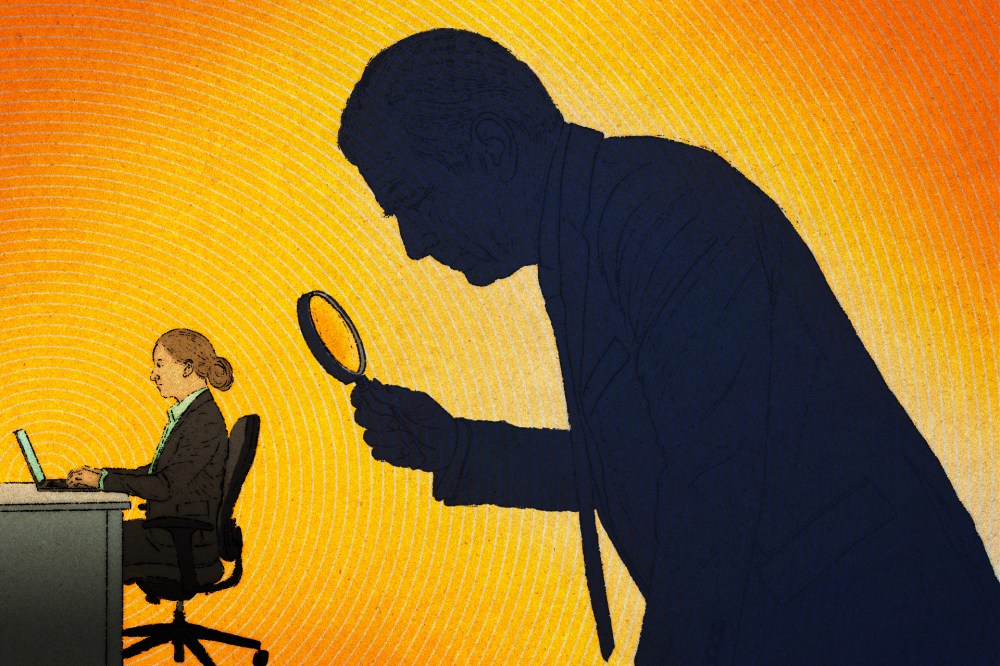
“Oftentimes, the workers with the least amount of power in the labor markets tend to be testing grounds for some of the more intrusive forms of data collection,” Negrón said.
Some of the most common workplace monitoring programs have shared names, email addresses and other personal worker data with hundreds of outside data brokers and technology companies without clearly disclosing the practice, according to an investigation by Vanderbilt University, Northeastern University and the University of California at Berkeley.
Data privacy experts and workers who say they’ve been closely monitored spoke with The Associated Press about what they see as the risks of employer surveillance and the steps employees can take to protect their personal information.
Team up with like-minded colleagues to advocate for yourself
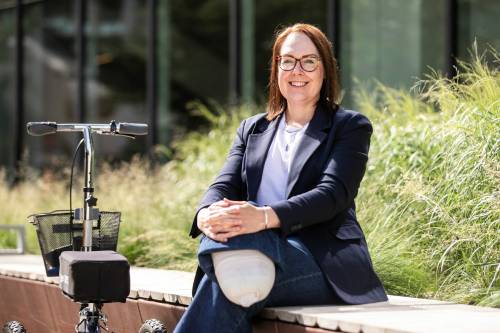
Pharmacist Lannie Duong’s job at a medical clinic involved meeting with patients who had chronic conditions such as diabetes, hypertension and heart disease. She reviewed their medical histories, blood work and symptoms, and adjusted their medications. She frequently enlisted interpreters to help her communicate with patients who had limited English language skills.
Duong said her employer tracked the length of her phone calls and appointments, and in performance evaluations questioned why she took so long with each patient.
“Everything was counted. How many minutes you’re on the phone. The minutiae of it was ridiculous,” Duong said. “We’re just tasked to do what feels like the impossible.”
Under what she described as unrelenting pressure, Duong felt “not trusted, not appreciated, almost completely hopeless. It was so depressing.” She eventually went on medical leave and began volunteering with other pharmacists to organize a union.
“I spoke up, hoping others would voice their concerns as well, but that didn’t really pan out,” Duong said. She says her employment was terminated after the medical leave.
Many of the employers using surveillance tools do so transparently and engage employee boards in reviewing how the tools are used, Negrón said. But there are also employers tracking, ranking and scoring employees in ways that are not transparent to workers, she said.
“Workers are going to have to come together because the forces of centralizing this kind of tracking and monitoring are moving too fast,” Negrón said.
Find out what kind of data your employer is collecting about you
As awareness about surveillance tools grows, some workers are pushing back on tools that track how long it takes to fulfill tasks, saying such monitoring contributes to injuries, and questioning what personal information is being collected and how it’s being used, said Hayley Tsukayama, director of state affairs at the Electronic Frontier Foundation, a nonprofit that focuses on digital privacy.
“Unfortunately, if you are on a machine that’s been issued by your workplace, you should expect that there’s some type of monitoring,” Tsukayama said.
Researching data collection and surveillance trends in your industry is a good idea, according to Negrón. Without that knowledge, workers may find themselves unprepared when confronted with information unearthed during surveillance.
While teaching a college writing class, Arianna Anaya discovered that an administrator was reading the papers her students uploaded to the school’s learning management software and the comments Anaya made on the work. The students often wrote about intimate topics, including abuse, eating disorders and family trauma.
“The school essentially used the online learning system to allow administrators and staff to read student work that was often immensely private and personal, something we were specifically told students should not know about,” Anaya said.
A colleague who printed out the comments criticized the casual tone Anaya used with students and accused her of not sticking to the course syllabus. A few months later, Anaya’s teaching contract wasn’t renewed, although she doesn’t know the exact reason.
“It made me quite paranoid,” Anaya said. “It made me feel less safe in the world.”
Check state laws to see what’s required of employers
Some states, including New York, Connecticut, Delaware and Maine, require employers to notify workers if they’re being monitored. Maine’s law goes further, prohibiting visual monitoring in employees’ homes or personal vehicles unless that kind of observation is required for the duties of the job, said Edward Halle, a privacy and AI compliance manager.
“The question becomes, what does the law mean by ‘the duties of the job’?” Halle said. “A telehealth nurse needs a camera; the camera is the job. A productivity webcam bolted onto ordinary desk work almost certainly isn’t. Where that line falls is the first thing the Department of Labor will be asked to sort out.”
If you work in a state without a notification requirement, it’s difficult to find out if an employer is using technology to monitor your performance.
To raise the issue with managers, Tsukayama suggests coordinating with a union. If that’s not an option and you’re asking managers individually, approach the topic cautiously and take a curious tone, she advised. You could say you’ve noticed something on the computer and have questions, such as “How is this information being used within the company? How might it get out of the company?” Tsukayama said.
One place to start is asking what specific employee data your organization collects, said Aiha Nguyen, director of the Labor Futures Initiative at Data & Society, a nonprofit institute studying the impacts of technology. If your manager doesn’t know, the information technology department may have answers, since the people working there often are the ones turning on the features, Nguyen said.
Some common software programs such as Microsoft Office and Zoom have tools that can be used for tracking worker productivity, but the tracking features aren’t always activated. Knowing whether those tracking features are turned on can be difficult, because they’re built into the programs, Nguyen said.
“It’s automatic. It’s considered something that employers have been able to say, ‘This is necessary for work. You have to use these tools,’” she said.
To help safeguard personal information, don’t use work devices to handle family matters or sensitive personal information such as medical conditions, experts advise.
“I think most people know that,” Nguyen said. “But it can become tedious to switch between phones, or people don’t really think it’s that harmful. … You don’t want to potentially put yourself at risk.”
___
Share your stories and questions about workplace wellness at cbussewitz@ap.org. Follow AP’s Be Well coverage, focusing on wellness, fitness, diet and mental health at https://apnews.com/hub/be-well