

Japan’s leader Takaichi explains why she spends long hours in seclusion at her official residence
Advertisement
Read this article for free:
or
Already have an account? Log in here »
To continue reading, please subscribe:

Digital Subscription
One year of digital access for only $205*
- Enjoy unlimited reading on winnipegfreepress.com
- Read the E-Edition, our digital replica newspaper
- Access News Break, our award-winning app
- Play interactive puzzles
*First annual payment billed as $205.00 + GST for one year. This annual subscription will automatically renew at $233.00 + GST every 52 weeks (10% off the regular annual price of $259.35). Offer available to new and qualified returning subscribers only. Cancel any time.
To continue reading, please subscribe:
Add Free Press access to your Brandon Sun subscription for only an additional
$1 for the first 4 weeks*
- Enjoy unlimited reading on winnipegfreepress.com
- Read the E-Edition, our digital replica newspaper
- Access News Break, our award-winning app
- Play interactive puzzles
*Your next Brandon Sun subscription payment will increase by $1.00 and you will be charged $17.95 plus GST for four weeks. After four weeks, your payment will increase to $24.95 plus GST every four weeks.
Read unlimited articles for free today:
or
Already have an account? Log in here »
TOKYO (AP) — Japanese Prime Minister Sanae Takaichi, who is increasingly seen secluding herself at home, said on Saturday that she is using her official residence next to her office more for work to maximize efficiency.
In December, Takaichi moved into the official residence, a brick-and-stone mansion that opened in 1929 used to be the original prime minister’s office until its replacement was built right next to it.
Takaichi said on X that living in the official residence, or “kotei,” is good because its proximity requires no commute and lets her immediately get down to work in time of an emergency.
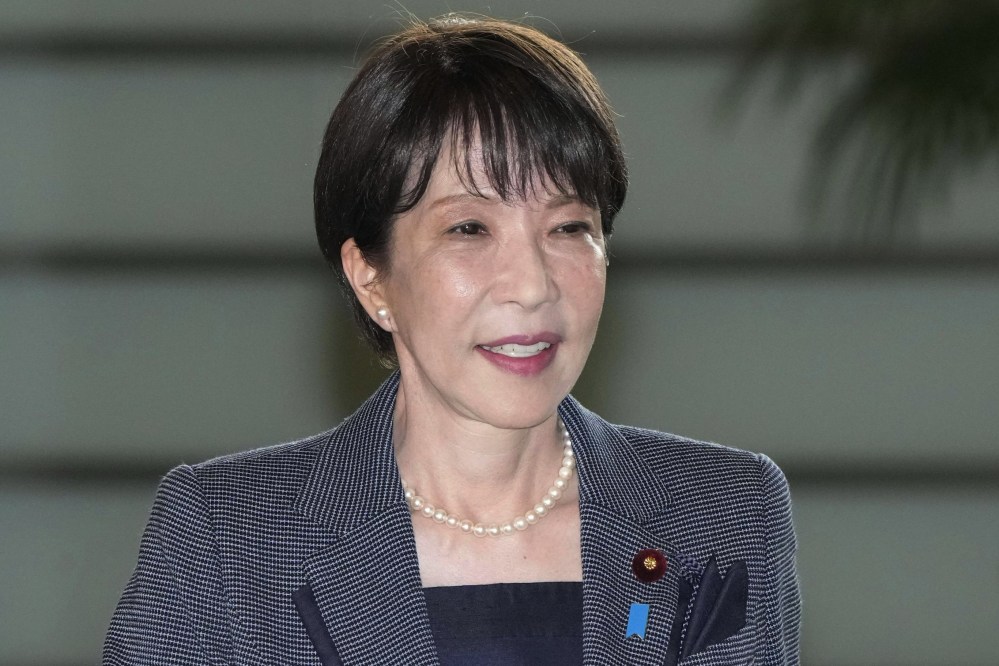
Takaichi said she has reinforced office functions at the residence so she can work and have meetings there remotely or in person with her staff whenever needed, even after office hours. She also takes home documents to read.
“To me, the official residence is also a workplace,” she said.
But Takaichi, whose work mantra and her recent revelation on X of zero to three hours of sleep at night because of her homemaking burden on top of her heavy workload as prime minister, triggered criticisms that Japan’s first female leader was setting a wrong example for a work-life balance and gender-equality.

Takaichi has seen her support ratings rapidly drop as she pushed unpopular policies such as a revision to the Imperial House Law to reinforce a male-only succession system, while delaying economic measures to address rising prices.
Media reports have said that Takaichi was avoiding parliamentary sessions and largely holed up at the residence at night and on weekends, saying that she’s having significantly less interactions and communication with other lawmakers and officials than her predecessors. Takaichi frequently posts comments and policies on X instead of talking to the media.
The official residence was the site of two bloody coup attempts in the 1930s, and legend has it that the building is haunted by ghosts.
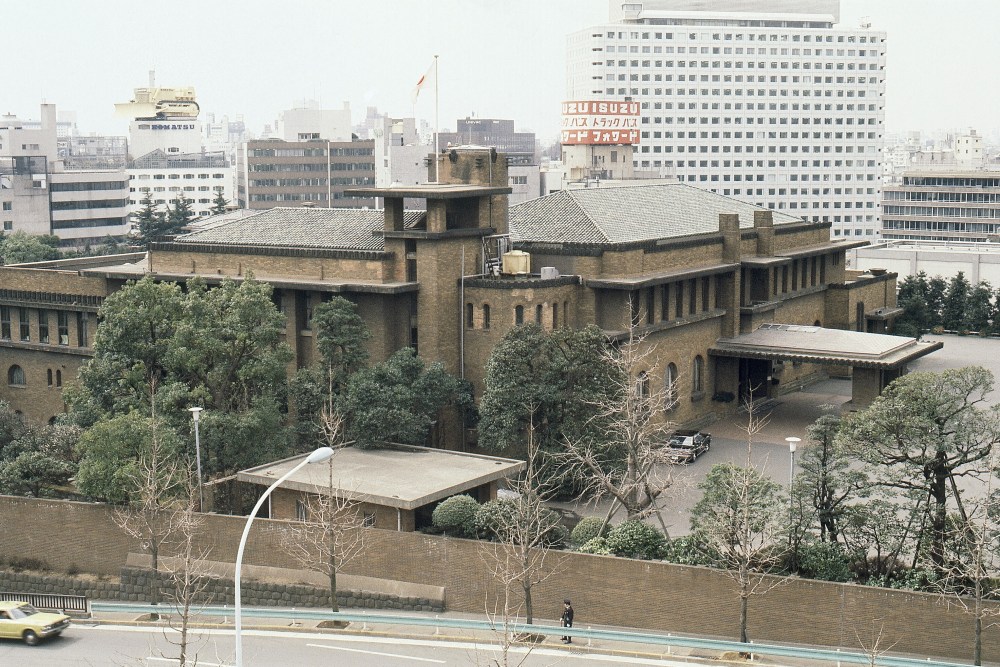
Takaichi apparently doesn’t mind spending long hours at the residence despite that.
“I’ve never seen a ghost, but I have often screamed because of my encounters with cockroaches,” she said. “I was shocked when a cockroach ran past my feet.”