How a Chinese film shot in dialect is finding a global audience

Advertisement

Advertise with us

BANGKOK (AP) — The buzziest film in China this year was shot almost entirely in a southern Chinese dialect that most Chinese viewers need subtitles to understand.

Read this article for free:


or

Already have an account? Log in here »

To continue reading, please subscribe:

Subscribe and receive a limited-edition Free Press branded hat or tote.

Digital Subscription

One year of digital access for only $205*

  • Enjoy unlimited reading on winnipegfreepress.com
  • Read the E-Edition, our digital replica newspaper
  • Access News Break, our award-winning app
  • Play interactive puzzles

*First annual payment billed as $205.00 + GST for one year. This annual subscription will automatically renew at $233.00 + GST every 52 weeks (10% off the regular annual price of $259.35). Offer available to new and qualified returning subscribers only. Cancel any time.

To continue reading, please subscribe:

Add Free Press access to your Brandon Sun subscription for only an additional

$1 for the first 4 weeks*

  • Enjoy unlimited reading on winnipegfreepress.com
  • Read the E-Edition, our digital replica newspaper
  • Access News Break, our award-winning app
  • Play interactive puzzles
Start now

*Your next Brandon Sun subscription payment will increase by $1.00 and you will be charged $17.95 plus GST for four weeks. After four weeks, your payment will increase to $24.95 plus GST every four weeks.

BANGKOK (AP) — The buzziest film in China this year was shot almost entirely in a southern Chinese dialect that most Chinese viewers need subtitles to understand.

Yet “Dear You” has become China’s second-highest-grossing film of the year. Now it is heading overseas, part of a broader wave of Chinese cultural exports.

“Dear You” was shot mostly in Teochew, a dialect spoken in Guangdong’s Shantou region. Set among the Teochew immigrant community in Bangkok, it tells the story of people who left China in search of work to support their families. Made on a low budget, it features a cast of mostly unknown actors.

In this photo released by Xinhua News Agency, viewers take selfie in front of an advertisement for the Chinese film
In this photo released by Xinhua News Agency, viewers take selfie in front of an advertisement for the Chinese film "Dear You" during its premiere in Jakarta, Indonesia, on Aug. 5, 2026. (Agung Kuncahya B./Xinhua via AP)

The film provides a glimpse into the centuries-long history of Chinese migration to Southeast Asia. It has succeeded in making this little-discussed history visible to a wider audience, threading the fine needle of passing official censorship requirements, experts say, while telling a compelling story.

As of August, the movie had grossed about 269 million yuan ($40 million) at the Chinese box office. It was released in Thailand in early August after being shown in Singapore, Malaysia and Australia. It will be released in the U.S. next month.

China is increasing its soft power with cultural exports

The film’s popularity comes as Chinese culture and consumer brands have been gaining global cachet — from collectible Labubu dolls to “Chinamaxxing,” a social media trend of embracing aspects of the Chinese lifestyle.

The Chinese government began promoting the film as it became a hit and prepared for its international release.

The Chinese consul in Sydney said at a June screening of the film that it “reflects the Chinese nation’s virtues of diligence, kindness, courage and unity.”

The movie aligns with Beijing’s broader goal of “telling China’s stories well,” highlighting themes of friendship, tradition and family, including motherhood and kinship, said Belinda He, an assistant professor of East Asian cinema and media studies at the University of Illinois Urbana-Champaign.

China’s ambassador to Thailand presented the film at a special screening in July and again at a red carpet event this month.

“We’re grateful to Guangdong for making such a wonderful film,” Chinese ambassador Zhang Jiangwei said at the red carpet event, which was attended by officials from Guangdong’s Information Office. “Stories about ordinary people and simple, genuine emotions can be even more moving. This film is an excellent vehicle for telling China’s story well.”

Chinese migration to Southeast Asia has been ongoing for centuries

The film first resonated in Malaysia and Singapore because it showcases a history that’s rarely featured in mainstream films.

Chinese migration to Southeast Asia dates back centuries, with many migrants coming from the Guangdong and Fujian provinces in southern China. Many worked as laborers in building projects in an era of Western colonial rule across much of Asia.

The film starts with a young man trying to find his grandfather, Deng Musheng, in hopes of getting a loan to repay his debts. In the family lore, there was supposedly a wealthy grandfather in Thailand, who left his young wife and children behind in China and never came back.

Using an address on an old remittance letter his grandfather had sent, he meets people who became part of his grandfather’s life in Bangkok, uncovering the mystery of why his grandfather never returned.

The film’s director, Lan Hongchun, wrote in a column for the People’s Daily, a state media outlet, that he grew up hearing stories from his grandmother about people she knew migrating to Bangkok, and wanted to tell these stories in film.

The film also resonates with Thai Chinese viewers

The plot revolves around “qiaopi,” remittance letters used by Chinese immigrants to send money and news back home. Many workers who could not write Chinese relied on scribes to compose the letters.

Scenes set in the centralized offices where the scribes worked, called “poy kuan,” were directly out of the childhood of 74-year-old Sathien Tuntipaiboontana.

“I connected emotionally with that part of the film quite strongly,” he said after watching the first screening of the film in a Bangkok theater with his older sisters and sisters-in-law. Among them was his eldest sister, who is 89 and needed help climbing the stairs to the cinema.

Their father had immigrated to Bangkok from China in search of work, leaving behind a wife and children. He ended up remarrying and never returned to China. But Sathien’s family continued to send remittances to the family left behind in China.

Thitikorn Phanprayoon, a third-generation Thai Chinese, said he decided to see the film after hearing Teochew, the Chinese dialect he speaks at home, in the trailer. It surprised him since most Chinese films are in Mandarin. He plans to return with his parents.

“I felt like I was sitting at home,” he said. “It felt like my family was performing in the movie in front of me.”

___

AP writer Fu Ting contributed to this story from Washington, D.C.
Report Error Submit a Tip

More Stories

Winkler-based internet provider delivering high-speed service to 30 rural and First Nations Manitoba communities

Nicole Buffie 3 minute read Preview

Winkler-based internet provider delivering high-speed service to 30 rural and First Nations Manitoba communities

Nicole Buffie 3 minute read Tuesday, Sep. 8, 2026

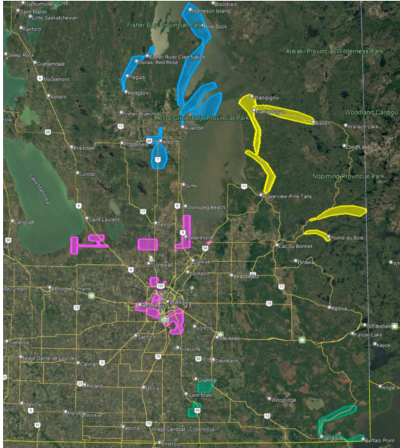
Valley Fiber says it is undertaking one of its largest fibre optic projects and is building infrastructure that will deliver internet to 10,000 homes and businesses in rural and First Nations communities across Manitoba.

“These communities will now have access to the fastest internet network in Manitoba, and it will power their lives and their business,” Ryan Klassen, chief executive officer of the Winkler-based internet provider, said Tuesday from Fisher River Cree Nation.

The province has granted Valley Fiber use of two of its underused cables on the existing Manitoba Hydro fibre optic network for up to 20 years as part of the project, which will connect nearly 30 communities — including Buffalo Point, Hollow Water, Black River and Peguis First Nations, along with Fisher River and Fox Lake Cree Nations — to high-speed internet.

Construction should be finished by 2027.

Read
Tuesday, Sep. 8, 2026

‘Huge resource gaps’: judge shortage leads to circuit court cuts

Dean Pritchard 4 minute read Preview

‘Huge resource gaps’: judge shortage leads to circuit court cuts

Dean Pritchard 4 minute read Updated: Yesterday at 6:33 PM CDT

A shortage of judges is forcing Manitoba’s provincial court to slash sittings across the province.

The court announced in a notice to the profession Wednesday that it will be reducing the number of annual court sittings at nine rural circuit locations and St. Boniface provincial court in Winnipeg by 68 sittings, effective April 1, 2027.

The reductions are necessary to balance “access to justice needs with the complement of judicial resources currently insufficient to maintain the current court schedule,” said the notice, signed by provincial court Chief Judge Ryan Rolston.

Affected circuit courts include Altona, Arborg, Beausejour, Easterville, Cranberry Portage, Lundar, Grand Rapids, Moose Lake, and Pine Falls.

Read
Updated: Yesterday at 6:33 PM CDT

Supportive housing operator sued after man with dementia walks away

Erik Pindera 4 minute read Preview

Supportive housing operator sued after man with dementia walks away

Erik Pindera 4 minute read 6:00 AM CDT

The Public Guardian and Trustee of Manitoba is suing a health services company after a man with dementia under its care allegedly wandered away from an apartment it operates for vulnerable people and was later found face down in a puddle — unresponsive, hypothermic and severely injured.

The public trustee — a provincial government agency that, among other duties, makes financial and personal care decisions for vulnerable adults who cannot do so themselves — filed the lawsuit against Cambridge Health Inc. and a related numbered company in the Court of King’s Bench earlier this month.

The agency did so on behalf of a now-38-year-old man, who has been under its care since 2018, as a result of his frontotemporal dementia. The disease often starts in mid-life, rather than old age, as is the case with most other forms of dementia.

The lawsuit alleges the man, who resided at a Henderson Highway apartment complex where Cambridge Health operated a supportive residence for people with complex behavioural health issues, was in a common area of the home at about 4:30 p.m. on April 3 last year.

Read
6:00 AM CDT

‘Dynacare sucks’: premier muses about bringing lab services back into public system

Carol Sanders 6 minute read Preview

‘Dynacare sucks’: premier muses about bringing lab services back into public system

Carol Sanders 6 minute read Updated: Yesterday at 7:45 PM CDT

Premier Wab Kinew says Manitoba may bring Dynacare’s diagnostic lab services back into the public system rather than continue to sign contracts with the for-profit company.

“Dynacare sucks. They’ve made an absolute mess of this situation,” the premier said Wednesday, the day the company’s 350 employees reported back to work after the labour board halted their strike after just one day.

Kinew first made the remark about Dynacare in a CBC radio interview Wednesday morning and added he is “not happy with them.”

Dynacare performs the majority of non-emergency blood and urine tests in the province.

Read
Updated: Yesterday at 7:45 PM CDT

Scrounging bestie overdue for reality check

Maureen Scurfield 5 minute read 2:00 AM CDT

DEAR MISS LONELYHEARTS: I’m almost 40, and one of my closest friends who was jobless for three years is once again earning decent money again — but she’s still acting like she’s broke!

I don’t care how people spend their money, but she still expects me to pay for her. For instance, if we go out for lunch, she’ll ask if we can do a 75-25 split, with her paying the lower amount. She also comes to potlucks with nothing to share, and then has the nerve to ask to take food home. She will also ask me to cover something and promise to pay me back, but then I have to hound her for weeks to get the money!

But it really took the cake recently when we went to a concert and she asked me to cover her ticket. Then she bought two T-shirts at the merch table! It feels underhanded to me — and insulting to my intelligence. It also feels weird to have to bring it up to her. We’ve been besties since high school —many, many years ago. Please help.

— Taking Advantage, Riverbend

What's Up: Brew at the Zoo, Neighbour x Neighbour fest, Fiver, Exploration of Contentment, Mangofest

5 minute read Preview

What's Up: Brew at the Zoo, Neighbour x Neighbour fest, Fiver, Exploration of Contentment, Mangofest

5 minute read 6:00 AM CDT

Brew at the ZooAssiniboine Park Zoo, 2595 Roblin Ave.Friday, 7-10 p.m.Tickets $68 hereIn July, Winnipeg beer drinkers flocked to Blue Cross Park for the return of Ballpark Brewfest; in August, they convened at Le Patio 340 for the Winnipeg Beer Festival.

And on Friday, lager lovers and hop heads will descend on the Assiniboine Park Zoo for the annual Brew at the Zoo, which sees local breweries pouring their wares alongside a range of national and international products. (Note: the zoo proper is not open to Brew at the Zoo guests.)

Among the locals taking part at this year’s Brew at the Zoo are Kilter Brewing Co., Heritage Farms Brewing Co., Dastardly Villain Ale Works, One Great City Brewing Co. and Barn Hammer Brewing Co. Locals pouring non-beer options include Brat Cat Mead Co., Shrugging Doctor Beverage Company and Patent 5 Distillery.

Brew at the Zoo, then, offers much more than beer, with a range of ready-to-drink cocktails, coolers, cider, wine and spirits being poured throughout the event; non-alcoholic options include kombucha and non-alcoholic beer.

Read
6:00 AM CDT