Pro-Russian hackers claim responsibility for major cyberattack on Norway’s public digital services
Advertisement
Read this article for free:
or
Already have an account? Log in here »
To continue reading, please subscribe:

Digital Subscription
One year of digital access for only $205*
- Enjoy unlimited reading on winnipegfreepress.com
- Read the E-Edition, our digital replica newspaper
- Access News Break, our award-winning app
- Play interactive puzzles
*First annual payment billed as $205.00 + GST for one year. This annual subscription will automatically renew at $233.00 + GST every 52 weeks (10% off the regular annual price of $259.35). Offer available to new and qualified returning subscribers only. Cancel any time.
To continue reading, please subscribe:
Add Free Press access to your Brandon Sun subscription for only an additional
$1 for the first 4 weeks*
- Enjoy unlimited reading on winnipegfreepress.com
- Read the E-Edition, our digital replica newspaper
- Access News Break, our award-winning app
- Play interactive puzzles
*Your next Brandon Sun subscription payment will increase by $1.00 and you will be charged $17.95 plus GST for four weeks. After four weeks, your payment will increase to $24.95 plus GST every four weeks.
Read unlimited articles for free today:
or
Already have an account? Log in here »
OSLO, Norway (AP) — A pro-Russian hacker group on Wednesday claimed responsibility for a cyberattack that has affected multiple Norwegian government digital services over the past three days.
The cyberattack has been ongoing since Monday, said Are Kvistad, a spokesperson for the Norwegian Digitalization Agency (Digdir), the state body in charge of making Norway’s public services more digital and user-friendly, told The Associated Press.
“It’s the biggest attack against Digdir solutions that we have ever experienced,” Kvistad said.
The denial-of-service attacks meant that hackers pushed massive traffic toward the agency in order to block services, including one that enables citizens to use one login across multiple public services.
However, the Digdir spokesman said that the agency managed to keep the services running “practically all the time.”
In a Telegram post on Wednesday widely reported by Norwegian media, the pro-Russian hacker group Server Killers claimed responsibility for the attack and said it had declared cyber war on Norway after the country renewed its security cooperation with Ukraine on Aug. 23.
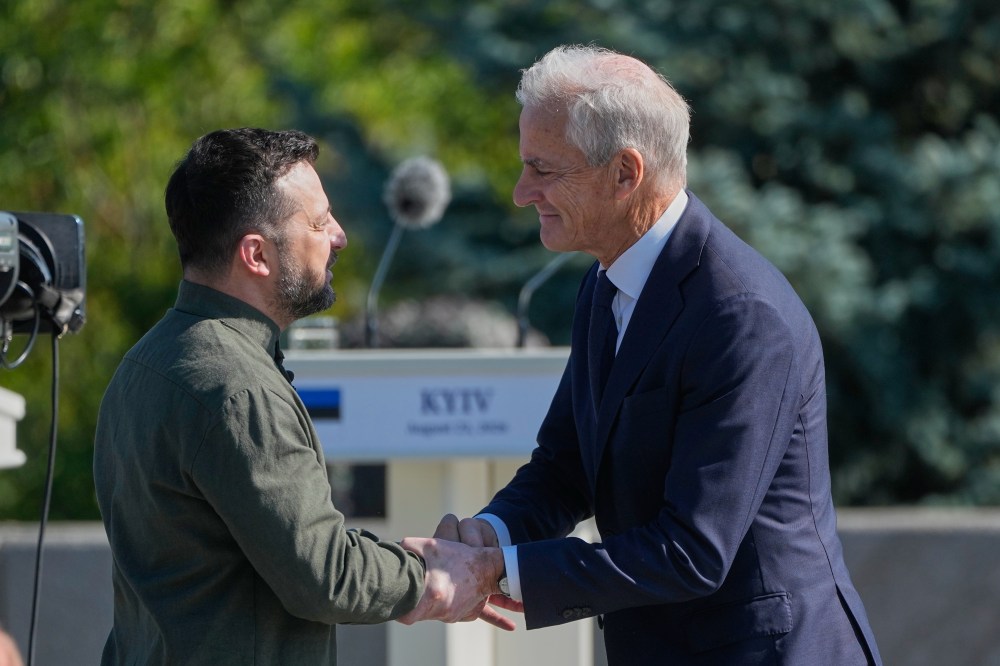
On Sunday, Norwegian Prime Minister Jonas Gahr Støre announced during a visit to Kyiv that Norway would provide 85 billion Norwegian crowns (9.2 billion US dollars) to Ukraine from next year’s state budget for a third year in a row.
The two countries also committed to further cooperation when it comes to drone technology and other forms of modern warfare.

Norwegian officials did not comment on the hackers’ claim by publication time.
All countries in Europe are on high alert with Russia stepping up its sabotage and malign activity across the continent since Moscow’s full-scale invasion of Ukraine in February 2022. Officials say the attacks are intended to undermine support for Ukraine, spread fear and discord in European societies and drain investigative resources.
In 2025, Norwegian authorities said Russian hackers were likely behind suspected sabotage at a dam in the country. During that incident, hackers gained access to a digital system which remotely controls one of the dam’s valves and opened it to increase the water flow. A three-minute long video showing the dam’s control panel and a mark identifying a pro-Russian cybercriminal group was published on Telegram at the time, the police said.
Last year, Danish authorities blamed Russia for carrying out cyberattacks against infrastructure and websites in Denmark in 2024 and 2025. Danish officials said pro-Russian group Z-Pentest carried out a “destructive attack” on the water utility company in 2024 and that a separate group, NoName057(16), was responsible for a cyberattack on Danish websites ahead of the 2025 local elections. Voth have links to the Russian state, they said.
According to Norwegian media, Server Killers were linked directly or indirectly to previous cyberattacks in Norway and other European countries.