

New-look Pac-12 looking to flex its way into CFP with unique schedule at end of regular season
Advertisement
Read this article for free:
or
Already have an account? Log in here »
To continue reading, please subscribe:

Digital Subscription
One year of digital access for only $205*
- Enjoy unlimited reading on winnipegfreepress.com
- Read the E-Edition, our digital replica newspaper
- Access News Break, our award-winning app
- Play interactive puzzles
*First annual payment billed as $205.00 + GST for one year. This annual subscription will automatically renew at $233.00 + GST every 52 weeks (10% off the regular annual price of $259.35). Offer available to new and qualified returning subscribers only. Cancel any time.
To continue reading, please subscribe:
Add Free Press access to your Brandon Sun subscription for only an additional
$1 for the first 4 weeks*
- Enjoy unlimited reading on winnipegfreepress.com
- Read the E-Edition, our digital replica newspaper
- Access News Break, our award-winning app
- Play interactive puzzles
*Your next Brandon Sun subscription payment will increase by $1.00 and you will be charged $17.95 plus GST for four weeks. After four weeks, your payment will increase to $24.95 plus GST every four weeks.
Read unlimited articles for free today:
or
Already have an account? Log in here »
The reincarnated Pac-12 will try to flex its way into the College Football Playoff.
No longer an automatic-bid Power Five conference, the Pac-12 will use an unusual “flex” schedule during the final week of the regular season to enhance its postseason chances. It is by far one of the most ambitious moves in the chase to make the highly lucrative CFP.
“We can kind of manipulate the schedule in a way that it’s the most advantageous to our teams, whether it’s for bowl access, CFP access,” Pac-12 Commissioner Teresa Gould said. “It was a genius idea and I’m thrilled that our ADs, our coaches and others were on board with moving forward with this.”
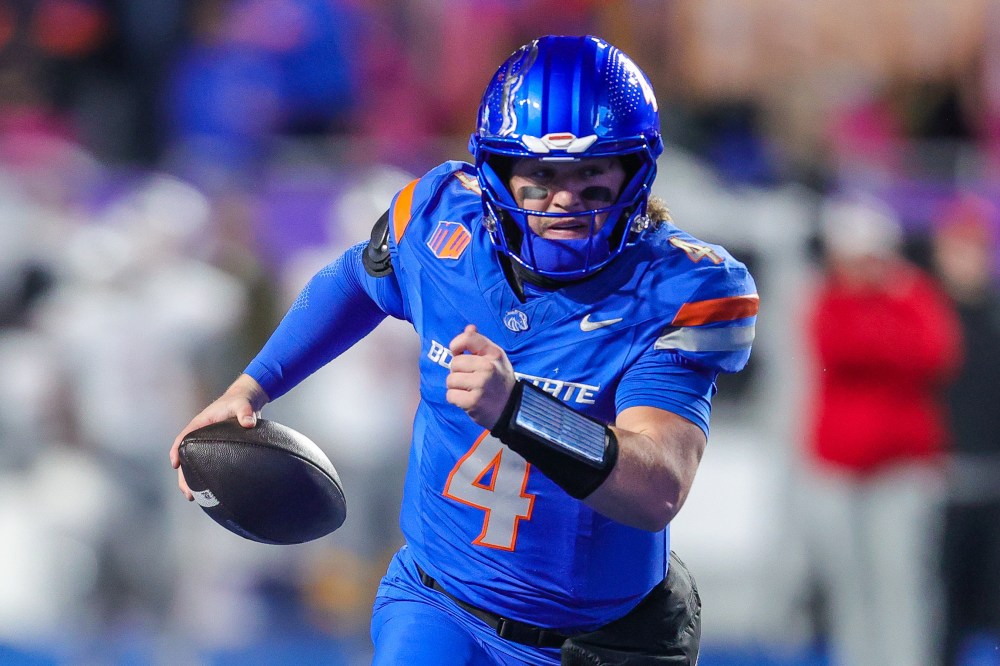
The Pac-12 was forced to reinvent itself after a mass exodus put the century-old conference’s future in doubt, leaving Oregon State and Washington State as the only teams standing.
The conference rebuilt itself by adding six new teams for football — Boise State, Colorado State, San Diego State, Utah State, Texas State and Fresno State — with Gonzaga joining in basketball. The Pac-12 also worked out new media rights deals so all of its games would be shown on linear TV.
Finding a path to the CFP turned into a big hurdle for the re-formed conference. The previous iteration of the Pac-12 was as a Power Five conference, providing a clearer path to the CFP. The new-look league is now part of the Group of Six, which has one guaranteed CFP spot going to the highest-ranked team from the six conferences. The rest of the 12-team playoff is filled out by the teams with the best resumes.
The Pac-12 faced operational scheduling challenges with an eight-team league, its schools potentially needing to find five nonconference games — not an easy task in the current Football Bowl Subdivision climate.
The Pac-12 found a solution that would not only alleviate the need to find one extra conference game, but strengthen its CFP hopes.
With its flex schedule, the conference will be able to create at least one high-profile rematch from earlier in the season as a prelude to the actual Pac-12 championship game Dec. 4 at the home stadium of the highest-seeded team.
“We’re eager to see what happens and we’ll see at the end of the season if it paid dividends, if it works it gives us as a conference a better chance of having one of our teams in the CFP playoff,” Oregon State athletic director Kevin Griffin said. “And that’s what the goal is: is to make sure we’re giving ourselves all the opportunities available to get in there.”
Because the conference wants every team to have four home league games, Colorado State, Utah State, Fresno State and Washington State will host the flex games. The games won’t count in conference standings and matchups will be determined six days in advance.
“It’s better for our TV partners in terms of the quality of the matchups, the quality of the games,” Gould said. “It’s better competitively in terms of strength of schedule and CFP positioning and the way that the flex is going to work. We can kind of manipulate the schedule in a way that it’s the most advantageous to our teams.”
___
AP Sports Writer Annie Peterson contributed to this report.
___
Sign up for Top 25 poll alerts here, visit the Top 25 here and see AP’s full college football coverage here.