

Middle East war, oil prices expected to push Alberta’s budget back into the black
Advertisement
Read this article for free:
or
Already have an account? Log in here »
To continue reading, please subscribe:
Digital Subscription
One year of digital access for only $1.44 a week*
- Enjoy unlimited reading on winnipegfreepress.com
- Read the E-Edition, our digital replica newspaper
- Access News Break, our award-winning app
- Play interactive puzzles
*Billed as $5.77 plus GST every four weeks. After 52 weeks, price increases to the regular rate of $19.95 plus GST every four weeks. Offer available to new and qualified returning subscribers only. Cancel any time.
To continue reading, please subscribe:
Add Free Press access to your Brandon Sun subscription for only an additional
$1 for the first 4 weeks*
- Enjoy unlimited reading on winnipegfreepress.com
- Read the E-Edition, our digital replica newspaper
- Access News Break, our award-winning app
- Play interactive puzzles
*Your next Brandon Sun subscription payment will increase by $1.00 and you will be charged $17.95 plus GST for four weeks. After four weeks, your payment will increase to $24.95 plus GST every four weeks.
Read unlimited articles for free today:
or
Already have an account? Log in here »
CALGARY – Alberta’s finances are swinging back into the black after war in the Middle East sent global energy prices surging.
The province’s latest fiscal update predicts a $2-billion surplus — a huge turnaround from the $9.4-billion deficit originally expected for the 2026-27 fiscal year.
It’s the latest reversal of fortune for the oil-rich province perennially tied to international energy markets.
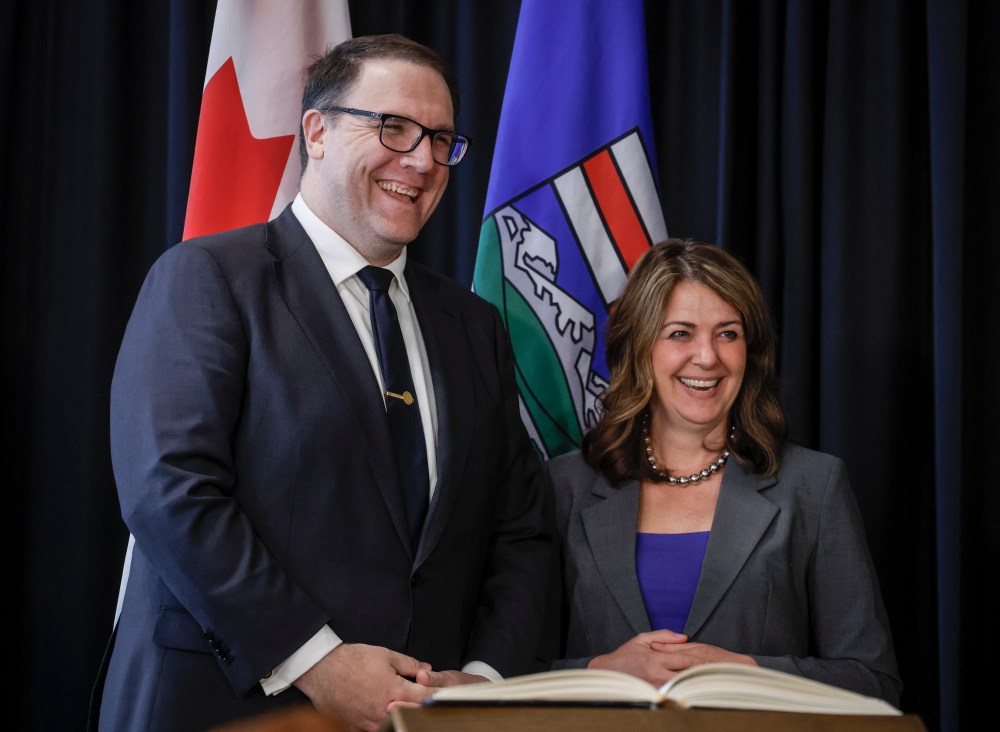
Finance Minister Jason Nixon welcomed the quarterly windfall as good news but warned the forecast could just as quickly take another turn.
“Energy prices can change quickly, trade uncertainty is real, and every dollar spent on debt is a dollar taken away from classrooms, hospitals and families,” he told reporters Thursday.
He warned the province won’t treat the surplus as a blank cheque.
“We will not commit temporary revenues to permanent expenses.”
Six months ago, the province anticipated West Texas Intermediate – the North American benchmark oil price — would average US$60.50 a barrel this year.
Two days after the province introduced its February budget, the U.S.-Iran conflict began, choking off oil tanker traffic through the Strait of Hormuz, a vital shipping lane at the mouth of the Persian Gulf.
Since April, the province estimates the price of WTI has averaged just above US$88 per barrel.
With every dollar increase in the average price, Alberta’s treasury stands to gain $680 million.
But the same commodity prices that are padding the government’s coffers are also driving up the cost of living.
In June, Premier Danielle Smith acknowledged the price pressures facing Albertans.
She announced $100 rebates for some 3.4 million eligible adults, instead of reducing the provincial tax on gasoline at the pumps.
Nixon said about 1.2 million have completed the application process, criticized by some as too invasive and demanding.
He didn’t commit to another round of rebates but said cabinet is mulling different options for the next quarter to offer relief for Albertans.
Nixon warned that amid the ongoing trade war between Canada and the United States, counter-tariffs could drive more inflation.
The fiscal update expects inflation will inch higher, hitting an average of 2.6 per cent in the coming year, compared to two per cent in 2025, largely because of the global supply squeeze.
For the latest budget numbers to pan out, WTI would have to average US$73.50 per barrel over 12 months or US$65 for the remainder of the fiscal year, which ends next March.
That price hit more than US$84 per barrel midday Thursday. Nixon said if it remains high, the province would have a much larger surplus.
Opposition NDP Leader Naheed Nenshi said Albertans are still facing a massive affordability crisis, with seniors and those with disabilities grappling with benefit cuts and many turning more frequently to food banks.
He repeated his call for the United Conservative Party government to cut the gas tax of 13 cents per litre, and accused Smith of making Alberta’s economy even more reliant on the royalty revenue roller-coaster.
“When we get windfalls, we should know what to do with them, and we should be able to balance our budget without relying on (U.S. President Donald) Trump starting a war in Iran,” Nenshi said.
Nixon said he expects the government is on track for a sixth consecutive surplus year, even though its year-end results for 2025-26 have been delayed.
He said the latest revenue bump — also driven by higher income and corporate tax revenue — should more than erase that year’s $4.1-billion projected deficit.
The government’s massive health-care restructuring has created an accounting challenge, Nixon added.

He said newly-created organizations need more time to match their books with the provincial budget.
Nenshi said that hiccup only shows Nixon is dodging his responsibility to report the province’s finances to Albertans amid a chaotic health care revamp.
“Of course they don’t have annual reports done … because they’re making it up as they go along.”
This report by The Canadian Press was first published Aug. 27, 2026.
—By Lisa Johnson in Edmonton