

Compact Slam schedule and Rock League campaign make for an unusual curling season
Advertisement
Read this article for free:
or
Already have an account? Log in here »
To continue reading, please subscribe:
Digital Subscription
One year of digital access for only $1.44 a week*
- Enjoy unlimited reading on winnipegfreepress.com
- Read the E-Edition, our digital replica newspaper
- Access News Break, our award-winning app
- Play interactive puzzles
*Billed as $5.77 plus GST every four weeks. After 52 weeks, price increases to the regular rate of $19.95 plus GST every four weeks. Offer available to new and qualified returning subscribers only. Cancel any time.
To continue reading, please subscribe:
Add Free Press access to your Brandon Sun subscription for only an additional
$1 for the first 4 weeks*
- Enjoy unlimited reading on winnipegfreepress.com
- Read the E-Edition, our digital replica newspaper
- Access News Break, our award-winning app
- Play interactive puzzles
*Your next Brandon Sun subscription payment will increase by $1.00 and you will be charged $17.95 plus GST for four weeks. After four weeks, your payment will increase to $24.95 plus GST every four weeks.
Read unlimited articles for free today:
or
Already have an account? Log in here »
TORONTO – A curling season unlike any before it is underway as the sport’s top teams prepare for the Grand Slam opener next month in Victoria.
The tour looks much different this season in the first year of the quadrennial.
Instead of being spread out over six or seven months like in regular non-Olympic seasons, the five Grand Slam events will be played over a compact two-month period this fall.
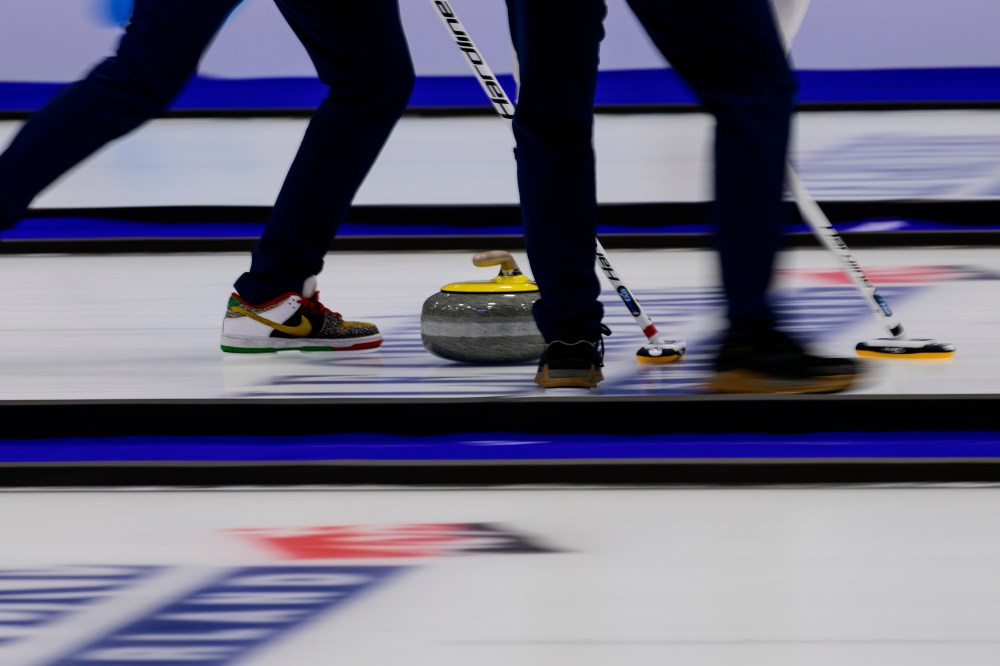
The Rock League pro circuit plans a one-month season starting in January ahead of an 11-day playoff in April once national and world championships are complete. With mixed doubles events also in play, it makes for a busy — and different — curling calendar.
“It’s Year 1 of a quad so for me, there’s no concerns,” said Curling Canada high-performance executive director David Murdoch. “Let’s just see how we could play this out, and I’m sure there’ll be learnings for Year 2 and Year 3 from both sides, whether you’re looking for an Olympic medal or whether you are looking for professionalism in sport.
“I think there’s scope there for everyone to figure this out quite easily.”
The schedule may present challenges for Rock League players who still need to qualify for the Scotties Tournament of Hearts or the Montana’s Brier.
Many provincial and territorial playdowns conflict with current Rock League dates, as do some national championships outside Canada.
With different lineups used on the pro circuit, some Rock League curlers may also have to juggle extra practice sessions or training camps with their regular teams to maintain cohesion.
“We’ve had lots of great discussions,” Murdoch said in a recent phone interview. “I think we’re figuring out some good solutions to that.
“And hopefully it can all work out and everyone benefits from it.”
Curling Canada recently named the women’s, men’s and mixed doubles teams for its national team program, and several athletes from those rinks are planning to play Rock League.
The national sport organization also announced that national coaches Scott Pfeifer and Jeff Stoughton would be switching roles.
Pfeifer has moved to men’s program manager and Stoughton has shifted to mixed doubles program manager. Viktor Kjell remained women’s program manager.
NEW LOOK
When Sportsnet and the CBC declined to extend their NHL broadcasting sublicensing deal for the upcoming hockey season, it was like a gift from the curling heavens for The Curling Group.
The CBC, which aired Season 1 of Rock League last April, found itself with vacancies for its Saturday programming.
Curling will fill part of that void as the broadcaster recently agreed to a five-year deal with The Curling Group.
Curling has a rich history on the CBC, which is also an Olympic rights-holder. The agreement gives The Curling Group more reach across the country and a deeper connection with the national public institution.
Saturday playoff games on the Grand Slam circuit will air on the main CBC network and stream on CBC Gem along with select Sunday finals throughout the season. The CBC will also broadcast Season 2 of Rock League on television and Gem.
Current rights-holder Sportsnet also agreed to a five-year deal. It will televise three Grand Slam draws daily from Tuesday to Friday, Sunday finals, and select Rock League games.
Grand Slam round-robin morning games and tiebreakers will be streamed on the Rock Channel website.
In the United States, ESPN inked a three-year deal with The Curling Group. Games won’t air on the main network but will be available on the ESPN+ streaming service.
The deals will put more pressure on The Curling Group, a sports business venture led by chief executive officer Nic Sulsky that has had mixed results since purchasing the GSOC series in 2024.
The debut of Rock League was marred by significant production issues over the first few days. Original plans for a six-week season with international stops were scrapped in favour of a single weeklong event in St. Paul, Minn., which was later moved to Toronto.
Curling ratings have remained solid — and will likely improve with the CBC involved — but attendance has been a major issue, most notably at the Grand Slam’s first-ever American event last fall in Lake Tahoe, Nev.
That bonspiel was played in front of a virtually empty arena, as were Rock League games over the first few days before things picked up a bit on the final weekend. Attendance figures were requested but organizers declined to provide them.
There will be some significant changes on the Grand Slam circuit this season.
The Curling Group will be responsible for production, a spokesperson said via email, and two longtime broadcasters won’t be returning.
Grand Slam play-by-play man Rob Faulds recently announced his retirement and analyst Kevin Martin said he won’t be returning to the role. New broadcast team details were expected to be announced later this month.
Sponsorship questions remain with just a few weeks to go. The series does not currently have a title sponsor and only one competition — the Oct. 13-18 Co-op Invitational — has an event sponsor.
GSOC branding is currently being used for the Nov. 3-8 GSOC Masters in Medicine Hat, Alta., the Nov. 12-17 GSOC National in Sydney, N.S., the Dec. 1-6 GSOC Open in Thunder Bay, Ont., and the Dec. 15-20 GSOC Players’ Cup in Kingston, Ont.
There is also some uncertainty with the Rock League calendar.
A host venue for the April 8-18 playoffs and championship has not been named and it’s unclear what might happen with a planned Jan. 14-17 stop in Halifax.

The Curling Group announced plans to go to the Scotiabank Centre — a 10,500-seat venue that hosted the Montana’s Canadian Curling Trials last year — but the arena does not have Rock League on its schedule.
In an email, an arena spokesperson said they don’t have any confirmation for that event.
The Curling Group plans to announce additional Rock League location details on Sept. 16, a spokesperson said via email. An update on the status of the Halifax event wasn’t provided.
Other previously announced Rock League dates include the season kickoff Jan. 7-10 in Moose Jaw, Sask., a Jan. 28-31 visit to Utica, N.Y., and a Feb. 4-7 competition in Ottawa.
This report by The Canadian Press was first published Sept. 1, 2026.
Related Articles
Curling Canada adopts World Curling rulebook, including new double-touch rule

Advertisement Advertise With Us
Advertisement Advertise With Us