

Enos Mafokate, South Africa’s first Black show jumping champion, dies at 80
Advertisement
Read this article for free:
or
Already have an account? Log in here »
To continue reading, please subscribe:
Digital Subscription
One year of digital access for only $1.44 a week*
- Enjoy unlimited reading on winnipegfreepress.com
- Read the E-Edition, our digital replica newspaper
- Access News Break, our award-winning app
- Play interactive puzzles
*Billed as $5.77 plus GST every four weeks. After 52 weeks, price increases to the regular rate of $19.95 plus GST every four weeks. Offer available to new and qualified returning subscribers only. Cancel any time.
To continue reading, please subscribe:
Add Free Press access to your Brandon Sun subscription for only an additional
$1 for the first 4 weeks*
- Enjoy unlimited reading on winnipegfreepress.com
- Read the E-Edition, our digital replica newspaper
- Access News Break, our award-winning app
- Play interactive puzzles
*Your next Brandon Sun subscription payment will increase by $1.00 and you will be charged $17.95 plus GST for four weeks. After four weeks, your payment will increase to $24.95 plus GST every four weeks.
Read unlimited articles for free today:
or
Already have an account? Log in here »
JOHANNESBURG (AP) — Enos Mafokate, South Africa’s first Black show jumping champion and veteran equestrian, has died at the age of 80, his family announced on Thursday.
Mafokate broke racial barriers in a sport that was dominated by white riders during South Africa’s decades of apartheid. He was widely known as “Kgosi ya Dipere,” a Sesotho language phrase which translates to ”King of Horses.”
“His journey was shaped by several leading figures in South African equestrian sport who recognised his extraordinary ability and, at critical moments, supported him as he challenged the racial barriers of the time,” his family said in statement.
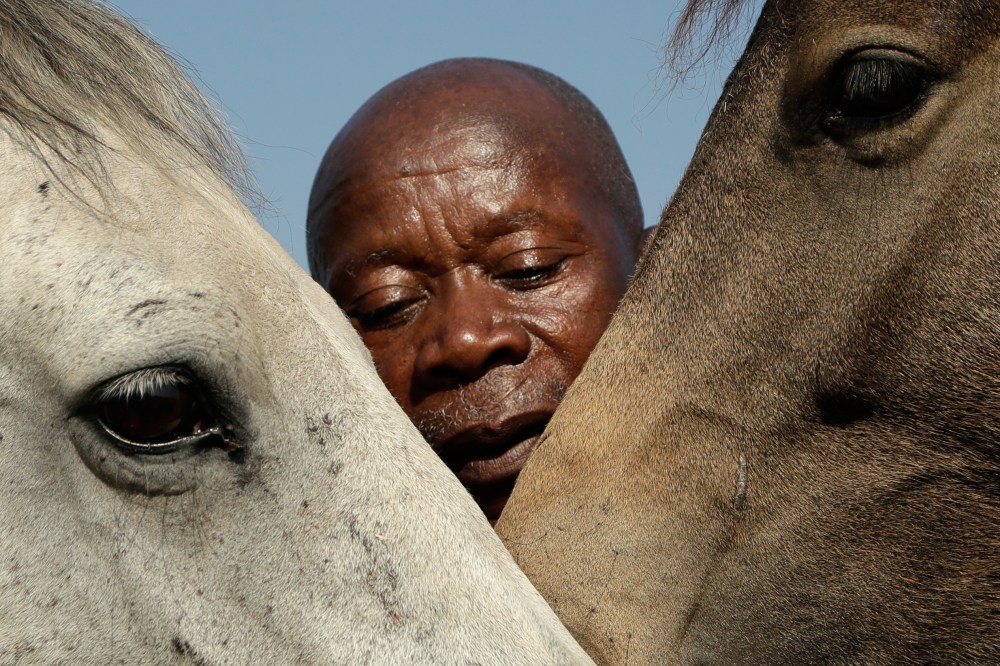
Mafokate started out as a stablehand. He won his first riding competition in 1963 but the country’s segregation laws prevented him from taking part in further competitions until 1975.
In 1980, he was the first Black South African man to compete internationally as a show jumper, placing fifth out of 31 riders at the Royal International Horse Show at Wembley.
After apartheid was dismantled in 1991 and the IOC readmitted South Africa to the Olympics, his service was recognized when he went to the 1992 Barcelona Games as a sports ambassador.
“His journey took him from the harsh realities of apartheid South Africa to competing internationally as a showjumper,” his family said. “Yet the significance of his life extended far beyond his own achievements in the arena.”
He spent his latter years developing young Black riders in Soweto township through the Soweto Equestrian Centre, a horse riding school he established in 2006. There he trained hundreds of young people in horse riding and animal welfare.
In 2015 at the South Africa sport awards he received a lifetime achievement honor.
___
See full AP coverage of African sports here