

Taking measure of tariff relief
Export supports, loans part of Manitoba efforts to back businesses amid U.S. trade war

Advertisement
Read this article for free:
or
Already have an account? Log in here »
To continue reading, please subscribe:

Digital Subscription
One year of digital access for only $205*
- Enjoy unlimited reading on winnipegfreepress.com
- Read the E-Edition, our digital replica newspaper
- Access News Break, our award-winning app
- Play interactive puzzles
*First annual payment billed as $205.00 + GST for one year. This annual subscription will automatically renew at $233.00 + GST every 52 weeks (10% off the regular annual price of $259.35). Offer available to new and qualified returning subscribers only. Cancel any time.
To continue reading, please subscribe:
Add Free Press access to your Brandon Sun subscription for only an additional
$1 for the first 4 weeks*
- Enjoy unlimited reading on winnipegfreepress.com
- Read the E-Edition, our digital replica newspaper
- Access News Break, our award-winning app
- Play interactive puzzles
*Your next Brandon Sun subscription payment will increase by $1.00 and you will be charged $17.95 plus GST for four weeks. After four weeks, your payment will increase to $24.95 plus GST every four weeks.
Read unlimited articles for free today:
or
Already have an account? Log in here »
The Manitoba government announced more than $100 million in tariff relief as companies brace for an escalation in the Canada-U.S. trade war. Canadian counter-tariffs ranging from 15 to 50 per cent are set to take effect Tuesday. Similar levies from the United States began in August.
A swath of businesses are hit: roughly $42 billion in two-way trade crosses the Manitoba-U.S. border annually.
The Free Press compiled information about the province’s business-focused tariff relief measures from the government and program facilitators.
Tariff workforce stabilization and youth employment program
The Business Council of Manitoba will administer this $13.7 million wage subsidy program.
It’s split into two halves. The workforce subsidy is a “safety net” after companies have exhausted other options, including federal employment insurance, said Bram Strain, president of the Business Council.
ALEX LAMBERT / THE BRANDON SUN FILES Business Council of Manitoba president and CEO Bram Strain 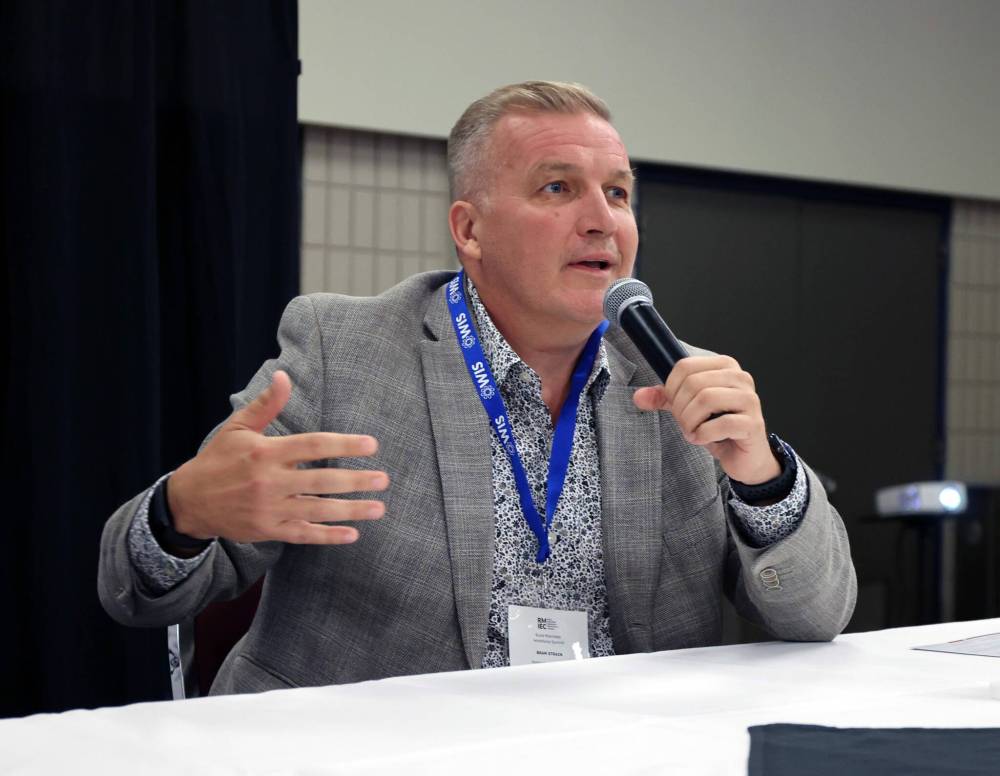
Money given through the stabilization fund will vary per company; businesses can receive up to $10,000 per employee. The government won’t ask for repayment unless its reporting requirements aren’t met.
On the youth employment side, companies can apply for up to $5,000 per new worker age 15 to 29. They must spend the same amount, minimum, for that worker.
“It derisks (the) hiring of someone new and helps with that initial training period,” Strain said. “But they will have to show that they are net new jobs to the workforce — that’s the major criteria.”
The goal is to create 500 jobs by September 2028. (The program has a two-year timeline.)
Strain said leadership will target job seekers via social media advertising and by liaising with high schools, post-secondaries, First Nations and existing groups working with youth.
The program is not tied to NextMB Jobs for Youth, an initiative to connect young workers with businesses that the province unveiled in June. NextMB was expected to unroll this fall at earliest.
Manitoba companies receiving funding must show how tariffs have or will create workforce pressures, such as reduced sales or higher input costs.
Affected firms will be able to apply online. That process is being created, Strain said, adding it should be live soon. The government confirmed applications will be through the Business Council.
Manitoba trade resilience loan program
Tariff-hit Manitoba businesses will receive loans ranging from $100,000 to $1 million through this $50 million program.
Loans are intended for operating cost needs, such as payroll. Companies must be at least three years old and have five or more full-time staff. Non-profits, associations and charities aren’t eligible.
Loan interest rates and due dates will vary per case. The rate will often hover around the Crown borrowing rate, said Business Minister Jamie Moses: “Our department evaluates every potential loan.”
MIKE DEAL / FREE PRESS FILES Jamie Moses, Manitoba’s Minister of Business, Mining, Trade and Job Creation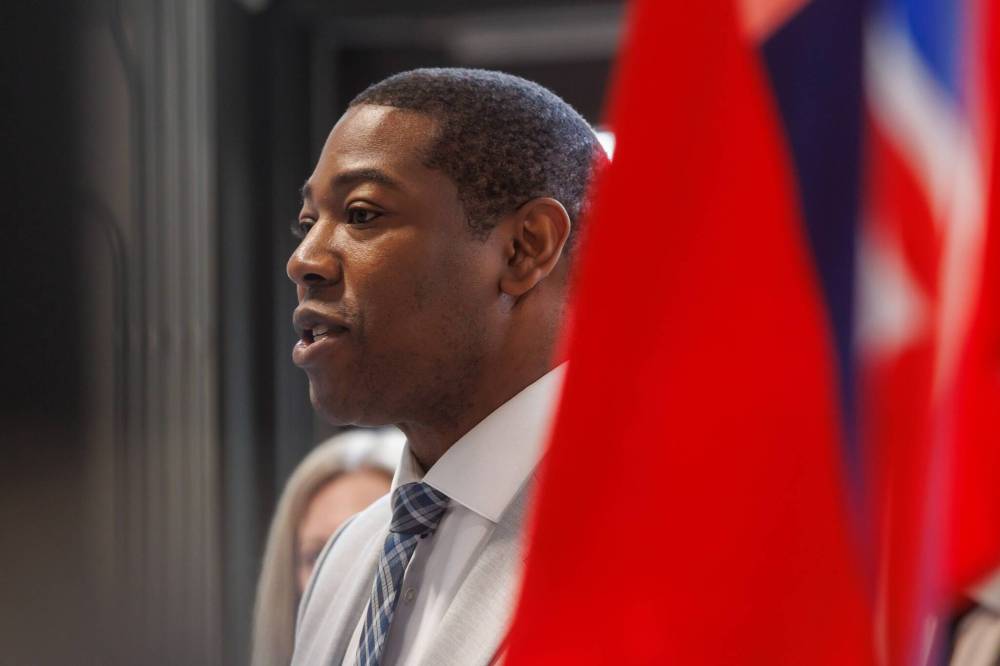
Loan terms may span up to six years, with a chance of up to one year of principal deferral as the government’s discretion, a spokesperson wrote.
An online application process is still being developed; a date for opening wasn’t provided. The province’s tariff response webpage will house the applications.
Made in Manitoba initiative
“Made in Manitoba” labelling on relevant items is an ongoing discussion between the Canadian Manufacturers & Exporters and the provincial government.
The national association oversees a labelling program for local goods in Ontario called “Ontario Made.” It’s researching whether a similar program could work in the Prairies, said Alan Arcand, the CME’s chief economist.
For now, the $500,000 slated for the CME’s Made-in-Manitoba initiative will go towards connecting manufacturers with new suppliers and customers.
It’s expected to hold its second Made in Manitoba summit next spring. The first happened in January, around 10 months after the province announced an initial $1.5 million for the CME to develop a Made in Manitoba program. Roughly 450 people attended.
A formal business-to-business web platform and various workshops are also being considered as funding uses, Arcand said.
“It won’t fully offset the impact of U.S. tariffs, but it can provide some relief,” he added.
Manufacturing has accounted for 10 per cent of the province’s GDP. The sector is among the most tariff-impacted.
Interprovincial trade missions for alcohol producers
The province has tabbed $500,000 for interprovincial trade missions. It’s tapped the Manitoba Chambers of Commerce and Manitoba Liquor and Lotteries to facilitate.
Planning with industry continues, Moses said. Destinations could include Saskatchewan, Alberta, British Columbia and Ontario, according to a government spokesperson.
Business-to-business meetings, buyer roundtables and distributor introductions could be part of the trips. The Manitoba Chambers of Commerce’s business network would be used, a government spokesperson said, adding there will be support for attendees after the mission.
Export services
The province added $500,000 to its existing export support program. Demand had already exceeded the $1 million slated for the program in Budget 2026, Moses said. There are funds for companies attending trade shows and missions, and for hosting international buyers in the province.
Another $250,000 was announced for existing export advisory services.
Businesses will be able to defer provincial taxes, such as the retail sales tax, for the period of Sept. 1 to Dec. 31.
This list doesn’t include measures for farmers announced last week.
The New Democrat government has received a range of praise and criticism for its measures. The Progressive Conservatives noted some businesses are on the verge of closing; Leader Obby Khan called some supports, including the tax deferrals, “half-baked.”
Tariff relief measures won’t lead to cuts in government programs elsewhere or in new civil servant hires for program administration, Moses said.
The province will use artificial intelligence in some application processes. It’s already done so for other programs, including its security rebate program.
— with files from Carol Sanders
gabrielle.piche@winnipegfreepress.com
Gabrielle Piché reports on business for the Free Press. She interned at the Free Press and worked for its sister outlet, Canstar Community News, before entering the business beat in 2021. Read more about Gabrielle.
Every piece of reporting Gabrielle produces is reviewed by an editing team before it is posted online or published in print — part of the Free Press‘s tradition, since 1872, of producing reliable independent journalism. Read more about Free Press’s history and mandate, and learn how our newsroom operates.
Our newsroom depends on a growing audience of readers to power our journalism. If you are not a paid reader, please consider becoming a subscriber.
Our newsroom depends on its audience of readers to power our journalism. Thank you for your support.
Gabrielle Piché reports on business for the Free Press. She interned at the Free Press and worked for its sister outlet, Canstar Community News, before entering the business beat in 2021. Read more about Gabrielle.
Every piece of reporting Gabrielle produces is reviewed by an editing team before it is posted online or published in print — part of the Free Press‘s tradition, since 1872, of producing reliable independent journalism. Read more about Free Press’s history and mandate, and learn how our newsroom operates.
Our newsroom depends on a growing audience of readers to power our journalism. If you are not a paid reader, please consider becoming a subscriber.
Our newsroom depends on its audience of readers to power our journalism. Thank you for your support.
Advertisement Advertise With Us
Advertisement Advertise With Us