Google to begin using age assurance tech to identify underage accounts in Canada
Advertisement
Read this article for free:
or
Already have an account? Log in here »
To continue reading, please subscribe:

Digital Subscription
One year of digital access for only $205*
- Enjoy unlimited reading on winnipegfreepress.com
- Read the E-Edition, our digital replica newspaper
- Access News Break, our award-winning app
- Play interactive puzzles
*First annual payment billed as $205.00 + GST for one year. This annual subscription will automatically renew at $233.00 + GST every 52 weeks (10% off the regular annual price of $259.35). Offer available to new and qualified returning subscribers only. Cancel any time.
To continue reading, please subscribe:
Add Free Press access to your Brandon Sun subscription for only an additional
$1 for the first 4 weeks*
- Enjoy unlimited reading on winnipegfreepress.com
- Read the E-Edition, our digital replica newspaper
- Access News Break, our award-winning app
- Play interactive puzzles
*Your next Brandon Sun subscription payment will increase by $1.00 and you will be charged $17.95 plus GST for four weeks. After four weeks, your payment will increase to $24.95 plus GST every four weeks.
Read unlimited articles for free today:
or
Already have an account? Log in here »
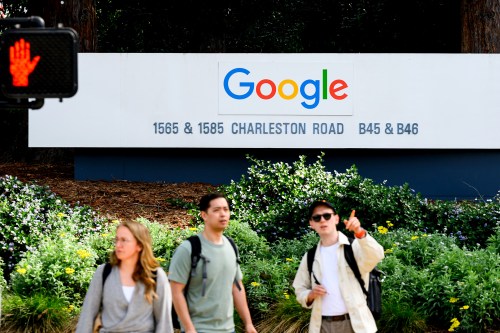
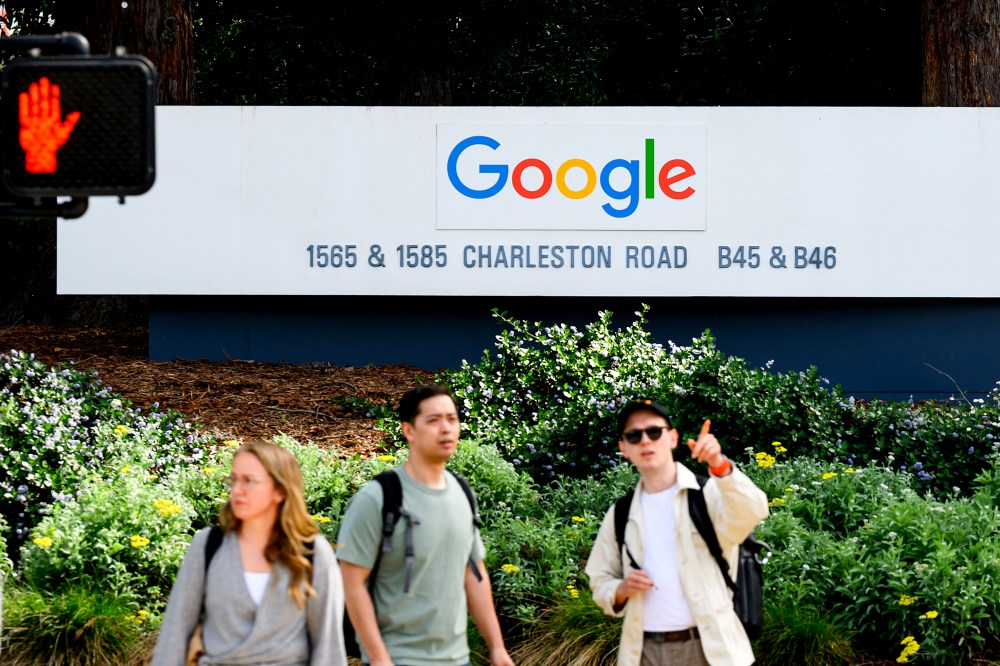
OTTAWA – Google is bringing its age assurance technology — which uses artificial intelligence to detect underage users — to Canada.
“Our age estimation model uses machine learning to interpret a variety of signals already associated with a user’s account, such as the types of information a user has searched for or the categories of videos they’ve watched on YouTube,” the company said in a blog post Monday.
The company says that if the technology identifies someone as underage, their Google account will be changed to include additional protections, such as safeguards on content recommendations.
If it mistakenly identifies an adult as being under 18, the company says that person will be able to prove their age using things like a government ID or a selfie.
“In the coming days, we’ll begin to gradually roll out this technology in Canada, carefully monitoring progress as we expand its availability,” Jeanette Patell, director of government affairs and public policy at Google Canada, said in the post.
She said the company won’t be collecting any new information that isn’t already associated with the user’s account.
“Age assurance technology is becoming more widely available, and we’re encouraged to see its increasing adoption by other companies in recent months,” Patell wrote.
“While some would like a system that imposes a universal arbiter of age, we believe that liability and responsibility rest with every service owner — the developer, the publisher, the app creator — because they know their users and services best.”
The increasing use of age assurance technology comes as governments around the world, including in Canada, move to implement age restrictions for social media.
Meta has already started using AI to identify underage users and place them in teen accounts in Canada. The company said in September it would expand testing of the technology to countries outside the United States., including Canada.
Meta uses AI to look at context clues, such as birthday celebrations, to identify accounts that may be underage. In May, it said it would add “visual analysis” as a technique — which involves AI scanning photos and videos for “visual clues” to a user’s age.
Meta promised to implement child protection measures, including stronger measures to identify underage users, as part of a massive recent legal settlement in the United States. But the company has confirmed those changes won’t be coming to Canada.
Google’s announcement comes after the Liberal government introduced digital safety Bill C-34.

The legislation, which has not yet become law, would force social media platforms to at least temporarily block access for kids under 16. The government has not yet decided how age verification would work and has said it will consult with platforms on specific methods.
In December, Australia became the first country to implement age restrictions for social media. It introduced a law that requires social media platforms to take reasonable steps to keep kids under 16 from using their services. The law doesn’t include standards for age verification.
In the United Kingdom, legislation sets out seven separate methods of age verification for legal access to adult content.
They include facial age estimation (which involves a third-party service using a live image to estimate age), a digital ID, or using a credit card, a mobile network operator or a bank to verify age. It also allows for the use of email to estimate age through a process that looks at where an email address has been used previously.
This report by The Canadian Press was first published Sept. 14, 2026.

Advertisement Advertise With Us
Advertisement Advertise With Us