

Inflation holds at 3% in August as high oil prices not spilling over: economists
Advertisement
Read this article for free:
or
Already have an account? Log in here »
To continue reading, please subscribe:

Digital Subscription
One year of digital access for only $205*
- Enjoy unlimited reading on winnipegfreepress.com
- Read the E-Edition, our digital replica newspaper
- Access News Break, our award-winning app
- Play interactive puzzles
*First annual payment billed as $205.00 + GST for one year. This annual subscription will automatically renew at $233.00 + GST every 52 weeks (10% off the regular annual price of $259.35). Offer available to new and qualified returning subscribers only. Cancel any time.
To continue reading, please subscribe:
Add Free Press access to your Brandon Sun subscription for only an additional
$1 for the first 4 weeks*
- Enjoy unlimited reading on winnipegfreepress.com
- Read the E-Edition, our digital replica newspaper
- Access News Break, our award-winning app
- Play interactive puzzles
*Your next Brandon Sun subscription payment will increase by $1.00 and you will be charged $17.95 plus GST for four weeks. After four weeks, your payment will increase to $24.95 plus GST every four weeks.
Read unlimited articles for free today:
or
Already have an account? Log in here »
OTTAWA – Canada’s inflation rate held steady in August, suggesting higher energy costs have yet to spill over significantly into broader consumer prices.
The consumer price index report released Monday by Statistics Canada showed the annual rate of inflation was unchanged at three per cent last month.
The inflation reading was in line with economists’ forecasts and could ease speculation of a Bank of Canada rate hike next month, said Benjamin Reitzes, BMO’s managing director of Canadian rates and macro strategist.
He said there was little in the inflation report to push the central bank toward an interest rate increase, potentially cooling market expectations of an October hike.
However, oil prices continued to be a real problem, which could “drive angst among policymakers and concern that it’s just a matter of time before we get some spillover into broader inflation,” Reitzes said in a note.
Financial odds of a hike at the central bank’s Oct. 28 meeting have jumped over the past week or so to 60 per cent as of midday Monday, according to LSEG Data & Analytics.
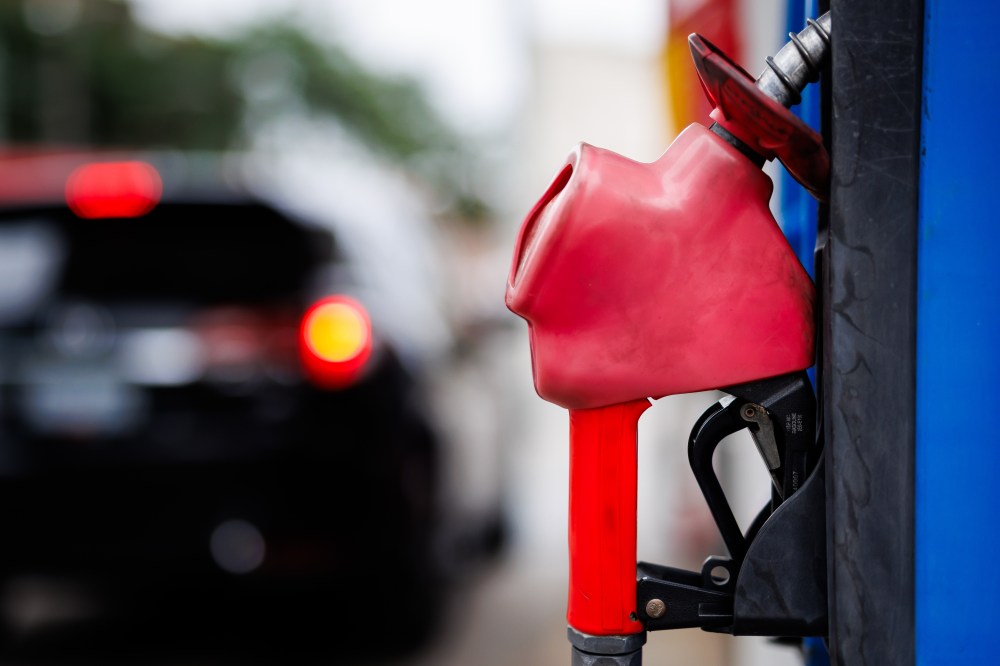
The conflict in the Middle East continued to drive up gasoline prices in August but just at a slower pace, with prices up 22.8 per cent compared with 25.7 a month earlier, StatCan reported.
Excluding gasoline, consumer prices rose 2.4 per cent last month.
The slowdown in rising gas prices was offset by higher costs for rent, travel tours and air travel.
Canadians paid more for travel amid rising fuel surcharges and as airlines adjusted to the sharp decline in Canadian travel to the United States in 2025, the agency said.
Rent prices also trended higher, increasing 2.8 per cent year-over-year in August, up from 2.5 per cent in July.
Consumers found some relief at the grocery store as food prices rose more slowly than overall inflation for the first time since July 2024, climbing 2.8 per cent year-over-year, according to StatCan.
Prices for dairy products like cheese and yogurt led the deceleration in grocery prices. StatCan said dairy prices rose 0.7 per cent in August compared with a 3.1 per cent rise in July.
Smaller price hikes for pork, condiments, spices and vinegars also added to the year-over-year slowdown in grocery inflation.
Still, overall food affordability is still a challenge for households, Royal Bank of Canada economist Abbey Xu said.
“The direction has been somewhat more encouraging recently,” she said in an interview. “We have seen food inflation overall ticking slightly lower for several months.

“But consumers might still feel it’s expensive to fill up their gas tanks and go to the grocery store,” Xu added.
“We’re seeing improvements but it doesn’t really make the household cost of living pressure any less significant.”
Consumers paid less for clothing in August, with annual prices edging down 1.1 per cent last month due to a 2.3 per cent drop in men’s clothing prices and a 1.9 per cent decline in children’s clothing.
Across Canada, the Atlantic provinces had the highest rates of inflation in August, with prices accelerating in Nova Scotia, Prince Edward Island and Newfoundland and Labrador, Statistics Canada said.

Overall, the August inflation data was “fairly reassuring” with core measures remaining around the Bank of Canada’s two per cent target and limited evidence that higher energy costs were spreading to other consumer prices, Xu said.
Yet the outlook for inflation and interest rates depends largely on how persistent higher energy prices prove to be, she said.
“If oil stays elevated for longer, then the risk of energy spillover will be higher” Xu said.
“So far we still have the Bank of Canada on hold for the remainder of 2026 and raising rates gradually beginning in 2027.”
This report by The Canadian Press was first published Sept. 14, 2026.