Silicon Valley shouldn’t self-regulate on AI safety, Cohere CEO says
Advertisement
Read this article for free:
or
Already have an account? Log in here »
To continue reading, please subscribe:

Digital Subscription
One year of digital access for only $205*
- Enjoy unlimited reading on winnipegfreepress.com
- Read the E-Edition, our digital replica newspaper
- Access News Break, our award-winning app
- Play interactive puzzles
*First annual payment billed as $205.00 + GST for one year. This annual subscription will automatically renew at $233.00 + GST every 52 weeks (10% off the regular annual price of $259.35). Offer available to new and qualified returning subscribers only. Cancel any time.
To continue reading, please subscribe:
Add Free Press access to your Brandon Sun subscription for only an additional
$1 for the first 4 weeks*
- Enjoy unlimited reading on winnipegfreepress.com
- Read the E-Edition, our digital replica newspaper
- Access News Break, our award-winning app
- Play interactive puzzles
*Your next Brandon Sun subscription payment will increase by $1.00 and you will be charged $17.95 plus GST for four weeks. After four weeks, your payment will increase to $24.95 plus GST every four weeks.
Read unlimited articles for free today:
or
Already have an account? Log in here »
TORONTO – Aidan Gomez, CEO of Canadian AI company Cohere, says a “small group of companies in Silicon Valley” shouldn’t be left in charge of ensuring AI is safe.
AI industry leaders have been warning about the dangers of the technology since an Anthropic researcher who quit last week said people in the industry fear AI could “kill us all.”
At the national investment summit in Toronto on Tuesday, Gomez pointed to a call by Anthropic CEO Dario Amodei for the U.S. government to loosen antitrust restrictions to allow companies to work on AI safety.
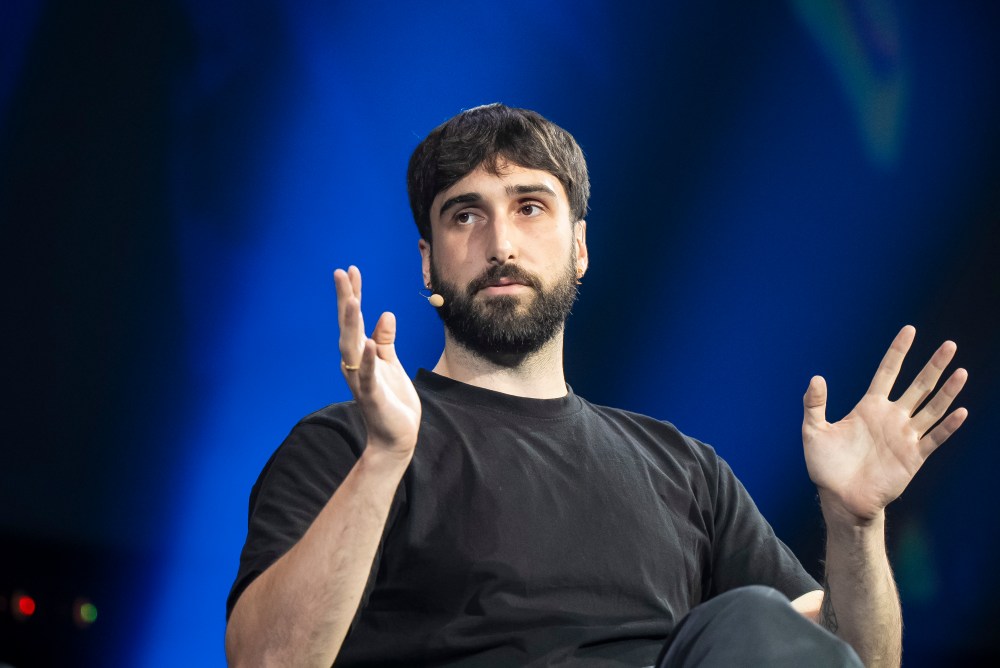
“I think any time you have a CEO asking for antitrust laws, which were developed to prevent cartels, to be temporarily and specifically relaxed for them, that should raise a little red flag,” Gomez said.
“The risks with this technology are real, but the way to go about preventing those risks is not going to be a small group of companies in Silicon Valley telling the world how to keep themselves safe.”
In a detailed post, Amodei said the pace of AI development should be slowed down, which would require industry coordination. Among other things, he suggested that while regulations are being developed, “AI companies can and should voluntarily work together to set standards.”
OpenAI CEO Sam Altman said he agreed with Amodei that “we need to pace the frontier,” while xAI CEO Elon Musk posted, “Dario is right.”
Gomez said Tuesday the solutions will come from the public and government, in consultation with industry.
Gomez also praised U.S. President Donald Trump’s opposition to calls for AI industry self-regulation.
But Trump has pushed back broadly on the idea of placing guardrails around the technology. He said Monday that efforts to limit AI technology amounted to a conspiracy.
“I am the Hoax Buster, and I’m right now breaking another Hoax — That AI is going to take over, consume, and destroy the World, and that Robots will be marching into our Cities, and getting rid of us all! This is even wilder than the RUSSIA, RUSSIA, RUSSIA HOAX, or the Global Warming Scam,” Trump said in one post.
Gomez argued the risks posed by AI must be confronted in a globally co-ordinated way.
“This is probably the most consequential technology humanity has ever developed,” he said.
Gomez said his company wants to “ensure that the world has a second rail to run on that is democratically aligned, that believes in those values and will protect democratic leadership through this geopolitical rupture that we’re facing.”
Artificial Intelligence Minister Evan Solomon said last week the warnings coming from the AI industry weren’t new and that there are both regulatory and technical solutions to the dangers posed by AI.
Solomon has often pointed to Cohere as an element of Canada’s strength in AI, saying Canada is one of only a few countries around the world with a large language model.
Gomez told reporters in Toronto his company is “excited” to work with the federal government on Canada’s leadership in AI technology.
“We’re uniquely positioned to lead, of course, with Cohere on the model layer, but also the infrastructure layer as well,” he said.
Gomez added the company has been “impressed” with the strategy the federal government is pursuing on AI.
“I think that Canada is positioning itself in a leadership role on the world stage, across all the different layers of the stack, including on issues like safety, and making sure that this technology gets deployed in an ethical way,” he said.
On the first day of the summit, Prime Minister Mark Carney and Saskatchewan Premier Scott Moe announced Bell Canada intends to quadruple the size of its planned AI data centre project in Saskatchewan, which is expected to bring in more than $50 billion in capital investment. Moe said the project would also help secure data sovereignty.
Massive increases to data centre capacity in Canada are in the works, even as the backlash against data centres grows across the country.
Gomez said Tuesday Canada should become a global leader on AI infrastructure but must do it “the right way.”
“We need to prove to the public that many of the fears around increasing carbon output, around environmental impacts, noise, etc., that we can build in a way that mitigates those risks,” he said. “So there’s a burden of proof on us, to show that our projects are better than the alternative elsewhere.”
In a speech at the start of the second day of the investment summit on Tuesday, Carney said Canada would build a “a sovereign broadband backbone that connects Canadians from coast to coast to coast with more direct and secure links to Europe and Asia.”
He told reporters that project would also extend to the Arctic.
The federal government’s national AI strategy, released earlier this summer, said Canada would “expand diverse high-capacity fibre lines and satellite connectivity, resulting in resilient network infrastructure with sovereign capabilities.”
This report by The Canadian Press was first published Sept. 15, 2026.
— Written by Anja Karadeglija in Ottawa and Craig Lord in Toronto

Advertisement Advertise With Us
Advertisement Advertise With Us