

Bank of England holds rates but appears ready to hike soon
Advertisement
Read this article for free:
or
Already have an account? Log in here »
To continue reading, please subscribe:

Digital Subscription
One year of digital access for only $205*
- Enjoy unlimited reading on winnipegfreepress.com
- Read the E-Edition, our digital replica newspaper
- Access News Break, our award-winning app
- Play interactive puzzles
*First annual payment billed as $205.00 + GST for one year. This annual subscription will automatically renew at $233.00 + GST every 52 weeks (10% off the regular annual price of $259.35). Offer available to new and qualified returning subscribers only. Cancel any time.
To continue reading, please subscribe:
Add Free Press access to your Brandon Sun subscription for only an additional
$1 for the first 4 weeks*
- Enjoy unlimited reading on winnipegfreepress.com
- Read the E-Edition, our digital replica newspaper
- Access News Break, our award-winning app
- Play interactive puzzles
*Your next Brandon Sun subscription payment will increase by $1.00 and you will be charged $17.95 plus GST for four weeks. After four weeks, your payment will increase to $24.95 plus GST every four weeks.
Read unlimited articles for free today:
or
Already have an account? Log in here »
LONDON (AP) — The Bank of England kept interest rates on hold Thursday while indicating that it could raise them soon in order to dampen inflationary pressures emanating from the fallout of the Iran war.
The decision was widely anticipated, with six members of the Monetary Policy Committee voting to keep rates unchanged, while three backed a quarter-point increase to 4%.
Though borrowing rates were kept on hold, financial markets think it’s more likely than not that the bank will back an increase at one of the next two policy meetings, either in November or December.
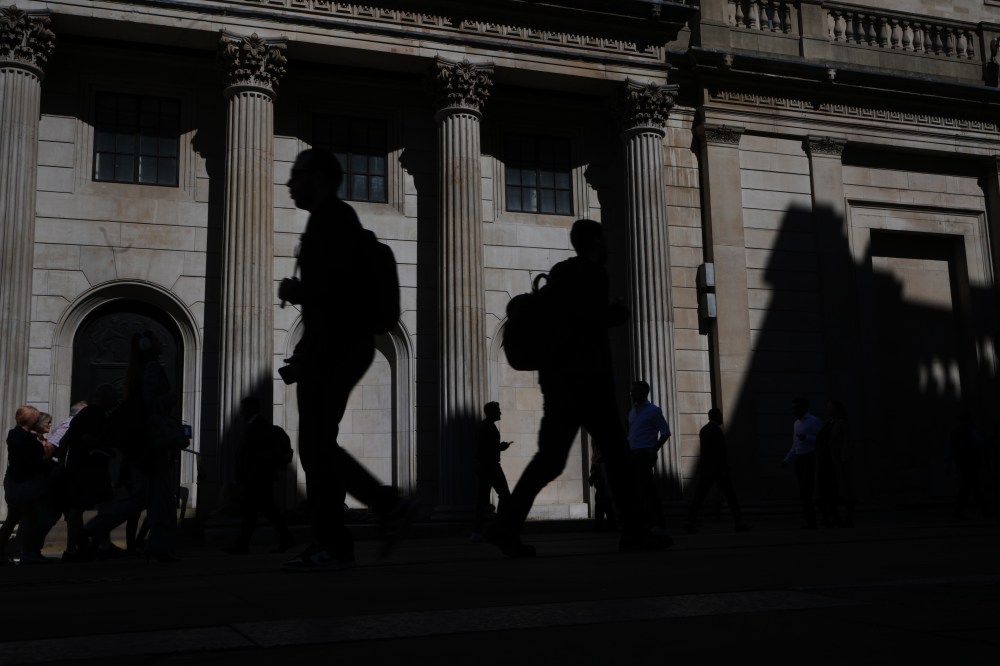
“So far higher global energy costs have had a limited effect on price and wage setting in the U.K.,” said Bank Governor Andrew Bailey. “But the longer this volatility persists, the bigger the impact it will have on inflation, and the more likely it is we will need to raise Bank Rate to ensure that inflation falls back to our 2% target.”
Like other central banks, the inflation outlook will be key. Some have already decided to start raising borrowing costs again, including the U.S. Federal Reserve on Wednesday.
The minutes accompanying the Bank of England’s decision showed that inflation is now expected to rise to around 4% in the first quarter of next year from the current 3.1% as households face another increase in their domestic energy bills. That would take inflation further above the bank’s target rate of 2%.

Interest rates in the U.K. had been trending downward from a 15-year high of 5.25% until the U.S. and Israel attacked Iran in late February. The Iran war led to sharp increases in oil and gas prices, partly because the crucial Strait of Hormuz has been largely closed to traffic ever since.
The Bank of England’s rate-setters meet on Nov. 5 and many economists believe that will be a natural moment for a change of course as they will be armed with the latest quarterly economic forecasts and Bailey will be subsequently holding a press briefing.
“So it is a natural starting point for a hiking cycle,” said Felix Feather, economist at asset management firm Aberdeen.
As well as impacting the cost of personal loans and mortgages, the uptick in interest rate expectations is a growing problem for the British government as the servicing of its debt accounts for a higher proportion of its spending.
Before the next meeting, the government will unveil its annual budget, which could have an impact on the inflation outlook and hence interest rate expectations.