

National Black Canadians Summit celebrates culture, combats racism

Advertisement
Read this article for free:
or
Already have an account? Log in here »
To continue reading, please subscribe:

Digital Subscription
One year of digital access for only $205*
- Enjoy unlimited reading on winnipegfreepress.com
- Read the E-Edition, our digital replica newspaper
- Access News Break, our award-winning app
- Play interactive puzzles
*First annual payment billed as $205.00 + GST for one year. This annual subscription will automatically renew at $233.00 + GST every 52 weeks (10% off the regular annual price of $259.35). Offer available to new and qualified returning subscribers only. Cancel any time.
To continue reading, please subscribe:
Add Free Press access to your Brandon Sun subscription for only an additional
$1 for the first 4 weeks*
- Enjoy unlimited reading on winnipegfreepress.com
- Read the E-Edition, our digital replica newspaper
- Access News Break, our award-winning app
- Play interactive puzzles
*Your next Brandon Sun subscription payment will increase by $1.00 and you will be charged $17.95 plus GST for four weeks. After four weeks, your payment will increase to $24.95 plus GST every four weeks.
Read unlimited articles for free today:
or
Already have an account? Log in here »
Despite the event’s name — the National Black Canadians Summit — Bruce Miller felt he should attend.
He booked a ticket. And so, this weekend, the Indigenous Manitoban joined roughly 1,500 people flocking to the RBC Convention Centre.
It’s a full schedule — addresses from a former Canadian governor general, sessions on Black mental health and anti-Black racism.
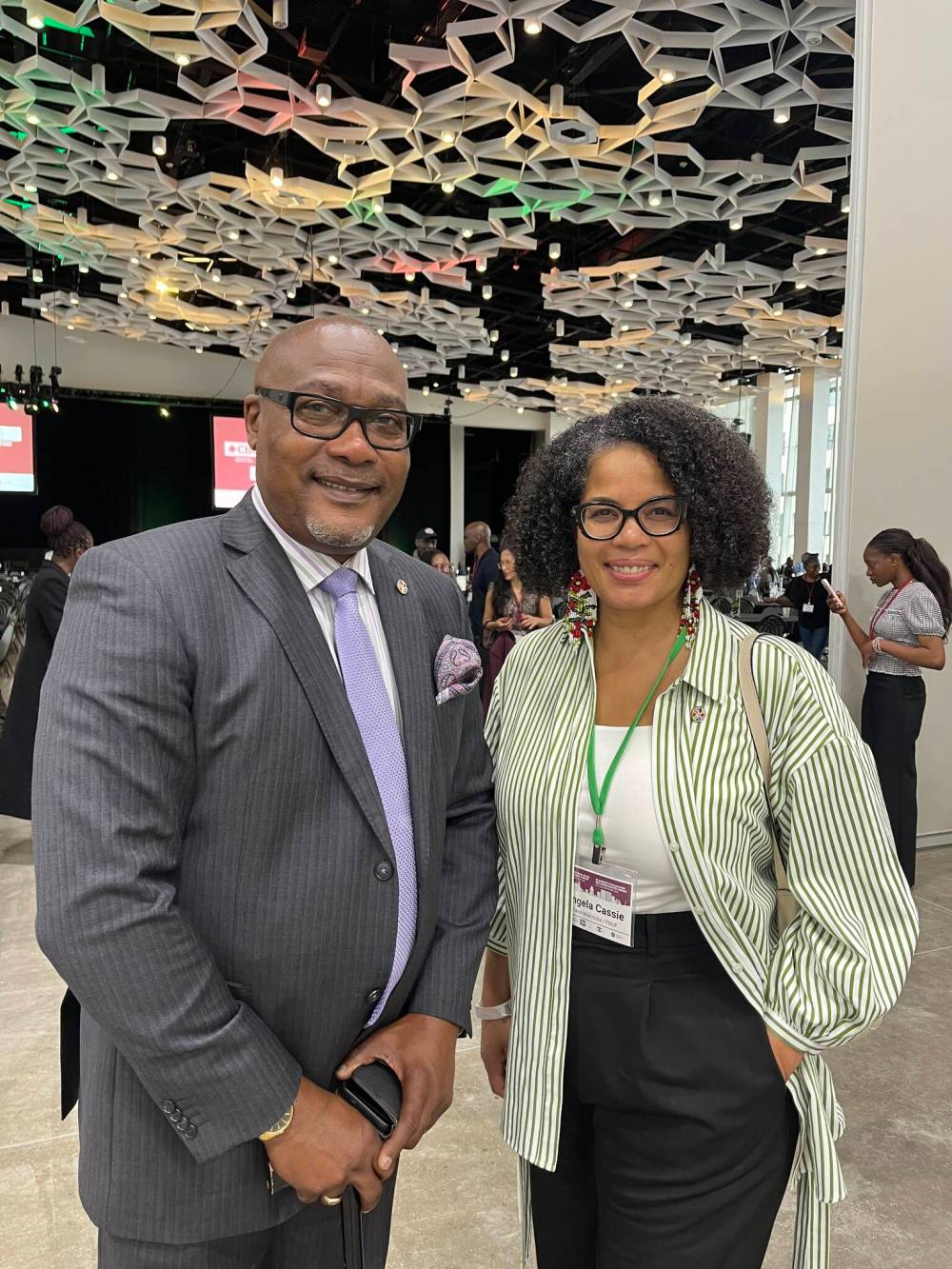
GABRIELLE PICHE / FREE PRESS
Edward Matwawana, executive director of the Michaëlle Jean Foundation, collaborated on the fifth National Black Canadians Summit with Angela Cassie, the summit’s chair.
The annual event draws politicians, artists and other professionals from across the country.
“I’m here to listen, to learn and acknowledge that shared history,” Miller said Saturday morning. “And, more importantly, how I can maybe contribute to being a better ally.”
Sept. 18 through 20 marks Winnipeg’s first time hosting the national summit, which is in its fifth year.
Organizers chose the theme “moving forward together.” A Friday night kickoff included celebrations from Manito Ahbee, an Indigenous organization, and African drumming and dancing.
“Racism is not a Black problem. It’s a Canadian problem,” said Edward Matwawana, executive director of the Michaëlle Jean Foundation, the entity behind the summit.
“It excludes. When you exclude, you are actually excluding talent.”
The United States has made headlines for its administration’s rollback of diversity, equity and inclusion programs. Canada’s racism is quieter, Matwawana said.
“It’s institutionalized,” he said. “I’ve seen situations where people have been in (their) department for a long time, no promotion. Why?
“They don’t give you a reason, but you know that reason is because you’re Black.”
The summit is meant to promote ideas and connect people. The Michaëlle Jean Foundation published a manifesto outlining issues affecting Black and racialized communities following its 2022 event.
It booked youth presenters for Winnipeg Friday night. More than 700 youth were on the attendance list, Matwawana said.
“We need youth. We need other racialized communities, and so on, to join us,” he said.
Ige Egal was slated to moderate a panel on anti-racism in sport Saturday. He spent part of his morning — his first-ever Winnipeg weekend — wending through booths of African fashion and Black history with Miller, a fellow sports industry professional.
“Racism in general has taken generations as a system to form, and it will take a lot of work — collectively within the community, and with allies — to basically unravel,” said Egal, who’s from Toronto.
Miller called the work “sometimes” lonely.
“When you come together collectively, it kind of fills your cup,” he added.
Angela Cassie, Travel Manitoba’s interim chief executive, chaired the summit. Manitobans who’d attended the summit in past years had flagged it to Winnipeg Economic Development and Tourism, she said.
The agency, alongside partners, worked to bring it to Manitoba.
“Very often, when we are in spaces at a national level with the Black community, we are not very well known as a Black community in Manitoba,” Cassie said.

The federal government counted 46,485 Black Manitobans in its 2021 census. In 1917, the province became home to North America’s first Black railway union, the Order of Sleeping Car Porters.
Manitoba has recently seen its first Black MLAs and city councillor. However, it’s lacked Black representation at the federal level, Cassie noted: “In terms of those seats of influence and power, we are still underrepresented.”
Higher incarceration rates and poorer healthcare are part of ongoing racial discrimination, she added.
Federal government staff who lead funding of Black-led organizations’ projects attended the summit, seeking new contacts. Ahead of the weekend, Winnipeg sites held African movie festivals, and Black-focused art and museum exhibits.
gabrielle.piche@winnipegfreepress.com
Gabrielle Piché reports on business for the Free Press. She interned at the Free Press and worked for its sister outlet, Canstar Community News, before entering the business beat in 2021. Read more about Gabrielle.
Every piece of reporting Gabrielle produces is reviewed by an editing team before it is posted online or published in print — part of the Free Press‘s tradition, since 1872, of producing reliable independent journalism. Read more about Free Press’s history and mandate, and learn how our newsroom operates.
Our newsroom depends on a growing audience of readers to power our journalism. If you are not a paid reader, please consider becoming a subscriber.
Our newsroom depends on its audience of readers to power our journalism. Thank you for your support.
Gabrielle Piché reports on business for the Free Press. She interned at the Free Press and worked for its sister outlet, Canstar Community News, before entering the business beat in 2021. Read more about Gabrielle.
Every piece of reporting Gabrielle produces is reviewed by an editing team before it is posted online or published in print — part of the Free Press‘s tradition, since 1872, of producing reliable independent journalism. Read more about Free Press’s history and mandate, and learn how our newsroom operates.
Our newsroom depends on a growing audience of readers to power our journalism. If you are not a paid reader, please consider becoming a subscriber.
Our newsroom depends on its audience of readers to power our journalism. Thank you for your support.

Advertisement Advertise With Us
Advertisement Advertise With Us