A simple row cover can save late-summer vegetables as frost threatens
Advertisement
Read this article for free:
or
Already have an account? Log in here »
To continue reading, please subscribe:

Digital Subscription
One year of digital access for only $205*
- Enjoy unlimited reading on winnipegfreepress.com
- Read the E-Edition, our digital replica newspaper
- Access News Break, our award-winning app
- Play interactive puzzles
*First annual payment billed as $205.00 + GST for one year. This annual subscription will automatically renew at $233.00 + GST every 52 weeks (10% off the regular annual price of $259.35). Offer available to new and qualified returning subscribers only. Cancel any time.
To continue reading, please subscribe:
Add Free Press access to your Brandon Sun subscription for only an additional
$1 for the first 4 weeks*
- Enjoy unlimited reading on winnipegfreepress.com
- Read the E-Edition, our digital replica newspaper
- Access News Break, our award-winning app
- Play interactive puzzles
*Your next Brandon Sun subscription payment will increase by $1.00 and you will be charged $17.95 plus GST for four weeks. After four weeks, your payment will increase to $24.95 plus GST every four weeks.
Read unlimited articles for free today:
or
Already have an account? Log in here »
Most of my summer vegetables are winding down now, the cooling temperatures serving as a cue that their mission has been nearly accomplished. But if frost threatens before the last of my tomatoes have turned red, I’ll drape a sheet of sheer fabric over their supporting cages to provide some warmth.
The white fabric sheets, sold as “row covers,” can be used two ways: floating, which is to say draped over plants, or hooped, which means affixing them to hoops inserted into the ground.
The latter method is more protective of fragile stems and foliage, as the hoops keep the fabric, however light, from crushing plant parts.
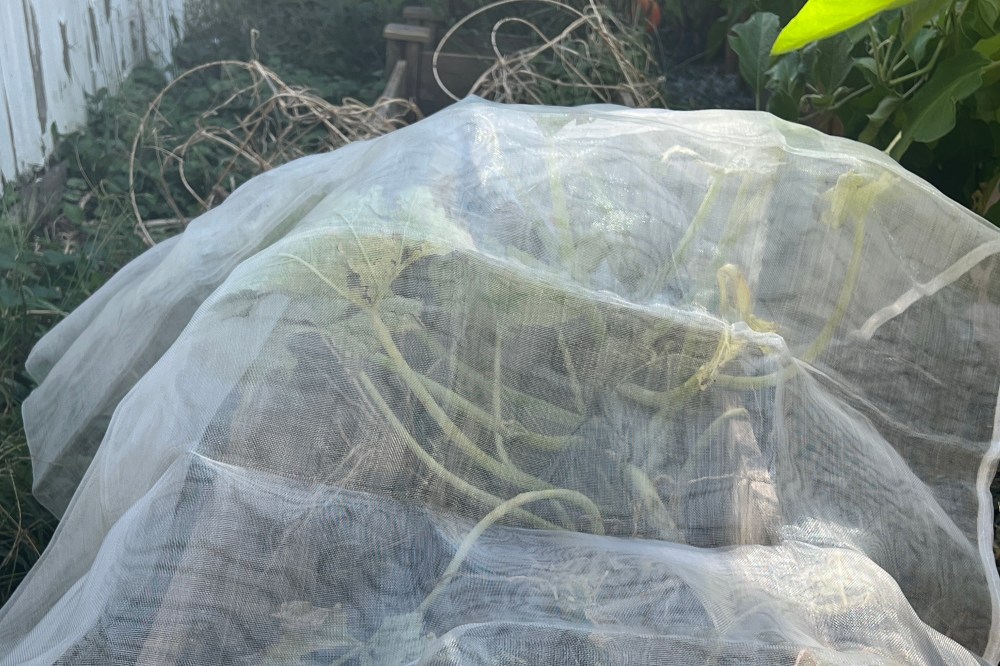
Row covers will also do a fantastic job of protecting cool-season vegetables, such as spinach, radishes, cucumbers, potatoes, kale and lettuces as colder weather arrives.
Consider which weight is best for your row covers
The UV-protectant sheets can’t perform miracles, of course. But they can raise the temperature around plants by up to 8 degrees F, which can mean the difference between life and death.
You’ll find row covers available in various sizes, and they can be easily trimmed to fit your needs, if necessary.
They’re also available in three weight grades. Lightweight materials offer only a couple degrees of protection, so they are primarily used as insect barriers in spring. They also allow roughly 90% of sunlight to reach plants.
Heavy fabrics provide the most warming, but block sunlight and water considerably. Their use also risks raising the temperature too high.
Medium-weight fabrics strike a balance by allowing 70% to 85% of sunlight to reach plants, and warming the surrounding air by 4-6 degrees F. That might not sound like much, but it can allow several extra weeks of growing time.
And protected brassicas (such as cabbages, broccoli and kale), leafy greens and root vegetables that survive the entire winter under covering will hit the ground running come spring, long before their spring-planted counterparts acclimate.
How to set up row covers
Drape floating covers loosely over low-growing plants and secure them by burying their edges in the soil or placing stones or bricks along the perimeter. Be sure to provide enough slack to allow for plant growth.
To protect taller or more fragile crops, buy ready-made hoops or make them yourself by bending flexible PVC piping into inverted U shapes, then inserting each end into the soil to create a frame. Drape the fabric over it. You’ll still need to secure the sheet’s edges to protect it from going airborne in the wind.
Row covers can be used over a single in-ground or potted plant, an entire row of crops or a raised bed.
Keep an eye on how the plants are growing under the row covers
With protection in place, you’ll still have to monitor your plants and weather conditions.
Assess the soil’s moisture levels periodically to ensure your plants are getting enough water.
Flowering plants that require pollination will need to be exposed to insects, so watch for open blossoms and remove covers to coincide with bloom times.
Regardless of the weight used, pull covers back on warm days to avoid “cooking” your vegetables before harvest.
___
Jessica Damiano writes weekly gardening columns for The Associated Press. She publishes the Weekly Dirt Newsletter. Sign up here for weekly gardening tips and advice.
___
For more AP gardening stories, go to https://apnews.com/hub/gardening.