

Average long-term US mortgage rate at highest level in nearly 3 years after 7th weekly rise in a row
Advertisement
Read this article for free:
or
Already have an account? Log in here »
To continue reading, please subscribe:

Digital Subscription
One year of digital access for only $205*
- Enjoy unlimited reading on winnipegfreepress.com
- Read the E-Edition, our digital replica newspaper
- Access News Break, our award-winning app
- Play interactive puzzles
*First annual payment billed as $205.00 + GST for one year. This annual subscription will automatically renew at $233.00 + GST every 52 weeks (10% off the regular annual price of $259.35). Offer available to new and qualified returning subscribers only. Cancel any time.
To continue reading, please subscribe:
Add Free Press access to your Brandon Sun subscription for only an additional
$1 for the first 4 weeks*
- Enjoy unlimited reading on winnipegfreepress.com
- Read the E-Edition, our digital replica newspaper
- Access News Break, our award-winning app
- Play interactive puzzles
*Your next Brandon Sun subscription payment will increase by $1.00 and you will be charged $17.95 plus GST for four weeks. After four weeks, your payment will increase to $24.95 plus GST every four weeks.
Read unlimited articles for free today:
or
Already have an account? Log in here »
Mortgage rates marched higher for the seventh week in a row, driving the average long-term U.S. home loan rate to its highest level in nearly three years.
The benchmark 30-year fixed-rate mortgage climbed to 7.40% from 7.28% last week, mortgage buyer Freddie Mac said Thursday. One year ago, the average rate was 6.30%.
The average rate is now the highest it’s been since Nov. 16, 2023, when it was at 7.44%.
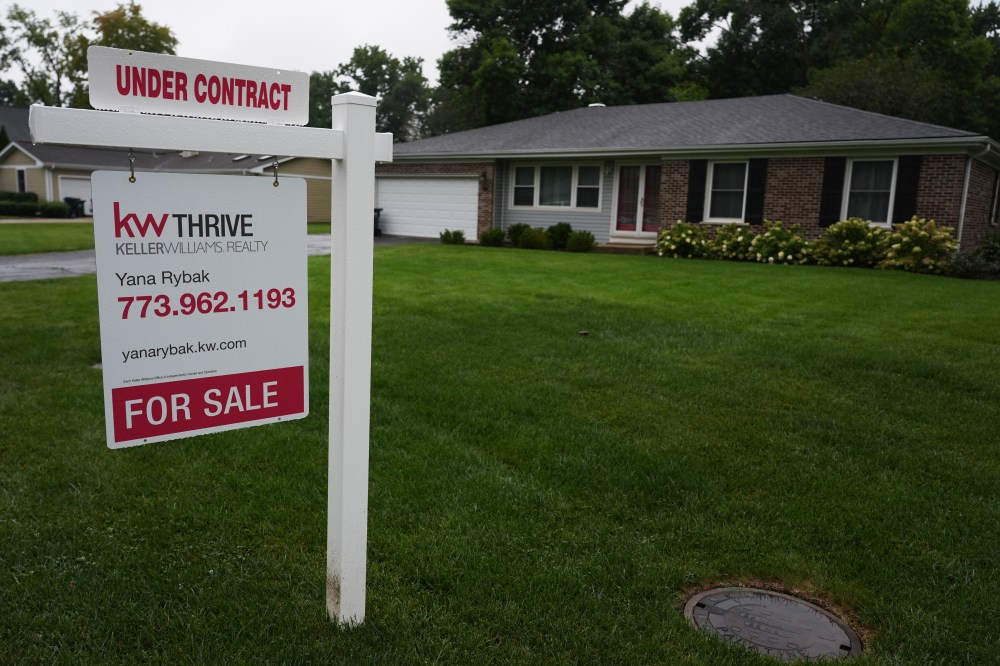
The housing market has been stuck in a rut this year in large part because of rising mortgage rates, which can add hundreds of dollars a month in costs for borrowers, limiting homebuyers’ purchasing power and prompting many to put off buying a home.
Borrowing costs on 15-year fixed-rate mortgages, often sought by borrowers refinancing a home loan, also rose this week. That average rate increased to 6.73% from 6.60% last week. A year ago, it was at 5.53%.
Mortgage rates have been climbing in the months since the start of the U.S. war with Iran in late February. The recent run-up in rates also reflects heightened bond market volatility as surging oil prices due to the war fuel inflation worries.
Rates on home loans are influenced by inflation, Federal Reserve policy and bond-market investors’ expectations for the economy, among other factors. They generally follow the trajectory of the 10-year Treasury yield, which lenders use as a guide to pricing home loans.
The 10-year Treasury yield has risen to its highest level since 2002 because of worries about high inflation, big government debt loads and other factors.
The yield was at 5.29% at midday Thursday on the bond market. That’s well above its 3.97% level from before the war with Iran began.
In late February, the average rate on a 30-year mortgage briefly dipped to 5.98%, its lowest level going back to late 2022. The 1.42 percentage point increase in the rate since then translates roughly into an additional monthly cost of $376 for a borrower financing a $400,000 home loan at the current average rate.
Depending on a borrower’s income, credit and other factors, they may qualify for a rate on a 30-year mortgage that is below or above the current average.

The U.S. housing market has been in a slump since 2022, when mortgage rates began to climb from pandemic-era lows. Sales of previously occupied U.S. homes were essentially flat last year, stuck at a 30-year low.
Last month, the National Association of Realtors said that existing home sales fell 2% in August from July to a seasonally adjusted annual rate of 3.98 million units. That was their slowest annual pace in more than a year.
The sharp rise in mortgage rates has many would-be homebuyers putting their home shopping plans on hold.
Mortgage applications, which include loans to buy a home or refinance an existing mortgage, fell for the fifth week in a row last week as mortgage rates kept climbing, according to the Mortgage Bankers Association.
Higher rates are also keeping many homeowners from refinancing their existing mortgage. Home loan refinance applications fell last week to their lowest level since January 2025 and were less than half last year’s pace, according to the MBA.