A botched execution and plans for one in public show the US is conflicted about capital punishment
Advertisement
Read this article for free:
or
Already have an account? Log in here »
To continue reading, please subscribe:

Digital Subscription
One year of digital access for only $205*
- Enjoy unlimited reading on winnipegfreepress.com
- Read the E-Edition, our digital replica newspaper
- Access News Break, our award-winning app
- Play interactive puzzles
*First annual payment billed as $205.00 + GST for one year. This annual subscription will automatically renew at $233.00 + GST every 52 weeks (10% off the regular annual price of $259.35). Offer available to new and qualified returning subscribers only. Cancel any time.
To continue reading, please subscribe:
Add Free Press access to your Brandon Sun subscription for only an additional
$1 for the first 4 weeks*
- Enjoy unlimited reading on winnipegfreepress.com
- Read the E-Edition, our digital replica newspaper
- Access News Break, our award-winning app
- Play interactive puzzles
*Your next Brandon Sun subscription payment will increase by $1.00 and you will be charged $17.95 plus GST for four weeks. After four weeks, your payment will increase to $24.95 plus GST every four weeks.
Read unlimited articles for free today:
or
Already have an account? Log in here »
Americans have long been divided over the death penalty, with nearly half of states banning capital punishment outright and just a handful of others carrying out most of the nation’s executions each year.
The longstanding but uneasy relationship with executing the nation’s worst criminals has been on clear display in recent weeks, first following a botched lethal injection in Tennessee and later after the military announced plans to livestream a death by firing squad. Both have prompted fresh calls for abolition from death penalty opponents and led supporters to publicly grapple with how to humanely carry out government executions.
When Christa Pike was sentenced to die in 1996 after being convicted of murdering a classmate, Tennessee was among 37 states that had capital punishment, and the number of annual executions in the U.S. was on the rise. Since then, 10 states have abolished capital punishment, and executions haven’t approached their late 1990s peak.
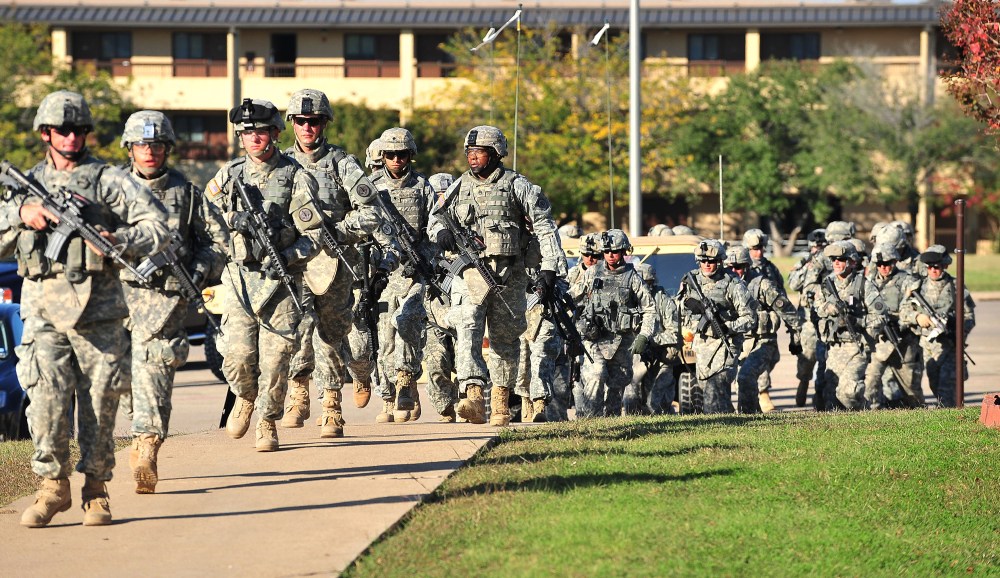
Still, it is unlikely the U.S. is headed for complete abolition. Thirty inmates have been executed this year, and another eight executions have been scheduled, most of them in Texas and Florida. The military’s planned firing-squad execution for Fort Hood shooter Nidal Malik Hasan is scheduled for Dec. 3.
Defense Secretary Pete Hegseth’s announcement Thursday that the military would livestream Hasan’s execution shocked even some capital punishment supporters. Vice President JD Vance on Friday questioned whether it would happen and said he wouldn’t watch. Retiring North Carolina Republican U.S. Sen. Thom Tillis called a livestream “beyond disgusting.”
American attitudes on the death penalty are complicated
While about two-thirds of U.S. adults see the death penalty as morally justified for people who have committed murder, according to a Pew Research Center poll conducted in July, about 6 in 10 say the death penalty does not deter crime. About 7 in 10 say there is some risk an innocent person would be put to death. Gallup’s trend suggests that support for capital punishment has fallen considerably since the 1990s.
Victims’ families are often among the most vocal advocates on either side of the debate. The family of Colleen Slemmer, whom Pike was convicted of killing, has supported Pike’s execution.
On the opposite side is Rachel Sutphin, a Presbyterian pastor whose father was killed in the line of duty as a sheriff’s deputy. The man convicted of killing him was the last person Virginia executed, in 2017. Sutphin was part of a coalition that successfully argued for abolishing the death penalty in the state in 2021. She said the Pentagon’s announcement was so shocking it might push her back into advocacy work.
“This place where (in) the name of revenge, taking an eye for an eye, has become socially acceptable and has almost become a form of entertainment — that very much concerns me,” she said.
In Tennessee, Republican legislators weren’t backing off their support for the death penalty after Pike survived her attempted execution Oct. 1. Instead, they contemplated returning to the electric chair or allowing firing squads. Idaho recently made the firing squad the state’s primary execution method, viewing it as more humane because the death is quicker and the chances of botching it are remote.
Idaho state Republican Rep. Bruce Skaug, a retired attorney who introduced that legislation, said he believes the death penalty should be rare but that once the court issues such a punishment, it’s the government’s duty to “carry it out properly.”
But Skaug was surprised by the Pentagon’s announcement and still pondering it Friday.
“That’s a difficult one for me to swallow.”
Public executions used to be common in the U.S.
From the Revolution and into the 20th century, American executions were often public and sometimes treated like mass entertainment. But no public executions have taken place since the late 1930s.
Brenner Fissell, vice president of the National Institute of Military Justice, said public executions “are seen by most civilized societies as grotesque and barbaric.” Almost every European nation has abolished capital punishment.
But, Fissell added, he did not know of any legal obstacles that would prohibit the administration from livestreaming Hasan’s execution.
“You don’t have a right to a secret death,” he said.
But Robert Blecker, a professor emeritus at New York Law School, said there are arguments in favor of making executions public. He said it forces the government to take responsibility for executing someone.
“Shouldn’t the people have access to what’s being done in their name?” he said. “If we can’t stomach and can’t tolerate it, then abolish it.”
Religious institutions highlight conflicting attitudes on death penalty
American culture is replete with portrayals of clergy being around execution, either advising and comforting the condemned or even occasionally giving a moral lecture from the gallows before a hanging. They have been a major part of the ongoing debate over capital punishment.
Blecker, who agrees with some criticism of how capital punishment is administered but believes it is morally appropriate in a few cases involving the worst criminals, said that idea came from the ancient Hebrews and Greeks. They felt that failing to adequately punish criminals polluted the population as a whole.
Hegseth’s church and denomination were co-founded by archconservative pastor Doug Wilson, who supports capital punishment.
Christian denominations such as the Southern Baptist Convention and the Lutheran Church–Missouri Synod support the death penalty, citing Biblical passages that mandate retributive justice under an authority granted by God to punish grave crimes. Supporters in these faith traditions view the death penalty as necessary to uphold the moral order and as a just response to the taking of innocent life.

But major religious denominations including the U.S. Conference of Catholic Bishops and several mainline Protestant denominations have taken official stances opposing the death penalty. Those positions are anchored in their theology of redemption and value for the “sanctity of life.”
Many clergy members, chaplains and volunteers from faith groups provide spiritual counseling, prayer and human connection to death row inmates and their families. Faith-based groups routinely organize prayer vigils and letter-writing campaigns while lobbying legislators to commute sentences or abolish capital punishment.
Archbishop Paul S. Coakley, president of the U.S. Conference of Catholic Bishops, on Friday issued a statement sharply condemning the military’s plans to livestream Hasan’s execution.
“This decision is a barbaric promotion of a culture of death and must be reconsidered,” he said.
__ Hanna reported from Topeka, Kansas; Rankin, from Richmond, Virginia, and Bharath from Los Angeles. Also contributing reporting were Associated Press writers Jeffrey Collins in Columbia, South Carolina, Gene Johnson in Seattle, and Tiffany Stanley in Washington.
The Free Press acknowledges the financial support it receives from members of the city’s faith community, which makes our coverage of religion possible.