Nepal’s devastating flood exposes the risks of resettling disaster survivors

Advertisement

Advertise with us

KHALTE, Nepal (AP) — When the flood came, Chheku Lama ran uphill, shouting for people to flee. A group followed him, but none survived, he said.

Read this article for free:


By clicking the button above, an account will be created and you will begin to receive some of our recommended newsletters. You may opt out of any newsletter by visiting your Email and Communication Preferences page or by clicking "unsubscribe" at the bottom of any email.

or

Already have an account? Log in here »

To continue reading, please subscribe:

Digital Subscription

One year of digital access for only $1.44 a week*

  • Enjoy unlimited reading on winnipegfreepress.com
  • Read the E-Edition, our digital replica newspaper
  • Access News Break, our award-winning app
  • Play interactive puzzles

*Billed as $5.77 plus GST every four weeks. After 52 weeks, price increases to the regular rate of $19.95 plus GST every four weeks. Offer available to new and qualified returning subscribers only. Cancel any time.

To continue reading, please subscribe:

Add Free Press access to your Brandon Sun subscription for only an additional

$1 for the first 4 weeks*

  • Enjoy unlimited reading on winnipegfreepress.com
  • Read the E-Edition, our digital replica newspaper
  • Access News Break, our award-winning app
  • Play interactive puzzles
Start now

*Your next Brandon Sun subscription payment will increase by $1.00 and you will be charged $17.95 plus GST for four weeks. After four weeks, your payment will increase to $24.95 plus GST every four weeks.

KHALTE, Nepal (AP) — When the flood came, Chheku Lama ran uphill, shouting for people to flee. A group followed him, but none survived, he said.

Lama’s Khalte village in Nepal’s Rasuwa district had been set up as a temporary settlement after a 2015 earthquake destroyed nearby villages. But it offered little protection from floods, with homes clustered along the Trishuli River in a narrow valley.

When the floodwaters surged through on Aug. 26, residents had few routes to escape. At least 375 people were reported missing, according to residents. The village was wiped out.
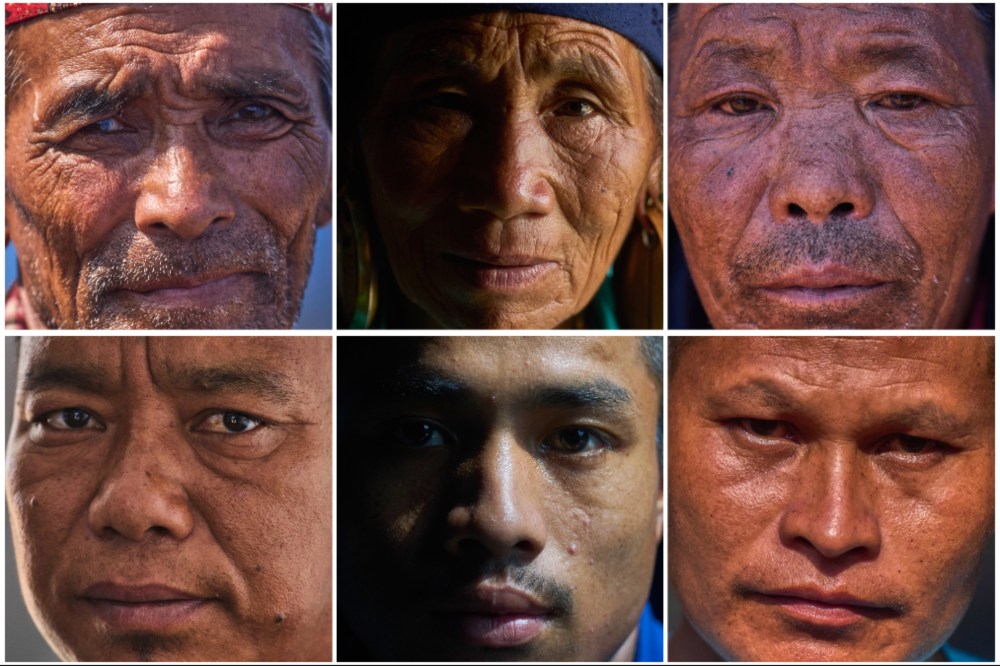
This combination of six posed photographs shows, clockwise from top left, Birbal Tamang, Nima Choying Tamang, Kancha Ghale, Norchi Ghale, Buddha Tamang, and Chheku Lama, all survivors of Nepal's 2015 earthquake and the flash floods in August this year, in Nepal's Nuwakot district, Sept. 23, 2026. (AP Photo/Niranjan Shrestha)

Nepal is still recovering from the devastating floods that killed more than 1,400 people and left thousands missing in its mountainous border region with China. Another flash flood in north-central Nepal last week left at least five people missing.

Over the past decade, tens of thousands of people in Nepal have been displaced by earthquakes, landslides and floods, only to face new risks in temporary settlements built in vulnerable areas. Khalte’s destruction highlights those dangers. Survivors say the government must go beyond emergency relief and temporary shelter to provide safe, permanent places where displaced people can rebuild their lives.

Khalte’s destruction exposes the risks of unsafe resettlement

The 2015 earthquake, which killed nearly 9,000 people nationwide, destroyed villages where many families had lived for generations. Under a government relocation plan, about 257 vulnerable households were moved to Khalte, which geological assessments later classified as a “red zone” because of landslide and avalanche risks.

Bam Bahadur Tamang, a Khalte resident now living in a government relief center, said he and many others had opposed the decision to resettle them there but they were eventually forced to move. He said any new relocation must account for both safety and access to basic services.

“Wherever the government resettles us now, it must first ensure that the place is safe,” he said. “We are not cattle to be moved from one place to another.”

Tamang’s worries point to a challenge that extends beyond finding safe ground. Displaced families also need access to schools, healthcare, roads and livelihoods if a temporary settlement is to become a viable home.

Nepal plans a new approach to disaster-hit settlements

Nepal’s government says it plans to build a new city for flood victims, with industries, hospitals and schools, and that displaced residents would not be sent back to settlements destroyed by the flood. It is also considering involving private developers in reconstruction, including a model in which they build homes in cooperation with landowners.

Dharam Raj Uprety, chief executive of Nepal’s National Disaster Risk Reduction and Management Authority, said the government was identifying land for settlements in safe areas. Experts would assess land use, and flood-prone areas could be declared uninhabitable, he said. The government could also convert vulnerable riverbanks into forest land and build homes on safer ground.

Uprety stressed, however, that agencies responsible for infrastructure and urban planning need to coordinate more closely.

“The disaster authority cannot do all of that work itself. Its role is largely to coordinate and create an environment in which other agencies incorporate disaster risk into their planning,” he said.

Nepal has previously taken steps to reduce flood risks, including river monitoring, early-warning systems and community preparedness. But its remote mountain valleys remain at risk of sudden floods caused by landslides and glacial lake outbursts.

Scientists warn that rising temperatures and increasingly unstable mountain landscapes make better monitoring and stronger early-warning systems ever more important for Nepal.

Rebuilding remains uncertain for Khalte’s survivors

For Khalte’s survivors the question of where to rebuild remains unresolved. Many are reluctant to return to places where they lost family members, saying a new relocation plan may do little to reassure them.

Norchi Ghale survived both the 2015 earthquake and the August floods, but suffered devastating losses, losing his father in the earthquake and his mother and wife in the floods.

Before the flood, he owned a small plot of farmland in Khalte, where he raised cattle that provided his family’s main source of income. When he recently returned, he could no longer recognize where anything had once stood.

“I could not even trace where things used to be, just like my future now. I don’t know where I will go or how I will raise my children,” he said.

——

Saaliq reported from New Delhi.

Report Error Submit a Tip

More Stories

Exchange welcomes new gallery

Jen Zoratti 3 minute read Preview

Exchange welcomes new gallery

Jen Zoratti 3 minute read Yesterday at 5:49 PM CDT

Co-owned by Laura Porath and Mike Page, Lucent Gallery + Design Studio celebrates its grand opening, Thursday.

Read
Yesterday at 5:49 PM CDT

You’re facing double trouble with infatuation

Maureen Scurfield 4 minute read Yesterday at 2:00 AM CDT

DEAR MISS LONELYHEARTS: I started enjoying the company of women in my running group so much that I ran more and more, and dropped 35 pounds over the summer and early fall. And in the summer I became attracted to a bisexual woman in the group.

At first, we claimed we were “doing OK” with the men we married. But now, feelings of all kinds are accelerating between us.

I must say I’ve suspected my husband has had another woman in recent years, but now it doesn’t bother me the same way. I finally understand wanting two people at one time. I tell myself I’m not “cheating” on anybody — because I’m not cheating on my husband with another man. But that’s not even fooling me, anymore. I’m feeling a lot more emotion for my female love interest.

So now what? I don’t want to disrupt my whole family, so should I keep it a secret for everyone’s sake? I must say the female object of my affection isn’t thinking of leaving her husband and family. I could be wrong, but I suspect she’s just having a fun time experimenting.

Jets out of tune against Blues

Ken Wiebe 7 minute read Preview

Jets out of tune against Blues

Ken Wiebe 7 minute read Updated: Yesterday at 8:29 AM CDT

ST. LOUIS – The issue is no longer limited to secondary scoring for the Winnipeg Jets.

Although they continue to be far too reliant on the top line for production, the Jets have suddenly been limited to not enough goals in a more general sense.

The latest example was a 2-1 loss Tuesday to the St. Louis Blues at Enterprise Center.

The Jets battled hard in this Central Division duel, but they’ve scored 24 goals in nine games (2.67 goals per game) and have one victory during the past five games after a 3-0-1 start. One of those losses did come in overtime (1-3-1).

Read
Updated: Yesterday at 8:29 AM CDT

Can’t have our cake and eat it, too

Mel Marginet 6 minute read Preview

Can’t have our cake and eat it, too

Mel Marginet 6 minute read 2:00 AM CDT

Last month, the City of Winnipeg said it would soon begin to study ways to improve pedestrian and cyclist safety along Osborne Street, which runs between two of the city’s densest neighbourhoods, where residents walk and bike for many of their daily activities. As someone who lives in South Osborne and who has frequented the shops and restaurants of the Village since my university days over 20 years ago, these changes can’t come soon enough.

Imagine my frustration when I read that this study of the street between Broadway and the St. Vital Bridge will take place “over the next year” to find “quick” solutions. We’ve all been through the COVID-19 pandemic, during which cities around the world found rapid solutions to improve safety and encourage more walking, biking and transit. Entire manuals have been published on easy things our city could try, literally this weekend, to improve the safety of Osborne Street.

Perhaps the reason this project is going to take a year can be found in this quote from David Patman, the city’s manager of transportation: “Osborne Street is currently serving multiple, competing functions … It exists in a dense, pedestrian-oriented development area that is close to rapid transit, which is at odds with the high flow of motor vehicles that travel daily along the corridor.”

Mr. Patman has correctly identified Osborne Street as a “stroad”. A stroad is a dangerous, inefficient combination of a street and a road. Stroads try to be the best of both worlds, and they fail at both. Charles Marohn, author of Strong Towns, offers the best analogy — a stroad is like a futon, which is both a terrible couch and an uncomfortable bed. You try to save money on two functions, but neither is right.

Read
2:00 AM CDT

Living a lie takes a toll on whole family

Maureen Scurfield 5 minute read 2:00 AM CDT

DEAR MISS LONELYHEARTS: My wife is no longer my life partner! To my mind, she’s just the mother of my children. She still lives with us and does the major part of the child care.

This summer she discovered I had a girlfriend, but she didn’t want to “break up our family,” as I earn a lot of money. Now she’s treating me like garbage. She’s pleasant to the kids and our cleaning help, but she doesn’t speak much to me, and is disposed to giving me lists for groceries and medication pickups via email, so I pay for almost everything.

The kids seem fine so far, because we haven’t broken up our family and we haven’t changed how we treat each other in front of them. We’re polite and we never fight.

Then just last weekend, my wife finally let me know she’d recently met someone she’s “seeing privately.” It’s a guy we both know from a sports activity the kids enjoy. That just makes me sick — and is upsetting me far more than breaking up.

A vote for public education

Shannon D. M. Moore and Melanie Janzen 4 minute read 2:00 AM CDT

On Wednesday, Oct. 28, Manitobans will head to the polls for municipal elections. Alongside their choices for mayors, reeves and councillors, voters will also have an opportunity to elect their school trustees.

In 2021, people across Manitoba rejected the government’s attempts to eradicate locally elected school boards and to centralize school governance. By defeating Bill 64, Manitobans demonstrated their commitment to maintaining locally elected school boards and to the ideals of public education.

School trustees are locally elected representatives who help govern their public school divisions. They make decisions about the direction and priorities of their school divisions, oversee budgets and help establish policies and programs that shape students’ educational experiences. Trustees also help determine how resources are allocated, advocate for the needs of students and communities and provide a link between local residents and the provincial government. They can raise — and address — concerns about class sizes, staffing, student supports, accessibility, school facilities and the resources educators need to do their jobs.

Despite the important role trustees play in communities across the country, school board elections in Canada have historically received little public or media attention. Low voter turnout for municipal elections (25 to 35 per cent), combined with ballot drop-off for the section on school trustees, single-digit turnouts for standalone school board elections and the number of trustees who run unopposed are all emblematic of the perception that school board elections are low stakes.