Life rarely goes according to plan. Here’s how to get better at adapting
Advertisement
Read this article for free:
or
Already have an account? Log in here »
To continue reading, please subscribe:
Digital Subscription
One year of digital access for only $1.44 a week*
- Enjoy unlimited reading on winnipegfreepress.com
- Read the E-Edition, our digital replica newspaper
- Access News Break, our award-winning app
- Play interactive puzzles
*Billed as $5.77 plus GST every four weeks. After 52 weeks, price increases to the regular rate of $19.95 plus GST every four weeks. Offer available to new and qualified returning subscribers only. Cancel any time.
To continue reading, please subscribe:
Add Free Press access to your Brandon Sun subscription for only an additional
$1 for the first 4 weeks*
- Enjoy unlimited reading on winnipegfreepress.com
- Read the E-Edition, our digital replica newspaper
- Access News Break, our award-winning app
- Play interactive puzzles
*Your next Brandon Sun subscription payment will increase by $1.00 and you will be charged $17.95 plus GST for four weeks. After four weeks, your payment will increase to $24.95 plus GST every four weeks.
Read unlimited articles for free today:
or
Already have an account? Log in here »
Will you get the job? What will the medical test results show? And what’s with that ominously vague email your boss sent?
Uncertainty and change have always been challenging to handle, for some people more than others, said Michel Dugas, a psychology professor at the University of Québec in Outaouais. There’s also today’s rapid changes in politics, technology and more.
We can all benefit from becoming more comfortable with not knowing, he said.
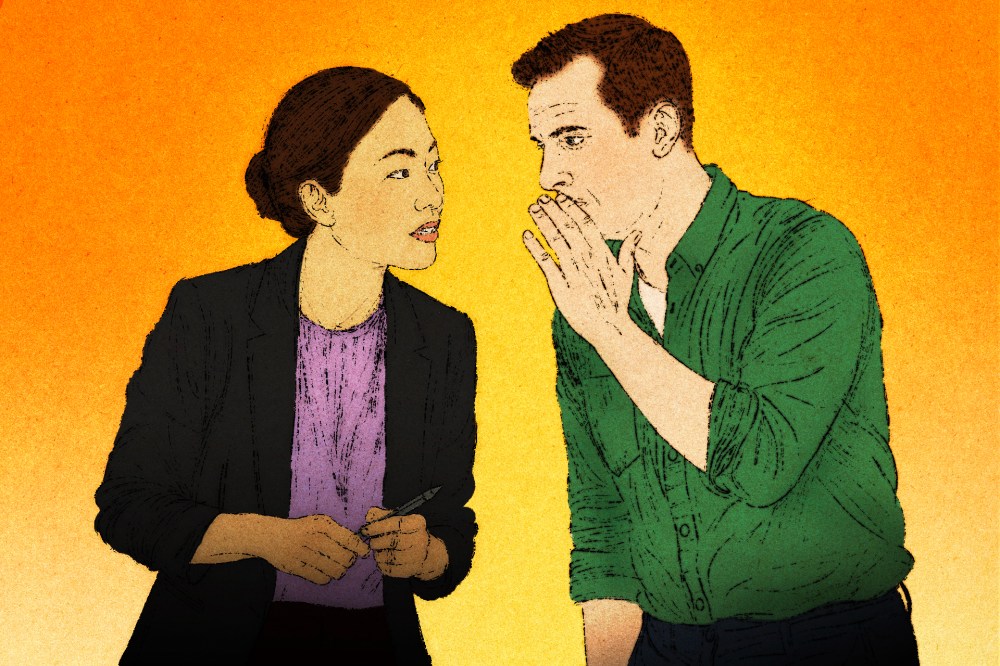
“Uncertainty is a fundamental part of life, whether it’s our relationships, our health, our finances,” Dugas said. “Learning to be able to deal with not knowing is a fundamental skill for quality of life.”
With effort, uncertainty can be not just tolerated, but embraced.
“Wouldn’t that be kind of boring if you always knew what would happen?” he said.
Why uncertainty bothers us
Discomfort with uncertainty exists on a continuum and changes with circumstances, said Nick Carleton, a psychology professor at the University of Regina in Saskatchewan, Canada. An unopened box may look exciting when it is surrounded by balloons, friends and the smell of cake. Unattended in a subway station, a box feels very different.
A degree of caution makes evolutionary sense.
“The people who absolutely loved uncertainty probably went into caves that they shouldn’t have and didn’t get to reproduce,” he said. “On the other hand, you also can’t be too scared of uncertainty, because the people who never left their safe space probably starved to death.”
Phones enable our desire to know everything right away
Jeroen van Baar, a psychiatric epidemiology researcher at the Boston University School of Public Health, and his colleagues examined 137 studies that have used the same scale to measure “intolerance of uncertainty” among college students since the 1990s. The term describes people whose reaction to not knowing is far more intense than the situation warrants.
They found that average scores had risen substantially.
One theory is that smartphones have made the problem worse by removing many everyday opportunities to practice not knowing. You might never get lost anymore. You can alert someone if you’re running late, and you can settle any bar debate about trivial facts immediately.
“The fact that we have mobile phones in our pockets allows us to know almost everything in an instant,” van Baar said. That may have “given us less opportunity to become comfortable with not knowing, and to experience that we are OK when we don’t know what’s going to happen.”
Practice living without an answer
When the line between general unease with not knowing crosses into anxiety that interferes with daily life, people should seek professional help, said Dugas. Treatments can include behavioral experiments that safely expose people to uncertainty.
One of Dugas’ patients who worried intensely about grades was asked to wait 48 hours before checking a test result that had been posted online. The patient’s distress was intense at first, Dugas said, but diminished considerably by the second day.
“New learning can only really happen when you experience what you’re afraid of,” he said.
Smaller experiments might include briefly leaving the phone at home, or making a low-stakes decision without asking others for reassurance.
When a genuine problem arises, said Ryan Jane Jacoby, a clinical psychologist and researcher at Massachusetts General Hospital, resist the urge to eliminate every unknown. When plans for a trip are disrupted, for example, ask whether the problem is within your control and can be solved.
If it can, narrow the possibilities to three or four reasonable options, weigh their advantages and disadvantages, and make a decision. Then resist repeatedly reconsidering it.
“There probably is no perfect choice,” she said.
When nothing can be done, Jacoby recommends shifting from problem-solving to acceptance. Mindfulness or an absorbing activity can redirect attention from repetitive thoughts to the present.
Think like a kid and be open to the opportunities in surprises
Embracing uncertainty does not mean ignoring danger, suppressing disappointment or insisting that every setback is positive.
In her book “Comfortable with Uncertainty,” prominent American Buddhist Pema Chodron writes that practitioners are warriors of nonaggression who accept that they can never know what will happen next.
“We can never avoid uncertainty,” she writes. “This not-knowing is part of the adventure.”
Carleton recommended acknowledging the negative emotions. Then ask yourself whether something worthwhile might emerge from a disruption, without assuming it will.
Jacoby suggested remembering what it was like as a kid, when surprises were exciting.
“Kids embrace the curveballs, and I think as we get older, we tend to worry more and think about all of the potential uncertainties,” she said.
Adds Dugas: “If you are not able to deal with the fact that the universe is uncertain, you are going to have a really difficult time being happy and having a good quality of life.”
___
EDITOR’S NOTE: Albert Stumm writes about wellness, travel and food. Find his work at https://www.albertstumm.com