

The number of people using food banks continues to rise in Quebec
Advertisement
Read this article for free:
or
Already have an account? Log in here »
To continue reading, please subscribe:
Digital Subscription
One year of digital access for only $1.44 a week*
- Enjoy unlimited reading on winnipegfreepress.com
- Read the E-Edition, our digital replica newspaper
- Access News Break, our award-winning app
- Play interactive puzzles
*Billed as $5.77 plus GST every four weeks. After 52 weeks, price increases to the regular rate of $19.95 plus GST every four weeks. Offer available to new and qualified returning subscribers only. Cancel any time.
To continue reading, please subscribe:
Add Free Press access to your Brandon Sun subscription for only an additional
$1 for the first 4 weeks*
- Enjoy unlimited reading on winnipegfreepress.com
- Read the E-Edition, our digital replica newspaper
- Access News Break, our award-winning app
- Play interactive puzzles
*Your next Brandon Sun subscription payment will increase by $1.00 and you will be charged $17.95 plus GST for four weeks. After four weeks, your payment will increase to $24.95 plus GST every four weeks.
Read unlimited articles for free today:
or
Already have an account? Log in here »
MONTRÉAL – A new report says the demand at Quebec food banks is continuing to break records.
The 2026 Hunger Count report was published by Food Banks of Quebec.
It says the food banks are now fulfilling 3.27 million requests each month.
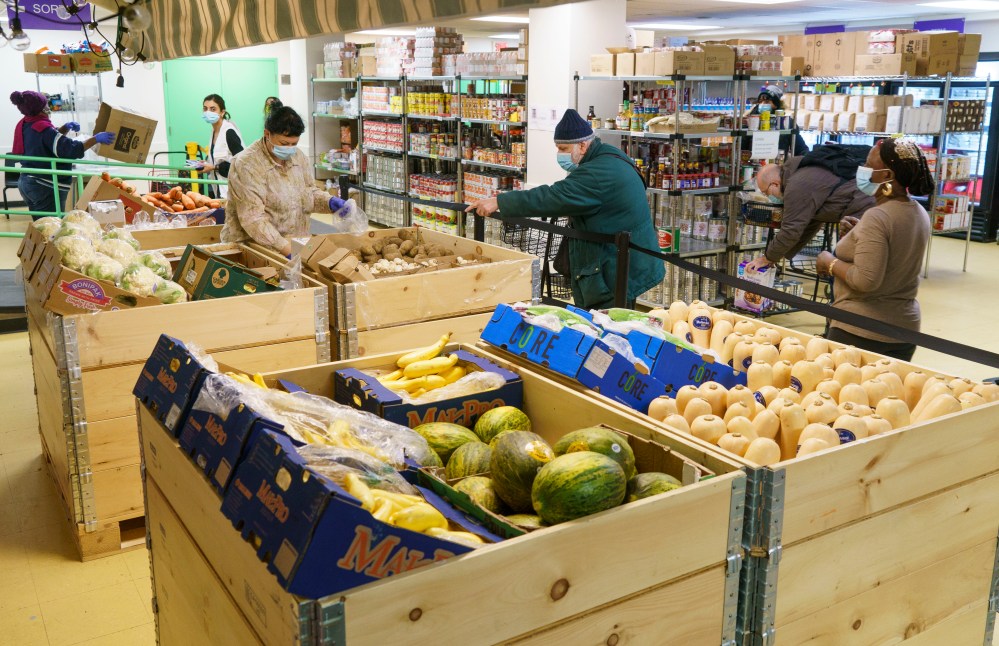
But close to 14 per cent of the network’s 1,400 community organizations say they had to turn people away because of food shortages.
The report adds that 70 per cent of organizations say they faced a shortage in the last year.
The report says the situation has been deteriorating since the pandemic.
“Needs remain at a historically high level,” Food Banks of Quebec Executive Director Alexandre Lebel told The Canadian Press. “There are far too many people who still have to rely on food assistance.”
Among the households assisted in 2026, nearly a quarter derive most of their income from a job, shows the report.

“Having a job doesn’t necessarily protect you from food insecurity,” says Lebel.
Chantal Vézina, executive director of Moisson Montréal, says that inflation is making it harder for households to get out of difficult financial situations.
“Unfortunately, food is a discretionary expense, and people will do whatever it takes, of course, to avoid ending up on the street,” she says.
Children account for around one-third of recipients in food banks, says Lebel.
This report by The Canadian Press was first published Oct. 21, 2026.