

Feds investing $1 billion for road to Ring of Fire in Ontario: Carney
Advertisement
Read this article for free:
or
Already have an account? Log in here »
To continue reading, please subscribe:
Digital Subscription
One year of digital access for only $1.44 a week*
- Enjoy unlimited reading on winnipegfreepress.com
- Read the E-Edition, our digital replica newspaper
- Access News Break, our award-winning app
- Play interactive puzzles
*Billed as $5.77 plus GST every four weeks. After 52 weeks, price increases to the regular rate of $19.95 plus GST every four weeks. Offer available to new and qualified returning subscribers only. Cancel any time.
To continue reading, please subscribe:
Add Free Press access to your Brandon Sun subscription for only an additional
$1 for the first 4 weeks*
- Enjoy unlimited reading on winnipegfreepress.com
- Read the E-Edition, our digital replica newspaper
- Access News Break, our award-winning app
- Play interactive puzzles
*Your next Brandon Sun subscription payment will increase by $1.00 and you will be charged $17.95 plus GST for four weeks. After four weeks, your payment will increase to $24.95 plus GST every four weeks.
Read unlimited articles for free today:
or
Already have an account? Log in here »
The federal government will put down $1 billion to help build a controversial road to the Ring of Fire region in northern Ontario, Prime Minister Mark Carney said Wednesday.
The region is said to be rich in nickel, chromite, copper and gold and Carney said its development will secure Canada’s critical mineral supply chain.
“Canada is matching Ontario’s $1-billion investment to build road infrastructure to reach the Ring of Fire,” Carney said as he and Premier Doug Ford announced in Ottawa an $8.7-billion joint plan to help Ontario’s tariff-affected industries, including steel and automotive sectors.
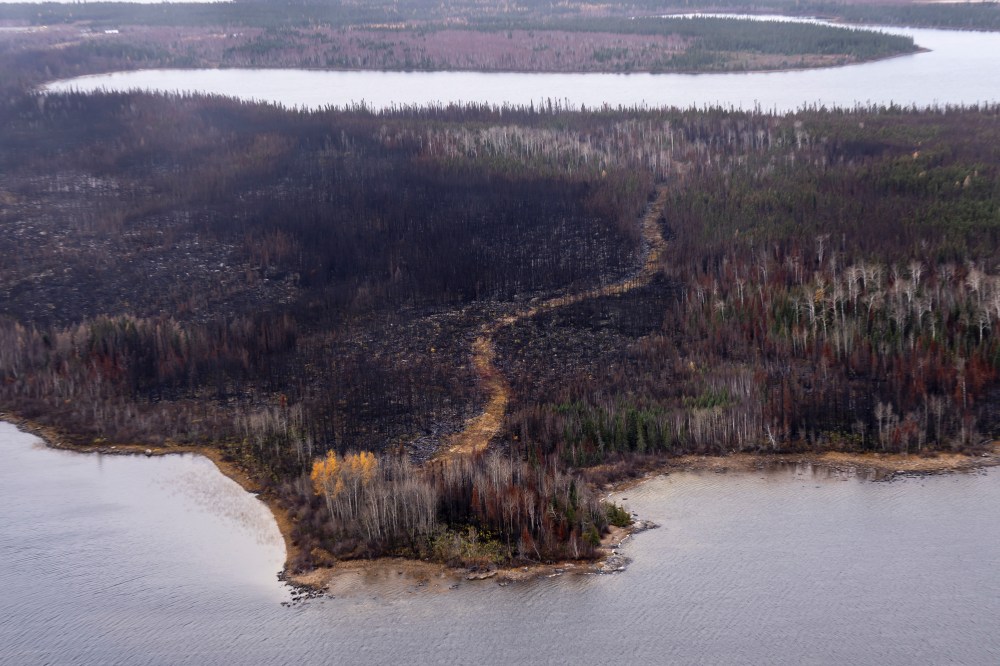
The Ring of Fire sits partially in the James Bay lowlands, part of North America’s largest wetland, and is home to a number of remote, fly-in First Nations. Its mineral development has been a major focus for Ford since he took office in 2018.
“We can secure a sovereign supply chain and bolster Canada’s position as a critical minerals leader,” Carney said. “Now, to build those mines, we need roads.”
Earlier this year, Ford announced construction had begun on two of the roads that will eventually connect the provincial highway system to the mining area some 500 kilometres north of Thunder Bay, Ont.
Ford had long called for the federal government to match the province’s $1-billion investment in the road project. Ontario’s previous Liberal government had also asked Ottawa to match that money.
“Last December, I joined the prime minister here in Ottawa to sign an agreement that would eliminate federal duplication for the roads to the Ring of Fire,” Ford said Wednesday.
“Thanks to that agreement, we got shovels in the ground on the roads to the Ring of Fire this summer and are well on our way to unlocking, as the prime minister mentioned, 70,000 jobs and $22 billion in economic activity that will be powered by the Ring of Fire’s critical minerals.”
The province has signed partnerships with three First Nations who want the road, while many others are decidedly against it.
Webequie First Nation and Marten Falls First Nation, both remote fly-in communities, want a road to connect to the provincial highway system as well as the economic opportunities in mining the Ring of Fire. They both say it will lift their communities out of poverty.
Aroland First Nation sits further south and its road will be upgraded to handle greater traffic.
Australian mining giant Wyloo and Juno Corp, a Canadian junior mining company, own the vast majority of stakes claimed in the Ring of Fire. Wyloo has proposed to build several mines up north if the road gets built, including a large underground nickel mine.
However, many other First Nations in northern Ontario are against the proposed road and mines. They say they haven’t been consulted and the development will change their way of life.
Neskantaga First Nation and Attawapiskat First Nation have built a settlement where the proposed road will cross the Attawapiskat River. The Canadian Press visited the region last year, including the settlement, where community members plan to block the road whenever construction crews arrive, years from now.
Sol Mamakwa, the provincial New Democrat who represents the riding of Kiiwetinoong, where the Ring of Fire sits, said he was dismayed by the latest news.
He said First Nations are livid at several pieces of provincial and federal legislation, some that have become law, which propose to speed up approvals of large projects, including mines.
“I’ve talked to enough people on the ground that live on these lands for a long time, they’ll be there to protect them and I stand with the rights holders,” Mamakwa said. “Without the proper, free, prior informed consent … I think that’s going to become an issue.”
Carney said speeding up mine approvals will be imperative, framing it as a way to counter U.S. President Donald Trump’s tariffs on Canadian goods.
But the prime minister said Canada and Ontario are creating “a working group to engage with local Indigenous communities so together we’ll identify opportunities for economic development, conservation and Indigenous protected areas.”

Mamakwa said those words are meaningless.
“It’s just two white men in Ottawa deciding what’s going to happen with our lands,” he said.
“That project will not happen.”
This report by The Canadian Press was first published Oct. 21, 2026.
–With files from Sarah Ritchie in Ottawa