

Ferrets roam Canadian Prairies once more
Advertisement
Read this article for free:
or
Already have an account? Log in here »
To continue reading, please subscribe:
Digital Subscription
One year of digital access for only $1.44 a week*
- Enjoy unlimited reading on winnipegfreepress.com
- Read the E-Edition, our digital replica newspaper
- Access News Break, our award-winning app
- Play interactive puzzles
*Billed as $5.77 plus GST every four weeks. After 52 weeks, price increases to the regular rate of $19.95 plus GST every four weeks. Offer available to new and qualified returning subscribers only. Cancel any time.
To continue reading, please subscribe:
Add Free Press access to your Brandon Sun subscription for only an additional
$1 for the first 4 weeks*
- Enjoy unlimited reading on winnipegfreepress.com
- Read the E-Edition, our digital replica newspaper
- Access News Break, our award-winning app
- Play interactive puzzles
*Your next Brandon Sun subscription payment will increase by $1.00 and you will be charged $17.95 plus GST for four weeks. After four weeks, your payment will increase to $24.95 plus GST every four weeks.
Read unlimited articles for free today:
or
Already have an account? Log in here »
Hey there, time traveller!
This article was published 03/10/2009 (6090 days ago), so information in it may no longer be current.
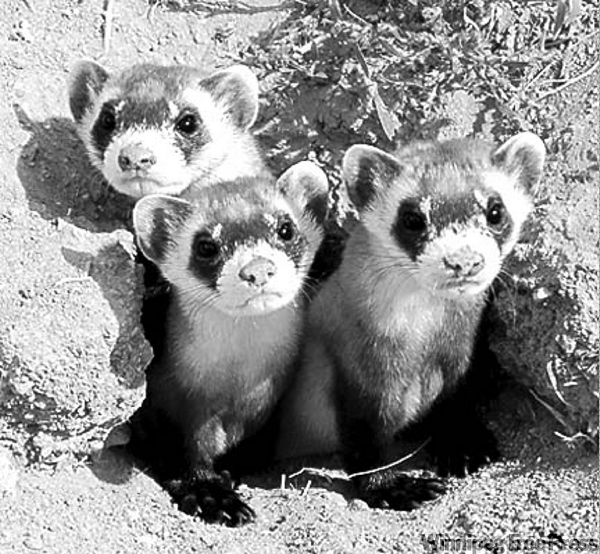
VAL MARIE, Sask. — With a hesitant first step and a shy glance around, a black-footed ferret exited a small animal carrier and made a big return to the Canadian Prairies.
Thirty-four of the small, furry creatures — once feared to be extinct — were released in Grasslands National Park in southern Saskatchewan on Friday as a part of a plan to reintroduce the species to the wild.
“This is huge,” says Maria Franke, curator of mammals at the Toronto Zoo.
“It’s huge in many aspects because it does fulfil one of the key goals of the overall recovery objectives. But it’s also huge because it’s an extirpated species in Canada.”
The black-footed ferrets were last seen in Canada in southwestern Saskatchewan in 1937.
They relied on black-tailed prairie dogs for food and even use the prairie dogs’ burrows for their own shelters. But prairie-dog colonies dropped dramatically at the turn of the last century, largely from the impacts of farming. With the loss of their prey and deaths from a sylvatic plague, the black-footed ferrets disappeared.
Wildlife officials thought the ferret was extinct until a small number was found in Wyoming in 1981.
At one point there were just 18 ferrets left and the decision was made to launch a captive breeding program that includes the Toronto Zoo.
Since 1991, the ferrets have been successfully reintroduced to 17 sites in the U.S. and one in Mexico. This is their first foray back into Canada and officials say it’s an important move.
“If you want a healthy Prairie ecosystem that includes ferrets,” says Franke.

Pat Fargey, a species-at-risk biologist with Parks Canada at Grasslands National Park, says he thinks the odds of the ferrets surviving in Canada are “pretty good.” That’s because the plague hasn’t been found here and because all of the black-tailed prairie dogs in Canada exist within Grasslands National Park or the surrounding area.
“I think there’s a good chance that we can have a sustaining small population,” says Fargey.
About half of the ferrets released Friday were born at the Toronto Zoo. They were shipped to a wildlife centre in the U.S. for “ferret boot camp” — where they exercised their hunting and survival skills before their reintroduction to Grasslands.
Another 30 to 40 of the ferrets will be reintroduced every fall for the next four or five years.
— The Canadian Press