

Mr. Big hears the secrets
But sometimes, the confession won't stand up

Advertisement
Read this article for free:
or
Already have an account? Log in here »
To continue reading, please subscribe:
Digital Subscription
One year of digital access for only $1.44 a week*
- Enjoy unlimited reading on winnipegfreepress.com
- Read the E-Edition, our digital replica newspaper
- Access News Break, our award-winning app
- Play interactive puzzles
*Billed as $5.77 plus GST every four weeks. After 52 weeks, price increases to the regular rate of $19.95 plus GST every four weeks. Offer available to new and qualified returning subscribers only. Cancel any time.
To continue reading, please subscribe:
Add Free Press access to your Brandon Sun subscription for only an additional
$1 for the first 4 weeks*
- Enjoy unlimited reading on winnipegfreepress.com
- Read the E-Edition, our digital replica newspaper
- Access News Break, our award-winning app
- Play interactive puzzles
*Your next Brandon Sun subscription payment will increase by $1.00 and you will be charged $17.95 plus GST for four weeks. After four weeks, your payment will increase to $24.95 plus GST every four weeks.
Read unlimited articles for free today:
or
Already have an account? Log in here »
Hey there, time traveller!
This article was published 31/10/2009 (6062 days ago), so information in it may no longer be current.
WINNIPEG – It’s like a scene from a Hollywood movie: A criminal organization, drunk with power and money, comes along with an opportunity too glorious to resist.
But this is the "Mr. Big" sting, where most of the actors are undercover police and the main role is played by a man — it seems always to be a man — who isn’t aware he’s an actor in a fictional production. But if the script works out, the unwitting actor delivers his lines: He confesses to a crime.
Police see Mr. Big as a costly last resort when all else has failed to bring a suspected killer to justice. More than 100 have reportedly been conducted since the early 1990s —- including several prominent ones here in Manitoba.
There have been a few well-publicized successes. But there have also been catastrophic failures. Undercover operations are banned in the United States and Britain on the grounds they can lead to entrapment of suspects, false confessions and wrongful convictions. Many defence lawyers have called for a similar move in Canada.
In 2001, the Free Press and the Brandon Sun led the legal charge to lift the veil of secrecy on Mr. Big police stings. In a bid to publish details of the secret undercover operation the RCMP used in the investigation of the 1996 murder of 14-year-old Amanda Cook, the newspapers had to fight all the way to the Supreme Court of Canada.
When the highest court in the country sided with the Free Press and Sun, not only was the public finally able to read about the sting that led to the arrest of George Mentuck — who was eventually acquitted after his confession was found to be unreliable — but an important legal precedent was set.
The debate over banning the stings is on once again following the case of Kyle Unger, who was the subject of Manitoba’s first Mr. Big sting. Unger, now 39, spent 14 years in prison for a murder justice officials now say he didn’t commit. He was acquitted earlier this month after his original convicted was quashed, leading to a federal review of his case.
Unger has always claimed he lied about his involvement as a means of trying to make more money.
Brigitte Grenier, 16, was killed during an outdoor rock concert near Roseisle in June 1990. Her mutilated body was found by a nearby creek. RCMP suspected Unger was involved and sent two Mounties posing as tourists with a broken motorhome to a small hobby farm where Unger was working.
The men offered to work around the farm to pay for their stay while parts were being ordered for repairs. They befriended Unger and offered him the chance to make some easy cash by delivering packages. Unger was repeatedly questioned about his criminal past but denied involvement in Grenier’s killing. That changed when he met "Big Larry," the boss of the fictional organization. The confession Unger gave "Big Larry," and which he now says was false, helped put him in prison.
When Mr. Big is called in, police have to be subtle and have a detailed script.
They usually prepare a comprehensive character profile of their target.
The fictional criminal organization is structured much like a Fortune 500 company. The mysterious Boss oversees a number of "lieutenants" who are spread out across the country. They live the good life — but discreetly. The Boss wants his underlings to blend in with their environment, because the key to a successful operation is staying in the shadows.
Beneath the lieutenants are "prospects" — they perform a lot of the low-level grunt work and have to prove their worth before moving up the chain of command. Loyalty, honesty and trust are stressed virtually every waking moment. Lies are exposed, and liars pay a stiff price.
The Boss has connections across Canada and beyond and in every walk of life — from the underbelly of the criminal underworld to the upper echelons of law enforcement. The Boss doesn’t care what you might have done in your past, only that you were honest about it. No problem is too big to handle. The Boss can also use his connections to make virtually anything go away.
If you want in, a face-to-face meeting with The Boss is a required final step.
Here are three other made-in-Manitoba Mr. Big stings.
"ö "ö "ö
GEORGE MENTUCK
AMANDA Cook, 14, disappeared from the Rossburn Harvest Festival in July 1996. Her bludgeoned body was found in a wooded area four days later.
George Mentuck was arrested weeks later and charged with her slaying. During his initial police interview, Mentuck was repeatedly denied access to a lawyer and told by police that a confession might get the charge reduced to manslaughter. He eventually gave three detailed statements about Cook’s killing, and even agreed to write a letter of apology to her family.
The case fell apart in March 1998 when a judge found RCMP had repeatedly violated Mentuck’s rights and refused to allow any of his statements into evidence. The Crown had no choice but to stay the charge.
RCMP took another shot in September 1998 by setting up a Mr. Big sting just as Mentuck was getting out of jail on some assault charges.
A friend had visited Mentuck behind bars two weeks earlier with an enticing job offer. Mentuck and his buddy quickly began working for a shady organization that seemed to be raking in the profits. Mentuck made nearly $2,000 in his first week, working just a few hours each day at jobs including counting money, moving cars from one small town to another, picking up packages from bus stations, and acting as a bodyguard during secret meetings. Mentuck moved into a rental home with his friend and was living the high life.
"She probably deserved it. You know how I feel about women," an undercover police agent had told Mentuck as the two men sat inside his living room drinking beer and discussing Cook’s killing. The agent — playing the role of crime lieutenant — had promised Mentuck a wonderful career in the organization if he came clean about his criminal past.
"I’m telling you, I didn’t (expletive) kill that chick. I would step on my grandfather’s grave and tell you that," Mentuck told the undercover agent. But police didn’t give up.
The undercover officer returned to Mentuck’s home the next day and claimed the mysterious gang had contacts that knew what had really happened to Cook. "We know you did it," he told Mentuck. "The only reason you’re not in jail is because the cops (expletive) up." The officer claimed his job and Mentuck’s were on the line if the truth didn’t come out.
"Where the (expletive) are you going to end up? Back on the reserve you came from and back in jail," he said. Mentuck relented. He recalled being drunk with Cook after she followed him home from the Rossburn fair.
"So you killed her," the undercover officer said. "I guess I might have, because I can’t remember that part. They said I used a rock," said Mentuck.
Later that night, Mentuck wrote his thoughts down on paper. "I still think I am innocent," he said. RCMP took Mentuck to Winnipeg the next day for an emergency meeting with the head of the fictional crime group. The Boss arrived in a limousine and offered Mentuck the deal of a lifetime — confess to Cook’s murder, with full details, and the gang has a guy "dying of cancer with AIDS" willing to take the rap. Mentuck was also told he could get at least $80,000 by suing the government for wrongful imprisonment. Mentuck provided a detailed confession, sketched out a map of the supposed crime scene, and no longer claimed to have been drunk at the time.
Court of Queen’s Bench Justice Alan MacInnes threw out Mentuck’s videotaped confessions in September 2000 on the grounds that police offered inducements he called "positively overwhelming." MacInnes said Mentuck was unsophisticated, had little education and no job prospects, and was bullied by police into confessing to a crime he may not have committed.
"ö "ö "ö
THOMAS GRIFFIN
GRIFFIN, a resident of Winnipeg, was convicted in early 2001 of first-degree murder for the 1979 killing of Robert Forgan.
The Manitoba RCMP cold case unit had reopened the file in 1997 and targeted Griffin with a Mr. Big sting. Griffin gave three secretly audiotaped confessions to killing Forgan and dumping his body in a river following a dispute at a Winnipeg bar. Griffin pleaded not guilty at trial, claiming he’d falsely confessed to murder to gain acceptance into the criminal organization.
"I wanted to impress them. I wanted to make the story more believable," Griffin said. "But I didn’t kill him."
His lawyer also claimed police abused Griffin’s rights by plying him with alcohol when they knew he was an alcoholic.
"This is worse than entrapment. They preyed upon his disease, upon his weakness. Where does the court draw the line?" asked Jay Prober. "This was nothing more than puffery, bravado, and exaggeration. An attempt to tell people something he thought they wanted to hear by saying he was something he wasn’t. To convict him would fly into the face of reason, fairness, and justice."
Justice Alan MacInnes — the same judge who had thrown out the Mentuck sting — refused to do the same for Griffin. MacInnes admitted he had concerns about the conduct of police, specifically pertaining to the alcohol, but felt Griffin had confessed of his own free will. Griffin was sentenced to life in prison.
"ö "ö "ö
MICHAEL BRIDGES
ERIN Chorney, 18, disappeared in April 2002. As time passed, it became apparent she was likely the victim of foul play.
Brandon police focused on Bridges, who had been charged weeks earlier with assaulting Chorney and admitted being the last person to see her. But he maintained his innocence and police were unable to find any direct evidence tying him to a crime.
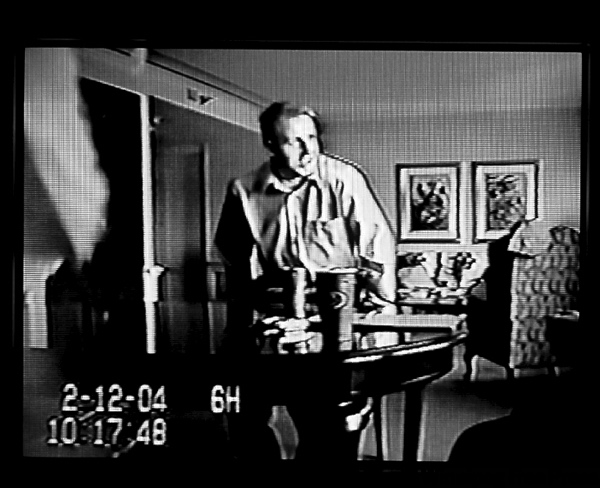
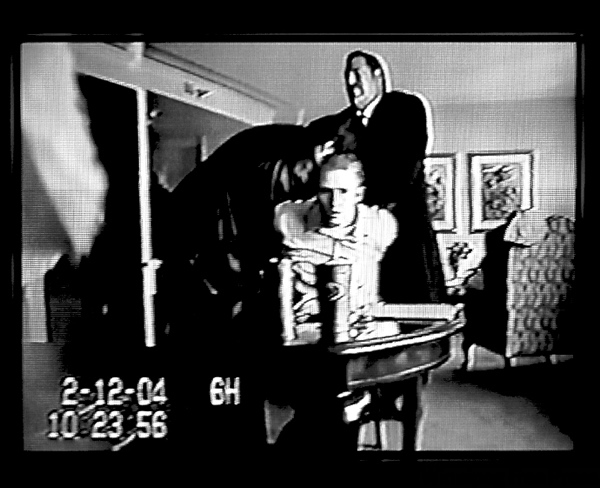
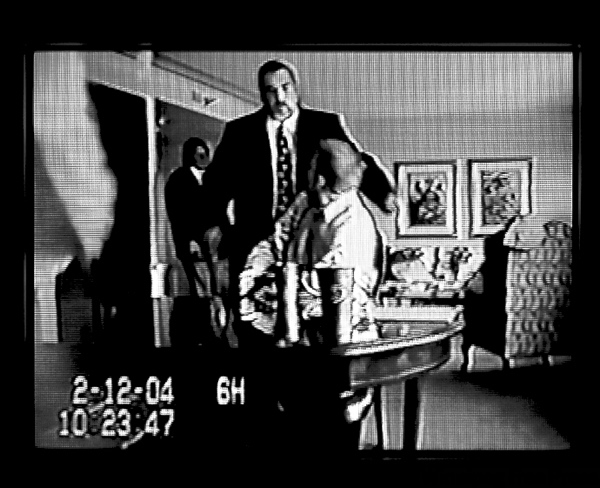
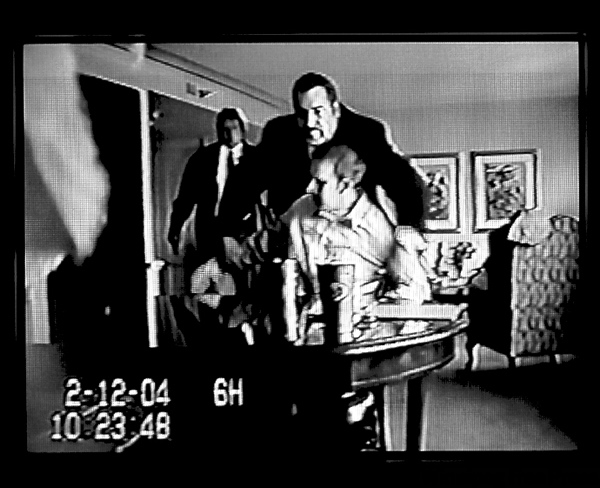
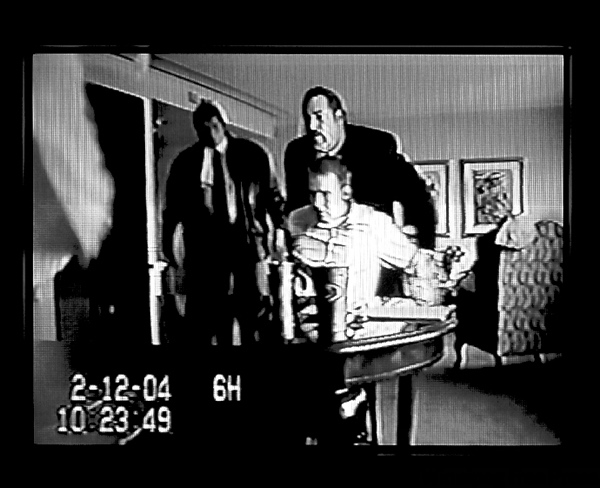
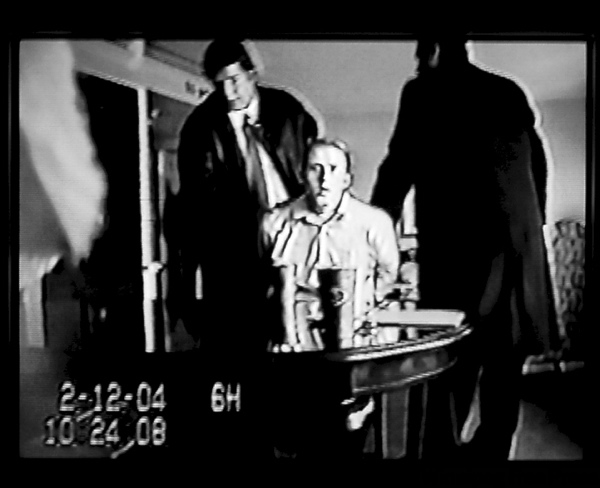
The RCMP were called in to assist in the fall of 2003, and they brought in Mr. Big. Over the course of several months, Bridges was duped into believing he was part of a powerful organized crime group in which the key to advancement was confessing his past sins to the mysterious, all-knowing "Boss." The grand finale came in February 2004 when, as a hidden video camera rolled, Bridges calmly explained how he choked Chorney unconscious, then decided to "finish her off." Bridges said he cut the cord off his mother’s hair dryer and used it to strangle Chorney. When she didn’t die, he submerged her head in his bathtub for nearly 20 minutes. He said he then scouted out a location in the graveyard behind his home to hide her body. He dug up a fresh grave and put her body inside and covered it up, believing his secret would also remain buried.
Bridges was convicted in June 2005 of first-degree murder following a jury trial. Defence lawyer Greg Brodsky challenged the sting operation at the time and claimed police induced Bridges to tell them an exaggerated tale. He argued "Mr. Big"-style stings have no place in Canadian law despite the obvious success against his client.
"They should be outlawed. Stings are awful ways to collect evidence," said Brodsky.
Queen’s Bench Justice John Menzies rejected the bid and said RCMP made painstaking efforts to ensure they didn’t elicit a false confession from Bridges. The Manitoba Court of Appeal later upheld the verdict.
"ö "ö "ö

MR. BIG doesn’t always hear a confession.
Every so often, the target either suspects or is tipped off that Mr. Big is really John Law.
Police have documented some of the failed cases in court filings that routinely seek to prohibit certain elements of sting operations — in particular, the names of the undercover agents — from being publicized. They fear such information will compromise the safety of the small number of specially trained officers who work these cases.
www.mikeoncrime.com
Mike McIntyre is a sports reporter whose primary role is covering the Winnipeg Jets. After graduating from the Creative Communications program at Red River College in 1995, he spent two years gaining experience at the Winnipeg Sun before joining the Free Press in 1997, where he served on the crime and justice beat until 2016. Read more about Mike.
Every piece of reporting Mike produces is reviewed by an editing team before it is posted online or published in print — part of the Free Press‘s tradition, since 1872, of producing reliable independent journalism. Read more about Free Press’s history and mandate, and learn how our newsroom operates.
Our newsroom depends on a growing audience of readers to power our journalism. If you are not a paid reader, please consider becoming a subscriber.
Our newsroom depends on its audience of readers to power our journalism. Thank you for your support.
Mike McIntyre is a sports reporter whose primary role is covering the Winnipeg Jets. After graduating from the Creative Communications program at Red River College in 1995, he spent two years gaining experience at the Winnipeg Sun before joining the Free Press in 1997, where he served on the crime and justice beat until 2016. Read more about Mike.
Every piece of reporting Mike produces is reviewed by an editing team before it is posted online or published in print — part of the Free Press‘s tradition, since 1872, of producing reliable independent journalism. Read more about Free Press’s history and mandate, and learn how our newsroom operates.
Our newsroom depends on a growing audience of readers to power our journalism. If you are not a paid reader, please consider becoming a subscriber.
Our newsroom depends on its audience of readers to power our journalism. Thank you for your support.
Advertisement Advertise With Us
Advertisement Advertise With Us