

Shedding a little bit of light on infamous English moment
Advertisement
Read this article for free:
or
Already have an account? Log in here »
To continue reading, please subscribe:

Digital Subscription
One year of digital access for only $205*
- Enjoy unlimited reading on winnipegfreepress.com
- Read the E-Edition, our digital replica newspaper
- Access News Break, our award-winning app
- Play interactive puzzles
*First annual payment billed as $205.00 + GST for one year. This annual subscription will automatically renew at $233.00 + GST every 52 weeks (10% off the regular annual price of $259.35). Offer available to new and qualified returning subscribers only. Cancel any time.
To continue reading, please subscribe:
Add Free Press access to your Brandon Sun subscription for only an additional
$1 for the first 4 weeks*
- Enjoy unlimited reading on winnipegfreepress.com
- Read the E-Edition, our digital replica newspaper
- Access News Break, our award-winning app
- Play interactive puzzles
*Your next Brandon Sun subscription payment will increase by $1.00 and you will be charged $17.95 plus GST for four weeks. After four weeks, your payment will increase to $24.95 plus GST every four weeks.
Read unlimited articles for free today:
or
Already have an account? Log in here »
Hey there, time traveller!
This article was published 02/01/2010 (6129 days ago), so information in it may no longer be current.
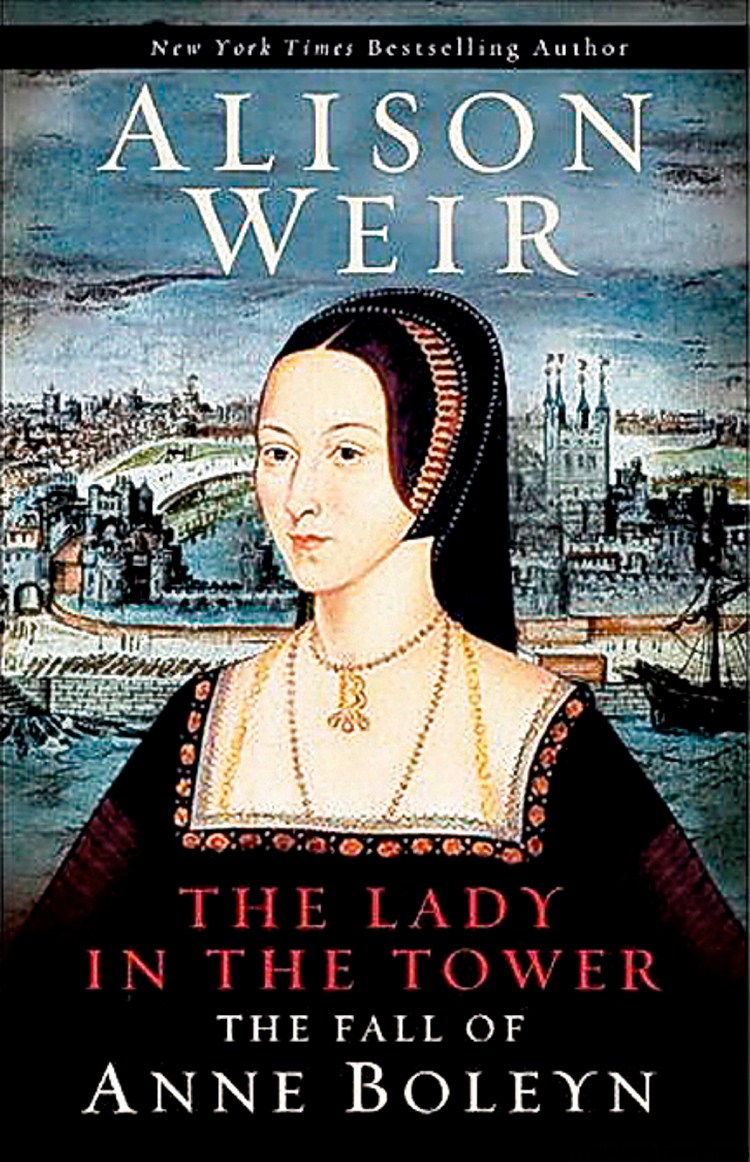
The Lady in the Tower
The Fall of Anne Boleyn
By Alison Weir
McClelland & Stewart, 464 pages, $35
Anne Boleyn has been both deified and demonized for centuries, cast as either a fallen woman or a wronged wife.
Her rise from lady-in-waiting to Queen of England and her fall as an executed traitor changed the course of English history.
Dozens of books, movies, plays and other works have been produced about Anne Boleyn and her marriage to Henry VIII, but few have focused on the events that led to Anne’s death in May, 1536.
But was it the king who made the decision to have her put to death, or did his court arrange the evidence that led to her ill-fated end?
In this impressive work of popular history, British historian Alison Weir (a veritable Peter C. Newman of British medieval royal history) blames the court.
Weir has written about Anne Boleyn in several of her previous tomes about Henry’s reign. This is her first to focus exclusively on Anne, let alone on the last four months of her too-short life.
After one successful pregnancy and two miscarriages, Boleyn was in a very tenuous position as queen. By early 1536, Anne was becoming increasingly unpopular and had numerous enemies at court, including several uncles and cousins.
After her third miscarriage in late January, things went downhill quickly for the 35-year-old queen. Rumours of witchcraft spread quickly, alongside others of the King’s plans to take a new wife.
Boleyn also made the mistake of angering Thomas Cromwell, the king’s chief administrator and head of the Privy Council.
This powerful man felt she had meddled too much in affairs of state and the dissolution of the monasteries, and by early April, he began plotting to assure her downfall.
Weir clearly conveys the fruits of her research without inserting herself in the process. Her conclusions are well-supported, constructed by taking information from a range of sources and weighing their accuracy and credibility.
Her reliance on primary sources, written either at the time or soon after, provides a broader look at the many issues that converged to ensure the downfall of Anne Boleyn.
In late April 1536, Anne "was charged with adultery with five men — one her own brother, another a lowly musician — and conspiring regicide."
A full half of the book centres on Anne’s arrest and imprisonment in the tower. Weir fully goes through the charges, highlighting the impossibility of some and the possibility of others.
Weir’s assessment of the facts leads her to strongly declare her opinion that "Anne was probably framed."
Weir also points out it would have taken days to call for an executioner from the continent — the fact that one arrived so quickly after the verdict was delivered indicates Boleyn’s execution may have been a foregone conclusion.
Yet despite the objectivity Weir tries to keep, she still treats Boleyn with compassion. She shows sympathy for Boleyn’s fate, noting "her body, however, had been consigned to oblivion, for no provision was made for any stone or memorial tablet to mark the place where she lay."

After Boleyn’s death, Henry moved quickly, ordering her royal badges, monograms and portraits removed or destroyed.
He and Jane Seymour became engaged the next day, and were married within 10 days of the execution. However, Boleyn triumphed in the end when her daughter Elizabeth became queen in 1558.
Weir’s close-up look at the fall of Anne Boleyn shows there is still much to glean from the few surviving contemporary records.
The Lady in the Tower succeeds precisely because of its narrow focus and in-depth research, providing a more thorough look at one of English history’s most infamous moments.
Julie Kentner is a Winnipeg writer.





