

Coastlines defining Canadian characteristic
Advertisement
Read this article for free:
or
Already have an account? Log in here »
To continue reading, please subscribe:
Monthly Digital Subscription
$0 for the first 4 weeks*
- Enjoy unlimited reading on winnipegfreepress.com
- Read the E-Edition, our digital replica newspaper
- Access News Break, our award-winning app
- Play interactive puzzles
*No charge for 4 weeks then price increases to the regular rate of $19.00 plus GST every four weeks. Offer available to new and qualified returning subscribers only. Cancel any time.
Monthly Digital Subscription
$4.75/week*
- Enjoy unlimited reading on winnipegfreepress.com
- Read the E-Edition, our digital replica newspaper
- Access News Break, our award-winning app
- Play interactive puzzles
*Billed as $19 plus GST every four weeks. Cancel any time.
To continue reading, please subscribe:
Add Free Press access to your Brandon Sun subscription for only an additional
$1 for the first 4 weeks*
*Your next subscription payment will increase by $1.00 and you will be charged $16.99 plus GST for four weeks. After four weeks, your payment will increase to $23.99 plus GST every four weeks.
Read unlimited articles for free today:
or
Already have an account? Log in here »
Hey there, time traveller!
This article was published 23/01/2010 (5795 days ago), so information in it may no longer be current.
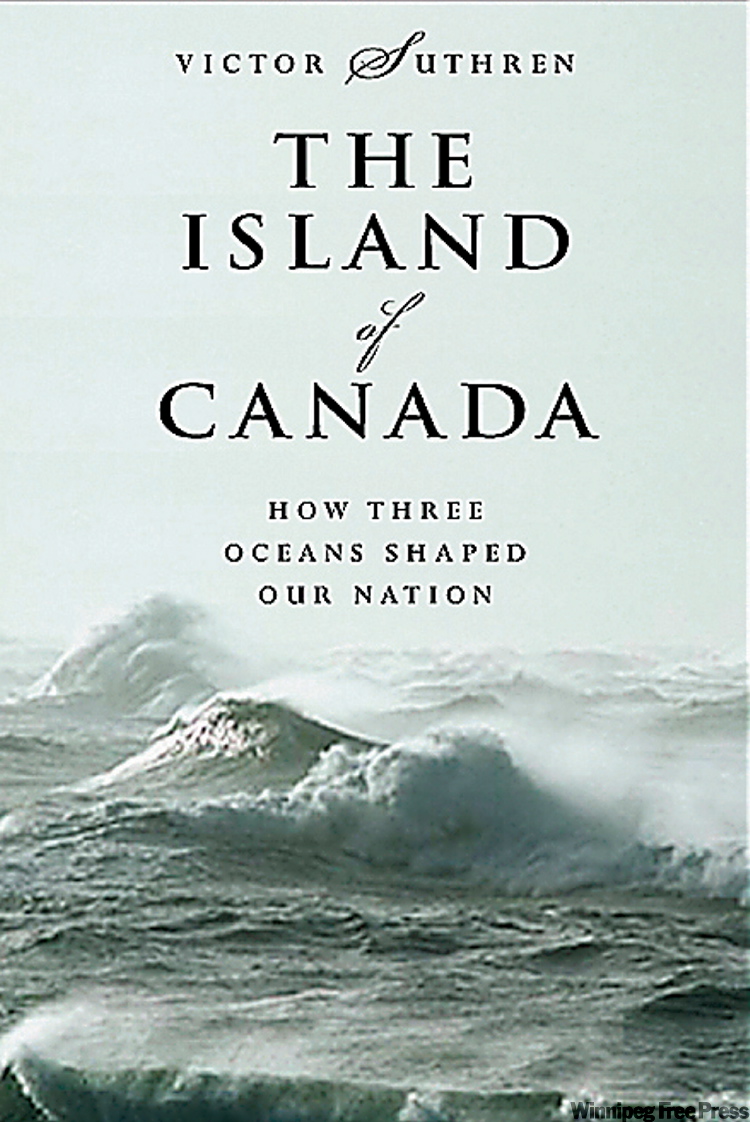
The Island of Canada
How Three Oceans Shaped Our Nation
By Victor Suthren
Thomas Allen, 362 pages, $35
THE Rockies, vast Prairies and near-barren Arctic are the most common representations of the Canadian landscape in the popular imagination.
But Victor Suthren, former director of the Canadian War Museum and an author of nautical fiction and non-fiction, argues that our truly defining characteristic is our coastline.
Some of his assertions aren’t fully supported, and the book as a whole is a mash-up of fact, imagination, policy critique and love-letter to the maritime life. Any reader will likely find something interesting in The Island of Canada, but it lacks the structure and coherence that characterize the best historical non-fiction.
Canada’s coastline is by far the longest of any country in the world.
The role played by the seas in our national history and consciousness is under-appreciated, Suthren asserts, since we are by his reckoning more influenced by oceans, and more dependent upon them, than any other in the world.
Our collective ignorance on these points leads to policies that he believes will be to our national detriment, and his primary objective in writing this book is to remedy that shortcoming.
While providing plenty of rhetorical material, this sweeping statement isn’t sufficiently defended. Suthren fails to make the case that the role of the sea in our past and present compares with, say, Britain and Australia.
Especially when discussing pre-Confederation Canada, Suthren brings to light episodes that are too often left out of our history.
He begins by exploring some of the theories about the first settlement of Canadian land, and moves gradually to the present day.
Particularly valuable are the chapters that narrate and analyze activity on the West Coast, from the aboriginals who developed a unique sea-based culture there, to the explorers who first mapped the islands and inlets of present-day British Columbia.
This will be of particular interest to Canadians who learned a Quebec- and Ontario-centric history curriculum, which paid great attention to the history of those provinces and almost none to the hinterlands west of Toronto.
Suthren spends too little time considering the role the seas have played, in Canadian history as well as our national psychology, as a barrier.
He also devotes comparatively little space — about 30 pages — to the history of Canada’s Navy, which has played a major role in all our overseas military activity and remains to this day the branch of the military most active in defending Canada’s borders and sovereignty.
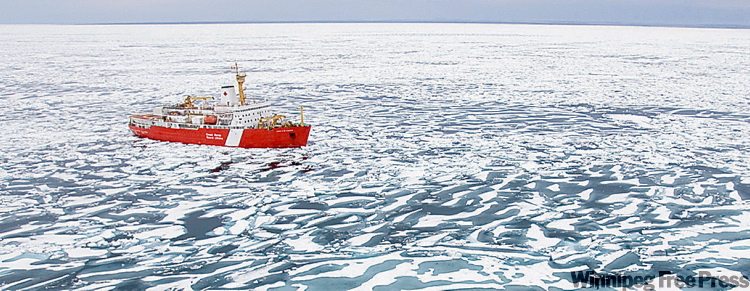
In his concluding chapters, Suthren broaches the challenges Canada faces in the Arctic today. Coastlines and shipping channels are changing as global temperatures fluctuate, and this is changing the status quo with respect to waters and resources of the far north.

He argues that Canadians don’t value our coastline and territorial waters sufficiently and that, as a result, our leaders are not strongly committed to maintaining our sovereignty in the Arctic.
Citing incursions by Chinese vessels, burgeoning cruise liner traffic that pollutes and disrupts northern eco-systems, and the declining capacity of the Canadian Forces to patrol and monitor the Arctic Ocean, Suthren makes a strong case that Canada’s claims to the north will soon exist only on paper, if we don’t strengthen our policies, diplomacy and equipment accordingly.
One needn’t accept Suthren’s thesis — that the oceans are our defining characteristic — to enjoy many of the elements of his book. This is the only single-volume history of Canada’s engagement with the sea from the earliest incursions of humans into North America until today, and as such it fills an important niche.
Sailing aficionados and sailors will also appreciate the detail and imagination lavished upon descriptions of the various ships that have plied Canadian waters.
Rebecca Walberg is the president of Winnipeg’s Wakefield Centre for Policy Research.