

Judge bans camera from Sinclair inquest
Says witnesses could be spooked
Advertisement
Read this article for free:
or
Already have an account? Log in here »
To continue reading, please subscribe:
Monthly Digital Subscription
$1 per week for 24 weeks*
- Enjoy unlimited reading on winnipegfreepress.com
- Read the E-Edition, our digital replica newspaper
- Access News Break, our award-winning app
- Play interactive puzzles
*Billed as $4.00 plus GST every four weeks. After 24 weeks, price increases to the regular rate of $19.95 plus GST every four weeks. Offer available to new and qualified returning subscribers only. Cancel any time.
Monthly Digital Subscription
$4.99/week*
- Enjoy unlimited reading on winnipegfreepress.com
- Read the E-Edition, our digital replica newspaper
- Access News Break, our award-winning app
- Play interactive puzzles
*Billed as $19.95 plus GST every four weeks. Cancel any time.
To continue reading, please subscribe:
Add Free Press access to your Brandon Sun subscription for only an additional
$1 for the first 4 weeks*
*Your next subscription payment will increase by $1.00 and you will be charged $16.99 plus GST for four weeks. After four weeks, your payment will increase to $23.99 plus GST every four weeks.
Read unlimited articles for free today:
or
Already have an account? Log in here »
Hey there, time traveller!
This article was published 20/03/2010 (5859 days ago), so information in it may no longer be current.
Justice can be served at the upcoming inquest into the 2008 death of Brian Sinclair in an ER waiting room without the help of TV and web cameras broadcasting each minute of testimony, a judge said Friday.
Provincial court Judge Tim Preston said it’s more important that witnesses are comfortable while testifying into the circumstances of Sinclair’s death.
"To allow the filming of witnesses would be unprecedented," Preston said. "It may indeed have ramifications on people’s willingness to co-operate with the process.
"Moreover, the complexion of the entire process would be altered by the presence of cameras or webcasts."
While Preston said the possible damage to the inquest if cameras were allowed is unknown, it’s a chance he was unwilling to take.
"Images and words, once captured and stored, can be rebroadcast in a variety of uncontrolled contexts, for a myriad of motives," he said. "Witnesses and other participants risk losing their privacy, long after these proceedings are over."
Preston’s decision was applauded by the Winnipeg Regional Health Authority, which along with the Manitoba Nurses Union opposed the media’s camera request. The Sinclair family decried the ruling. Their lawyer had argued the camera would allow many people throughout Manitoba to watch and listen to the proceedings without having to be in court.
Lawyers for CTV, Global, CBC, APTN and Sinclair’s family had argued the details of Sinclair’s death at the Health Sciences Centre, and the inquest’s role in examining emergency care in the province, are too vital to restrict electronic media coverage.
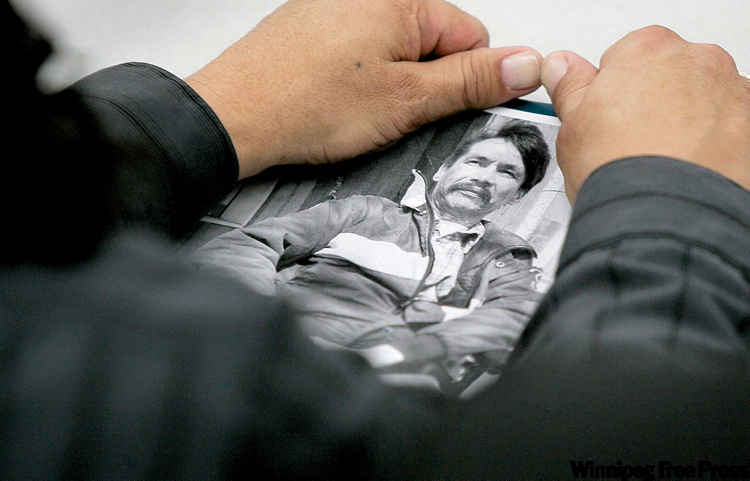
Sinclair, a wheelchair-bound aboriginal man, died after waiting 34 hours without getting help for an easily treatable bladder infection. The coroner has ruled his death was avoidable.
The judge said his job doesn’t extend to approving TV cameras.
"The charter right of freedom of the press does not give the media any rights beyond those enjoyed by the Canadian public," Preston said.
WRHA spokeswoman Heidi Graham said the health authority welcomes the decision because the privacy of witnesses will be protected.
But Graham said Preston’s decision has no bearing on what media do outside of the Law Courts in attempting to photograph and interview witnesses.
"The application was specifically for what was happening inside the courtroom," Graham said. "I think he made it clear about the interests of the privacy rights and we’re very pleased he recognized the importance of those rights."
Vilko Zbogar, the Sinclair family’s lawyer, said Preston’s decision underscores the need for an inquiry. "…The Sinclair family is even more concerned than before that an inquest may not be able to fully examine the fundamental systemic issues with full and equitable public access, in Manitoba and beyond," he said in a statement.
The province has ruled out an inquiry.

No date for the inquest has been set.
Preston also criticized Zbogar for asserting that some witnesses come from a "culture of secrecy."
bruce.owen@freepress.mb.ca
A question of dignity
"Even if the denial of broadcasting constitutes a violation of the right to freedom of the press, the denial is a reasonable limit, because of the need to ensure fairness, dignity, decorum and privacy. The media is free to attend the inquest. The media is not restricted in its access to the inquest. The only restriction is the technology it can use. So the restriction is not on access but on technology. The right to freedom of expression is minimally impaired by the exclusion of cameras and recording devices,"
— Provincial court Judge Tim Preston