

From Glen Coco to Asher Lev
David Reale shows serious range in role of a conflicted son, born into Hasidic Judaism but drawn to a life of artistry

Advertisement
Read this article for free:
or
Already have an account? Log in here »
To continue reading, please subscribe:
Digital Subscription
One year of digital access for only $1.44 a week*
- Enjoy unlimited reading on winnipegfreepress.com
- Read the E-Edition, our digital replica newspaper
- Access News Break, our award-winning app
- Play interactive puzzles
*Billed as $5.77 plus GST every four weeks. After 52 weeks, price increases to the regular rate of $19.95 plus GST every four weeks. Offer available to new and qualified returning subscribers only. Cancel any time.
To continue reading, please subscribe:
Add Free Press access to your Brandon Sun subscription for only an additional
$1 for the first 4 weeks*
- Enjoy unlimited reading on winnipegfreepress.com
- Read the E-Edition, our digital replica newspaper
- Access News Break, our award-winning app
- Play interactive puzzles
*Your next Brandon Sun subscription payment will increase by $1.00 and you will be charged $17.95 plus GST for four weeks. After four weeks, your payment will increase to $24.95 plus GST every four weeks.
Read unlimited articles for free today:
or
Already have an account? Log in here »
Hey there, time traveller!
This article was published 14/10/2016 (3515 days ago), so information in it may no longer be current.
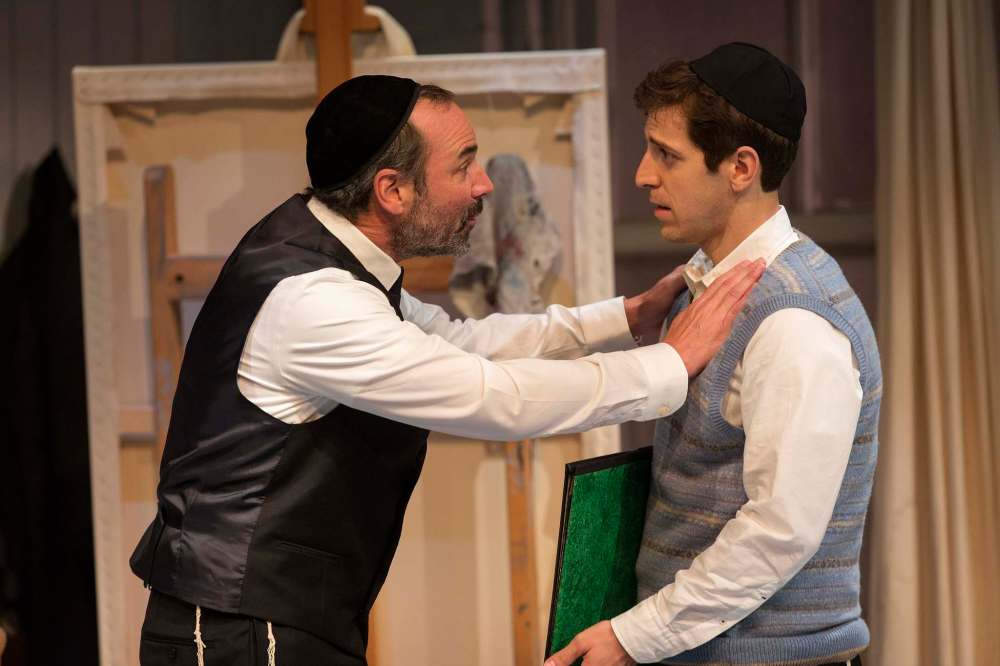
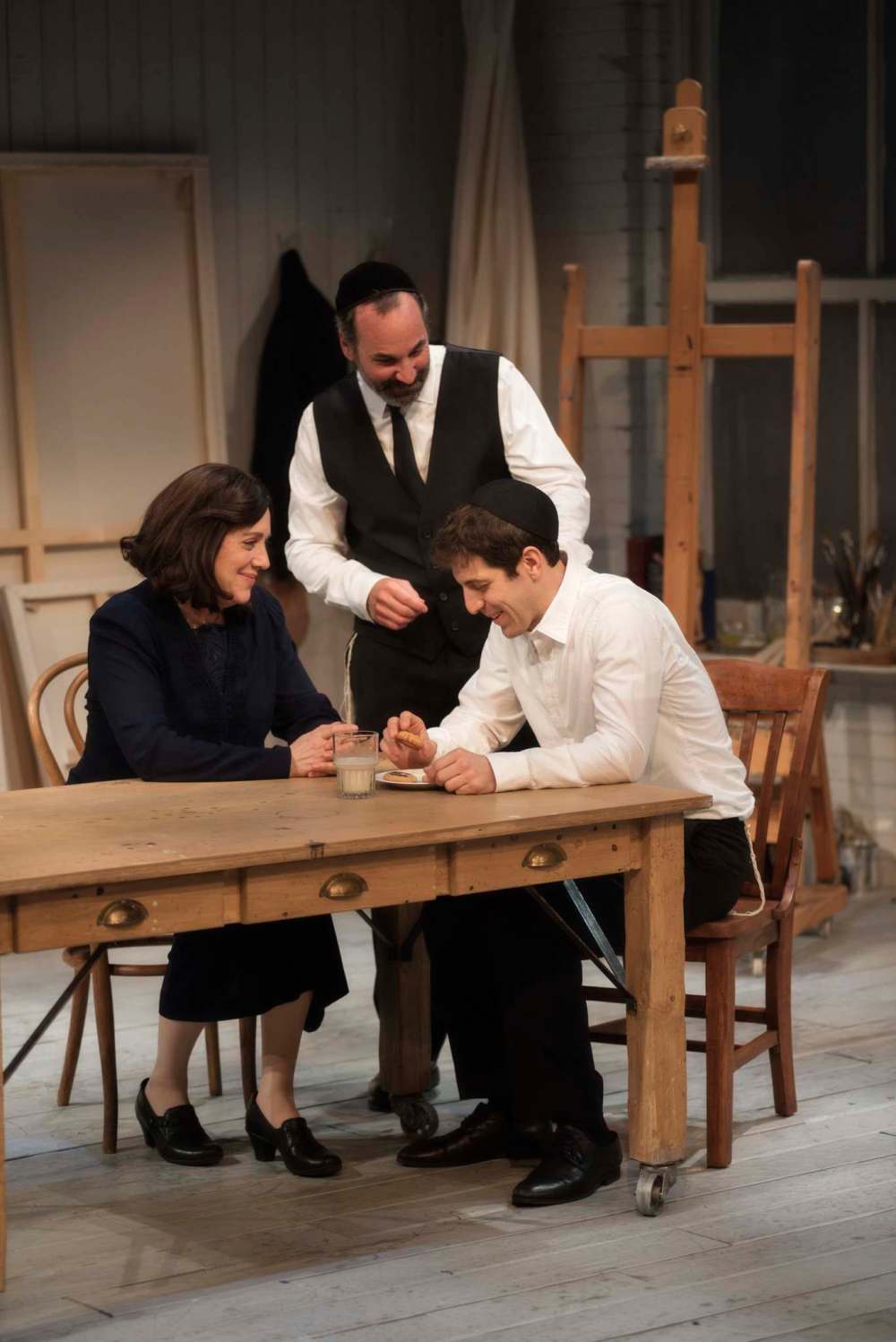
Actor David Reale is in Winnipeg for the next few weeks playing the title role of a man compelled to choose between his Hasidic faith and his artistic calling in the drama My Name Is Asher Lev, which Aaron Posner adapted from Chaim Potok’s 1972 bestselling novel of the same name.
It’s a serious role. But lest you think the 32-year-old Torontonian is himself a deadly serious artist, you should understand that he may be best known for the role of Glen Coco in the 2004 teen comedy Mean Girls. He is also the voice of Kai Hiwatari in the English-language version of the animated series Beyblade and the voice and face of soldier Charlie Cole in the Ubisoft video game Splinter Cell: Blacklist.
Curiously, it’s the non-speaking role in Mean Girls that ended up raising his visibility. It was all on the strength of a short scene that became an Internet meme, in which a student dressed as Santa Claus interrupts a class to hand his character four candy canes with the exhortation, “You go, Glen Coco!”
“That gets ignited every year because Oct. 3 is a big day for Mean Girls fans,” Reale says in a phone interview, explaining that the date is referenced in an offhand piece of dialogue in the film, an arbitrary detail that gained outsize significance among the fandom. “So every year, some online (news service) like Buzzfeed or the Daily Mail does a ‘where are they now?’ article — ‘Did you know Glen Coco is a real person?’ — that sort of thing.
“It ignites for about three days,” Reale admits, clearly amused by the phenomenon. “The character doesn’t exist outside of that line. And there’s been no monetary gain from it whatsoever. But there’s riches in people’s friendship and adoration.”
The role of Asher Lev comes with considerably more dramatic homework, needless to say. The Royal Manitoba Theatre Centre and Segal Centre co-production — the Montreal run of which has already finished — requires Reale to play Lev from the age of six to his early 20s in a closed environment that’s rich in tradition and culture, but not necessarily welcoming to the more secular realm of modern art to which the character is drawn.
For Reale, raised a strict Catholic, it was an environment that required depths of research.
“A lot of Jewish audience members were stunned to find out that I didn’t have any Jewish in my background because this character is Hasidic, an ultra-Orthodox Jew,” he says. “I did some things to try to understand (that world).
“There are physical and vocal rhythms to a culture you try and understand so you can play it as honestly and accurately as possible,” he says.
Reale travelled to Brooklyn on his own impromptu research mission to investigate the character.
“I went down without any connections or any plan,” he says. “I was hanging around Crown Heights hoping I would meet someone who would be willing to talk to me, and in fact, I did.
“They were very helpful. Someone introduced me to someone else who was raised in the Lubavitch community (the Hasidic movement depicted in Potok’s novel) who no longer identifies as Hasidic,” he says. “I ended up sitting down with two people and they were so helpful to get the human perspective of what’s going on.
“From the outside, all you can see is the clothes and what’s different, but from this inside, when you talk to a human being, you see what is the same and where we connect, and how we are all striving for the same things,” Reale says. “I was able to come into an understanding of Asher, I think, talking about what community means to that community and how important it is.”
Reale says he had a sense of that conflict from his own experience.

“I was very religious as a young person and my family was part of a small sect of Catholicism that embraced the born-again Christian mentality,” he says. “I went down to Ohio and did these youth conferences.”
When he decided to become an actor at the age of 14, he recalls, “My mother called the priest to come over and we had a long discussion over whether I wanted to become involved in an industry that is so rife with corruption and worldly ideals.
“We almost decided not to,” he says.
“This is a specific story, but anyone can relate to it because everyone is an individual and, by nature, you exist within a culture,” he says. “And I really felt like the story is about an individual honouring himself in conflict with his culture.”
randall.king@freepress.mb.caTwitter: @FreepKing
Our newsroom depends on a growing audience of readers to power our journalism. If you are not a paid reader, please consider becoming a subscriber.
Our newsroom depends on its audience of readers to power our journalism. Thank you for your support.
THEATRE PREVIEW

My Name Is Asher Lev
Tom Hendry Warehouse
To Oct. 29
Tickets $22-$41 at 204-942-6537 or www.royalmtc.ca
Our newsroom depends on a growing audience of readers to power our journalism. If you are not a paid reader, please consider becoming a subscriber.
Our newsroom depends on its audience of readers to power our journalism. Thank you for your support.
Advertisement Advertise With Us
Advertisement Advertise With Us
History
Updated on Friday, October 14, 2016 10:10 AM CDT: Updated.