

Offering a helping hand — or a cold shoulder
Advertisement
Read this article for free:
or
Already have an account? Log in here »
To continue reading, please subscribe:
Digital Subscription
One year of digital access for only $1.44 a week*
- Enjoy unlimited reading on winnipegfreepress.com
- Read the E-Edition, our digital replica newspaper
- Access News Break, our award-winning app
- Play interactive puzzles
*Billed as $5.77 plus GST every four weeks. After 52 weeks, price increases to the regular rate of $19.95 plus GST every four weeks. Offer available to new and qualified returning subscribers only. Cancel any time.
To continue reading, please subscribe:
Add Free Press access to your Brandon Sun subscription for only an additional
$1 for the first 4 weeks*
- Enjoy unlimited reading on winnipegfreepress.com
- Read the E-Edition, our digital replica newspaper
- Access News Break, our award-winning app
- Play interactive puzzles
*Your next Brandon Sun subscription payment will increase by $1.00 and you will be charged $17.95 plus GST for four weeks. After four weeks, your payment will increase to $24.95 plus GST every four weeks.
Read unlimited articles for free today:
or
Already have an account? Log in here »
Hey there, time traveller!
This article was published 20/10/2016 (3534 days ago), so information in it may no longer be current.
To give or not to give?
That is the question Free Press readers asked after Tuesday’s column.
The piece related the story of my wife and I giving $5 to a young panhandler in the Exchange District who said he needed the money to pay for a bed at the Salvation Army, but later appeared to have used it for a drug fix. The experience made me wonder what others do when they encounter panhandlers.
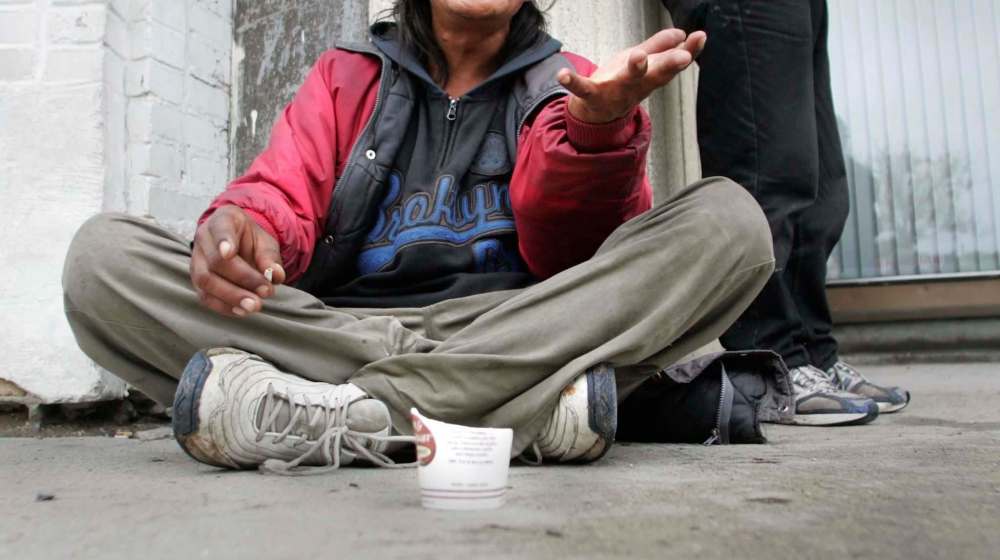
The online comments that followed tended to be more about not giving, which wasn’t a surprise.
The responses that came directly to me, with names or at least email addresses of the writers, leaned mostly in a more nuanced direction; driven often by the conflicting feelings of guilt, fear and empathy.At least one writer remembered what it was like to be on the street. Here are a few samples:
• • •
“Yes, I do give to panhandlers. I always say, ‘There but for the grace of God go you and I.’ I keep change handy in the car. I pass McPhillips and Notre Dame quite often and it is always the same person, therefore I do not give every time.
It also depends on the weather. If it is stormy, I feel for them standing out there all day.
My husband and I are seniors and are on a fixed income. I try to give when I can.”
— Darlene Nelson
“If I give to someone on the street, it’s usually because the look makes me feel insecure and I just want to give them something so they will go away. This is pretty rare — usually I give nothing.
But if I’m inclined to help someone on the street, I’ll do it of my own volition, and it’ll be by physically going to a restaurant and buying them a meal and sitting down to chat with the person. This, or volunteering at the soup kitchen or donating to the local church.
I’ve learned from experience that these are the best ways, and just giving on the street isn’t worth it. If you want to help someone and want your money to be used for good, make sure you’re controlling how it is spent.”
— James
“I used to donate to panhandlers, but I now realize they are there by their own choice. Like an alcoholic, they need to hit bottom to realize it’s time to make a different choice.
My giving them cash only enables them to carry on destroying their life or to continue living without taking responsibility for their own demise. So, I will give to the Salvation Army and Siloam Mission.”
— Don
“My wife (who has worked in non-profits helping the abused, as a professional lead in social work in a hospital and as a private practice counsellor) knows more about this than I do.
‘I think whatever way anyone contributes to a panhandler, it should be done graciously and with an element of compassion. It costs nothing to show someone that you care’ — Tom Pearson
She would tell you there are many homeless people (particularly young people) who come from abusive backgrounds. They have escaped to the streets because they saw no other solution. Many use drugs to mask the severe emotional scars that have been inflicted on them. Others suffer from mental illness and are on the streets because we lack the infrastructure to provide the support they need. Some are just too poor to live anywhere else. And finally, some just choose life on the street.
But you asked what we as individuals can do. Deborah and I both believe providing money to panhandlers is generally the wrong thing to do because often it is used to feed an addiction. Sometimes Deborah will offer someone food or water from a stock she seems to have in her purse or car. Usually the offer is graciously received; sometimes not so much.
I think whatever way anyone contributes to a panhandler, it should be done graciously and with an element of compassion. It costs nothing to show someone that you care.”
— Tom Pearson
“I’ll let them warm up in my car in winter or listen to their stories. I guess I’m compelled to do something. I know what it’s like. I was a runaway teenager (and was) homeless at times.”
— Anonymous woman
• • •

I received another email this week with the subject: “Winter is coming.”
It was from a car dealer reminding customers our vehicles need to be ready for winter. It also served as an ironic reminder about the service provided by the Salvation Army and Siloam Mission and the other places where the homeless and hungry get the basics of what they need. Even if we don’t. But I’ll leave the last word to a 22-year-old college student.
“I try to remember that we live in a city home to more panhandlers than millionaires, but being numb to their pleas won’t make them go away.”
— Maggie Wysocki
gordon.sinclair@freepress.mb.ca
Related Articles
Panhandler knows the right strings to pull
Advertisement Advertise With Us
Advertisement Advertise With Us
History
Updated on Thursday, October 20, 2016 7:59 AM CDT: Adds photo