Death of an Iranian Salesman
Oscar-nominated film explores after-effects of assault on marriage

Advertisement
Read this article for free:
or
Already have an account? Log in here »
To continue reading, please subscribe:

Digital Subscription
One year of digital access for only $205*
- Enjoy unlimited reading on winnipegfreepress.com
- Read the E-Edition, our digital replica newspaper
- Access News Break, our award-winning app
- Play interactive puzzles
*First annual payment billed as $205.00 + GST for one year. This annual subscription will automatically renew at $233.00 + GST every 52 weeks (10% off the regular annual price of $259.35). Offer available to new and qualified returning subscribers only. Cancel any time.
To continue reading, please subscribe:
Add Free Press access to your Brandon Sun subscription for only an additional
$1 for the first 4 weeks*
- Enjoy unlimited reading on winnipegfreepress.com
- Read the E-Edition, our digital replica newspaper
- Access News Break, our award-winning app
- Play interactive puzzles
*Your next Brandon Sun subscription payment will increase by $1.00 and you will be charged $17.95 plus GST for four weeks. After four weeks, your payment will increase to $24.95 plus GST every four weeks.
Read unlimited articles for free today:
or
Already have an account? Log in here »
Hey there, time traveller!
This article was published 15/02/2017 (3475 days ago), so information in it may no longer be current.
It doesn’t take long for Iranian director/writer Asghar Farhadi to establish the mood in The Salesman.
When married couple Rana (Taraneh Alidoosti) and Emad (Shahab Hosseini) return to their apartment to collect their belongings after being evacuated (the building is unstable because of a nearby construction project), an ominous web of cracks has broken up the wall above their bed.
It’s a not-so-subtle sign that all will not be well with the couple, though the Oscar-winning Farhadi (A Separation took home the 2012 Oscar for Best Foreign Language Film; The Salesman is nominated in the same category this year) comes nowhere near melodrama in this quietly tense film about the futility of vengeance.
The Salesman (in Persian, with English subtitles) is, in the vein of Farhadi’s previous films, a domestic drama set in modern-day Tehran.
Rana and Emad work “in culture” (maybe only in Iran is this information greeted with reverence rather than dismay by the neighbours), as actors who are playing Linda and Willy Loman in a production of Death of a Salesman. Emad also teaches high school literature; he’s a well-liked instructor whose students seem to respect him.
When they find themselves temporarily homeless owing to the evacuation, an actor friend offers up an apartment he rents out. The last tenant, however, a single woman with a kid, has left behind most of her belongings and proves reluctant to pick them up. There’s something portentous about her shoes and clothes in the closet, the crayon drawings her child has scrawled on the bedroom wall.
The neighbours, however, have a “good riddance to bad rubbish” attitude, implying the woman was a prostitute.
Then, in a scene that’s all the more chilling for the fact we see nothing, Rana is attacked; it might be that the violence was intended for the previous tenant.
Her head is stitched up at the hospital (although there are possibly other wounds that go unspoken), and she’s sent home, but the attack drives a wedge into the relationship.
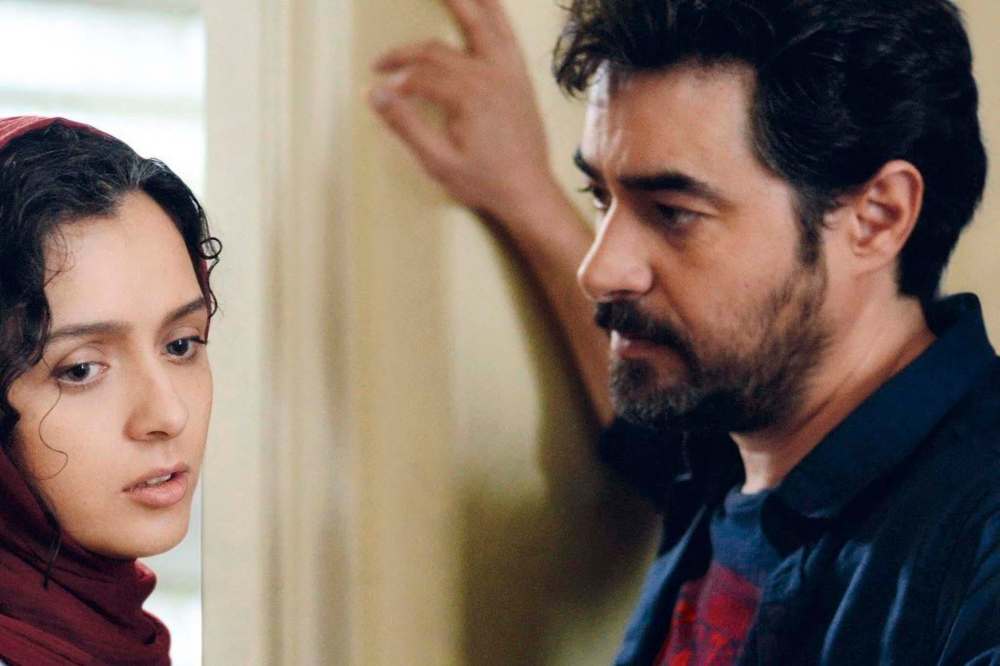
Emad’s personality shifts as he struggles to cope with his tamped-down rage. He’s curt with his students and impatient with Rana, seemingly unsympathetic to her fear of being left alone.
Farhadi carefully ratchets up the tension — there’s the sense of bad decision being piled on bad decision — as Emad, rather than consoling or comforting Rana or going to the police, opts for vigilante justice.
This is not John Wick-style hail-of-bullets revenge, of course. It’s small and sad and wrong-headed and destined to fail, but no less devastating.

The director is aided by his two leads, who are as committed to realism as he is. Alidoosti portrays the inner struggle of a woman who wants to return to normal but can’t, while as Emad, Hosseini is a man who realizes his life is being poisoned but picks the wrong antidote.
Much in The Salesman is implicit — the Iranian government’s censorship code would likely forbid referring directly to prostitution (the female tenant “had many acquaintances”) or explicitly saying Rana was sexually assaulted.
Farhadi even pokes fun at it himself; in the production of Death of a Salesman, Willy’s seductress is clad in a long-belted trench coat and hat, despite the script’s reference to lingerie, and the play’s director mentions some of Arthur Miller’s scenes may have to be cut to pass muster.
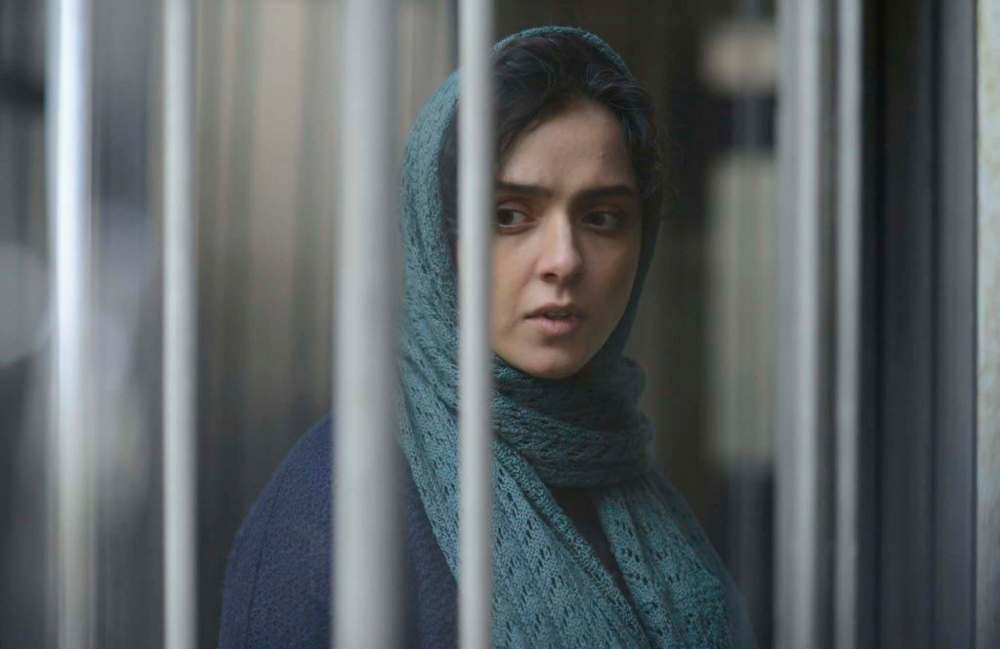
But when it comes to his own work, Farhadi uses the implied nature of Rana’s injuries to the film’s advantage. Neither she nor Emad ever directly speak of it, but the possibility of her rape hangs over every moment afterward, freighting their actions with shame and impotence, and ensuring peace, or even closure, is not an option.
jill.wilson@freepress.mb.caTwitter: @dedaumier
Jill Wilson is the editor of the Arts & Life section. A born and bred Winnipegger, she graduated from the University of Winnipeg and worked at Stylus magazine, the Winnipeg Sun and Uptown before joining the Free Press in 2003. Read more about Jill.
Jill oversees the team that publishes news and analysis about art, entertainment and culture in Manitoba. It’s part of the Free Press‘s tradition, since 1872, of producing reliable independent journalism. Read more about Free Press’s history and mandate, and learn how our newsroom operates.
Our newsroom depends on a growing audience of readers to power our journalism. If you are not a paid reader, please consider becoming a subscriber.
Our newsroom depends on its audience of readers to power our journalism. Thank you for your support.
Movie review
The Salesman
Directed by Asghar Farhadi
Grant Park
124 minutes
PG
Four-and-a-half stars out of five
OTHER VOICES
The Salesman warns of the dangers of plastering over fissures so deep that they will eventually — inevitably — give way.
— Rene Rodriguez, Miami Herald
A typically wrenching film for Farhadi, one that morphs from a quiet family drama to a tale of revenge, and is all the more impressive for how seamlessly it executes that shift.
— David Sims, The Atlantic
The Salesman doesn’t shy away from showing its male protagonist as a righteous, misguided man. But he’s still human. Everyone is in this picture, and in Farhadi’s illusion-free worldview.
— Michael Phillips, Chicago Tribune
It’s an effectively feel-bad story, deploying a torrent of wounded, retrograde masculinity to make uttering the word “rape” an even greater transgression than the event itself.
— Sara Stewart, New York Post
Jill Wilson is the editor of the Arts & Life section. A born and bred Winnipegger, she graduated from the University of Winnipeg and worked at Stylus magazine, the Winnipeg Sun and Uptown before joining the Free Press in 2003. Read more about Jill.
Jill oversees the team that publishes news and analysis about art, entertainment and culture in Manitoba. It’s part of the Free Press‘s tradition, since 1872, of producing reliable independent journalism. Read more about Free Press’s history and mandate, and learn how our newsroom operates.
Our newsroom depends on a growing audience of readers to power our journalism. If you are not a paid reader, please consider becoming a subscriber.
Our newsroom depends on its audience of readers to power our journalism. Thank you for your support.
Advertisement Advertise With Us
Advertisement Advertise With Us