CancerCare joins trend to greater out-patient treatment for bone-marrow transplants
Advertisement
Read this article for free:
or
Already have an account? Log in here »
To continue reading, please subscribe:
Digital Subscription
One year of digital access for only $1.44 a week*
- Enjoy unlimited reading on winnipegfreepress.com
- Read the E-Edition, our digital replica newspaper
- Access News Break, our award-winning app
- Play interactive puzzles
*Billed as $5.77 plus GST every four weeks. After 52 weeks, price increases to the regular rate of $19.95 plus GST every four weeks. Offer available to new and qualified returning subscribers only. Cancel any time.
To continue reading, please subscribe:
Add Free Press access to your Brandon Sun subscription for only an additional
$1 for the first 4 weeks*
- Enjoy unlimited reading on winnipegfreepress.com
- Read the E-Edition, our digital replica newspaper
- Access News Break, our award-winning app
- Play interactive puzzles
*Your next Brandon Sun subscription payment will increase by $1.00 and you will be charged $17.95 plus GST for four weeks. After four weeks, your payment will increase to $24.95 plus GST every four weeks.
Read unlimited articles for free today:
or
Already have an account? Log in here »
Hey there, time traveller!
This article was published 24/04/2017 (3345 days ago), so information in it may no longer be current.
Alvera Funk did something this April she hasn’t been able to do in years.
She baked pies for Easter.
While that may not sound like a notable achievement, the 54-year-old mother of four and grandma of six has for the better part of the last 15 years been battling a rare and progressive form of bone disease called myelofibrosis. Although she lived with the illness relatively unaffected for a number of years, it began to take its toll by 2013.
She battled constant fatigue, shortness of breath and aches and pains.
“I also had pneumonia and fluid retention to the point where medication could hardly keep up.” Even her organs were swollen. Her health was failing, and the condition would only get worse without treatment.
But today, Funk’s health has done a complete turnaround.
“It’s just been amazing — I feel so much better.”
Funk recently received a bone-marrow transplant, one of dozens of Manitobans who will undergo the procedure this year.
The majority of recipients suffer from leukemia (myelofibrosis is considered a slow-burning type of blood cancer), while others may have lymphoma. A few may not have cancer at all but instead have rare blood disorders.
Regardless of the disease, all suffer from a similar problem. Their bone marrow is no longer producing healthy blood cells. And often the only cure is a bone-marrow transplant.
The lifesaving procedure has been available for decades. And like many other cancer treatments, bone-marrow transplants have become less invasive.
And the result is more people can now receive the treatment safely and successfully.
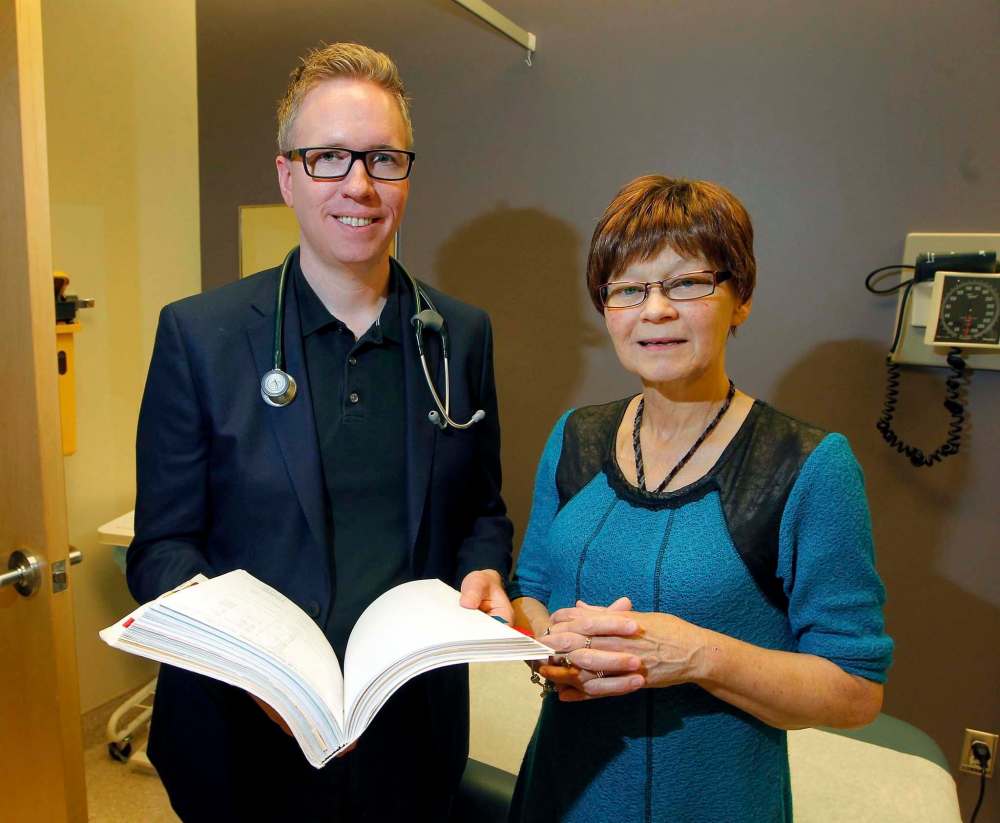
“It used to be when they first started doing transplants, the thought was that if you were over 50, the risks were too high,” says Dr. Kristjan Paulson, hematologist with the Manitoba Blood and Marrow Transplant Program at CancerCare Manitoba.
“Now we do it for patients up until age 70 (sometimes even older) because a transplant is much safer than it was just 15 years ago — we’re just that much better at it.”
Consequently, the number of transplants in Manitoba has risen steadily. Today CancerCare performs about 100 bone-marrow transplants a year, whereas a little less than a decade ago the number was closer to 60.
And the number of procedures is expected to keep rising.
“Manitoba has an aging population, as does the rest of Canada, so there are going to be more 60- to 70-year-olds in five years than there are today, just like there are more today than five years ago, and that’s all because that big baby boomer cohort is approaching that age frame right now,” Paulson says, adding cancer incidence overall increases with age.
This poses a problem for the health-care system.
“We won’t be able to meet the demand in the future without either more beds in hospital or a more efficient way to do transplants, which means on an out-patient basis, because we’re at the very limit of what we can do with the number of in-patients we have.”
Advances have also allowed for more patients to receive treatment on an out-patient basis. As a result, CancerCare has been moving toward a model that keeps patients in hospital for as short a time as possible.
The change highlights a larger trend overall for cancer treatments in Canada. Increasingly, care is provided on an out-patient basis, which helps reduce costs and increase the availability of beds for the sickest of patients, says Dr. Sri Navaratnam, CEO and president of CancerCare Manitoba.
More importantly, it’s generally become a better experience for patients — particularly those receiving bone-marrow transplants.
“As an in-patient treatment, patients are kept in a ‘bubble,’” for often several weeks, she says. “This has an emotional toll on patients and family.”
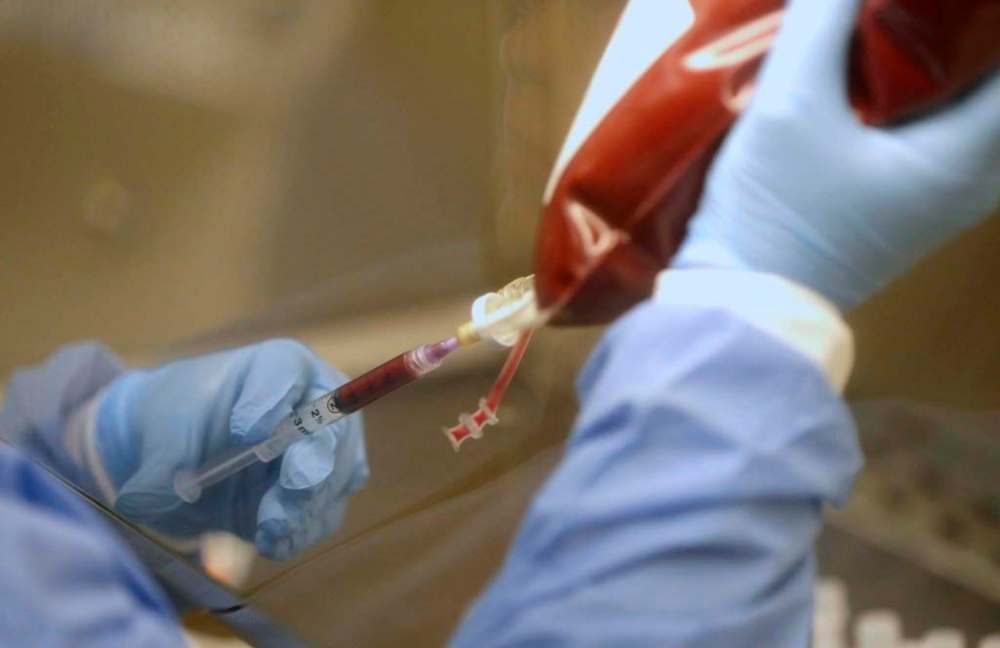
CancerCare started performing out-patient bone-marrow transplants, which involve high doses of chemotherapy and then a blood transfusion of stem cells from a healthy donor, about three years ago. At first, only patients at low risk for complications — often younger individuals — were eligible. But the program is increasingly focused on providing out-patient care for most.
“So the default would be coming in for treatment then going home and coming back for checkups,” Paulson says.
“And patients are generally happy with this; they want to be out of hospital — and not eating hospital food — unless they need to be here because of complications.”
Even for Funk, a Winkler resident, being an out-patient was desirable despite having to return for frequent follow-ups.
She had actually undergone a prior, unsuccessful transplant late last year and stayed in hospital for almost three months. After that first attempt, she was reluctant to try again because of the unpleasant side effects of chemotherapy. Moreover she did not want to be in hospital for several weeks again.
But Funk agreed to give the procedure one more shot in March, and this time she spent only a few days in hospital.
“It was like a blooming,” she says. “I had the transplant, and I started to feel better and better by the day.”
Funk still had to visit the clinic daily for a few days afterward, so she stayed at the Canad Inns Destination Centre, which is attached to the Health Sciences Centre, a short distance from CancerCare.
“Just being able to be out of the hospital setting makes a huge difference,” she says.
While she is glad to have avoided another lengthy stay, she says the care she received made the experience, which can be difficult, all the more bearable.
“If you have to go through with it (the transplant), it’s the best place to be,” Funk says. “They’re like God’s angels.”
joelschles@gmail.com