

A feminist tale?
Miniseries offers another look at Canadian novel, and at our society

Advertisement
Read this article for free:
or
Already have an account? Log in here »
To continue reading, please subscribe:
Monthly Digital Subscription
$1 per week for 24 weeks*
- Enjoy unlimited reading on winnipegfreepress.com
- Read the E-Edition, our digital replica newspaper
- Access News Break, our award-winning app
- Play interactive puzzles
*Billed as $4.00 plus GST every four weeks. After 24 weeks, price increases to the regular rate of $19.95 plus GST every four weeks. Offer available to new and qualified returning subscribers only. Cancel any time.
Monthly Digital Subscription
$4.99/week*
- Enjoy unlimited reading on winnipegfreepress.com
- Read the E-Edition, our digital replica newspaper
- Access News Break, our award-winning app
- Play interactive puzzles
*Billed as $19.95 plus GST every four weeks. Cancel any time.
To continue reading, please subscribe:
Add Free Press access to your Brandon Sun subscription for only an additional
$1 for the first 4 weeks*
*Your next subscription payment will increase by $1.00 and you will be charged $16.99 plus GST for four weeks. After four weeks, your payment will increase to $23.99 plus GST every four weeks.
Read unlimited articles for free today:
or
Already have an account? Log in here »
Hey there, time traveller!
This article was published 29/04/2017 (3262 days ago), so information in it may no longer be current.
“This will become ordinary.”
That chilling line of dialogue in the new television adaptation of Margaret Atwood’s 1985 dystopian novel The Handmaid’s Tale could serve as shorthand for why a work written 32 years ago continues to have profound resonance today — especially since we’ve seen firsthand what happens when we say “that could never happen.”
Atwood’s disturbing tale of a totalitarian theocracy describes a society where fertile women are forced to become Handmaids, whose sole purpose is to reproduce for Commanders and their wives, as recounted by a Handmaid named Offred (played here by Elisabeth Moss). The novel has been adapted many times over the past three decades into plays, a largely forgotten 1990 film, an opera, and, in 2013, a full-length ballet commissioned by the Royal Winnipeg Ballet.
But this television adaptation feels especially timely in Donald Trump’s America, or “scarily relevant” as one headline put it. (Though, that the book has never gone out of print should offer a comment on just how timeless this story is.) As Atwood told the Los Angeles Times “…then the election happened, and the cast woke up in the morning and thought, we’re no longer making fiction — we’re making a documentary. I think that is one reason for the resurgence of interest.”
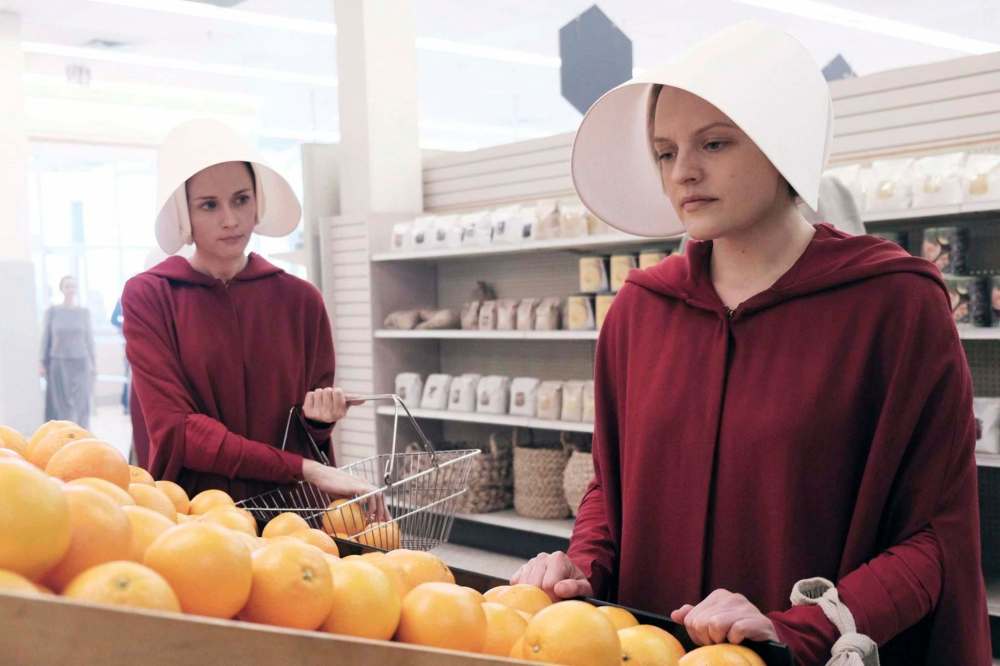
The Handmaid’s Tale has long been a feminist touchstone for many people. In March, activists in Texas dressed up as Handmaids to protest anti-abortion legislation, and women carried signs that read “Make Margaret Atwood Fiction Again” at the Women’s March at Washington, D.C. Indeed, it is a story about resistance; you can trust that Offred’s mic-drop proclamation “I intend to survive” will show up on protest signs.
That’s why it was both confusing and disappointing last week when the cast of the show refused to call The Handmaid’s Tale feminist at a film festival panel. “Honestly, for me it’s not a feminist story,” Moss said. “It’s a human story, because women’s rights are human rights.”
Despite the T-shirt-friendly, feminist-adjacent sloganeering of late — “nevertheless, she persisted,” “the future is female,” “nasty woman” — it would seem that the term “feminist” itself remains an F-word.
A feminist is, by definition, “a person who believes in the social, economic and political equality of the sexes.” But the word has been warped by those who fear it. Let’s put it this way: the idea that feminists are shrill, man-hating harpies with hairy pits didn’t come from feminists.
But the word has also been distorted by capitalism. Every so often there’s a discussion about “re-branding” feminism. Not to make it more inclusive, but to make it more marketable, more palatable. So, feminism gets de-clawed and de-fanged. It’s made non-threatening, non-obtrusive and non-disruptive. The word “feminist” is made into something you can sell, because the idea of equality can’t seem to sell itself.
Sure, the cast and crew of The Handmaid’s Tale might avoid the F-word in interviews because they are promoting a TV show and, to do so, feel they must create some distance between themselves and a loaded word. But maybe they aren’t explicitly saying the show is feminist because they don’t have to. The Handmaid’s Tale is, at its core, a story about the subjugation of women. There is no shortage of feminist commentary embedded within it.
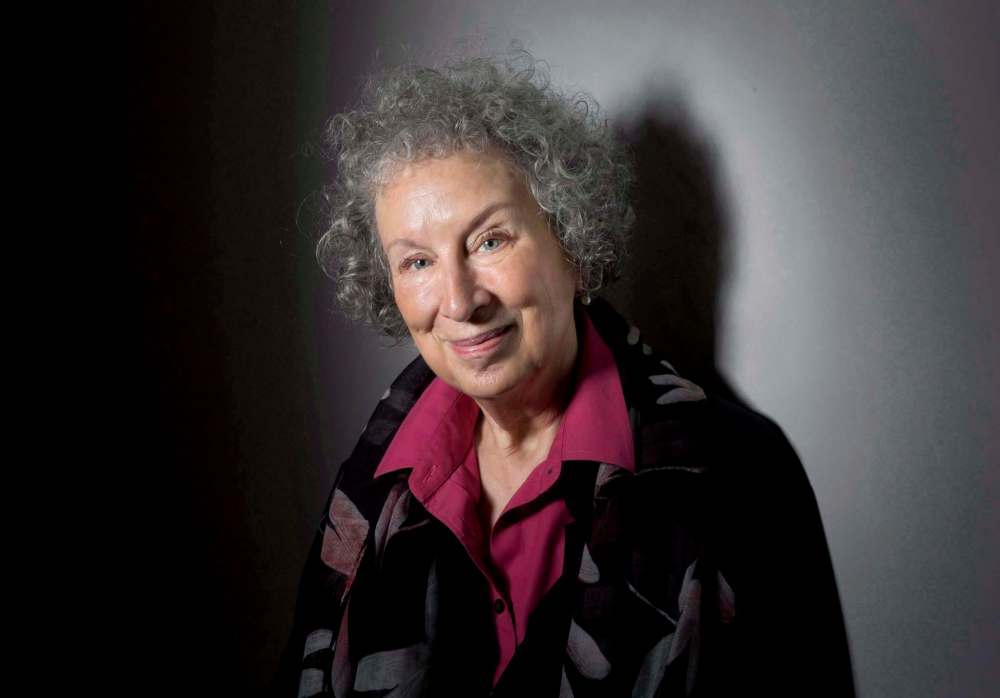
In the book and the TV series, the Handmaids are at once treated like Madonnas and whores, and are raped once a month by their Commanders as sanctioned by the state. Handmaids and wives have status over other women, but they learn that having status is not the same as having power. In the Republic of Gilead, where the story is set, women’s sexuality is something to be feared, policed and strictly regulated. Women are objectified and treated as vessels. Women who are not fertile are considered defective.

The Handmaids are made to regard each other with suspicion and competition. At one point, Ofglen (Alexis Bledel), Offred’s shopping partner, comments, “They do that really well: make us distrust each other.” She could just as easily be talking about any form of girl-on-girl crime that results from internalized misogyny.
If the treatment of women in Gilead looks at all familiar and makes you think, “Wow, that’s horrific and wrong,” congratulations: you’re a feminist.
Even if the cast of the TV series doesn’t call The Handmaid’s Tale a feminist work, the series will doubtlessly open people’s eyes to the ways in which women are treated in our society.
Like Offred, we need to stay awake. It’s when we’re asleep that the unthinkable becomes the ordinary.
jen.zoratti@freepress.mb.caTwitter: @JenZoratti
Jen Zoratti is a columnist and feature writer working in the Arts & Life department, as well as the author of the weekly newsletter NEXT. A National Newspaper Award finalist for arts and entertainment writing, Jen is a graduate of the Creative Communications program at RRC Polytech and was a music writer before joining the Free Press in 2013. Read more about Jen.
Every piece of reporting Jen produces is reviewed by an editing team before it is posted online or published in print – part of the Free Press‘s tradition, since 1872, of producing reliable independent journalism. Read more about Free Press’s history and mandate, and learn how our newsroom operates.
Our newsroom depends on a growing audience of readers to power our journalism. If you are not a paid reader, please consider becoming a subscriber.
Our newsroom depends on its audience of readers to power our journalism. Thank you for your support.
TV Preview

The Handmaid’s Tale
Starring Elisabeth Moss
Begins Sunday, 8 p.m
Bravo
Jen Zoratti is a columnist and feature writer working in the Arts & Life department, as well as the author of the weekly newsletter NEXT. A National Newspaper Award finalist for arts and entertainment writing, Jen is a graduate of the Creative Communications program at RRC Polytech and was a music writer before joining the Free Press in 2013. Read more about Jen.
Every piece of reporting Jen produces is reviewed by an editing team before it is posted online or published in print – part of the Free Press‘s tradition, since 1872, of producing reliable independent journalism. Read more about Free Press’s history and mandate, and learn how our newsroom operates.
Our newsroom depends on a growing audience of readers to power our journalism. If you are not a paid reader, please consider becoming a subscriber.
Our newsroom depends on its audience of readers to power our journalism. Thank you for your support.
Advertisement Advertise With Us
Advertisement Advertise With Us