

Defining moments
Dictionary editor opens a door into a lexicographer's world

Advertisement
Read this article for free:
or
Already have an account? Log in here »
To continue reading, please subscribe:
Monthly Digital Subscription
$1 per week for 24 weeks*
- Enjoy unlimited reading on winnipegfreepress.com
- Read the E-Edition, our digital replica newspaper
- Access News Break, our award-winning app
- Play interactive puzzles
*Billed as $4.00 plus GST every four weeks. After 24 weeks, price increases to the regular rate of $19.95 plus GST every four weeks. Offer available to new and qualified returning subscribers only. Cancel any time.
Monthly Digital Subscription
$4.99/week*
- Enjoy unlimited reading on winnipegfreepress.com
- Read the E-Edition, our digital replica newspaper
- Access News Break, our award-winning app
- Play interactive puzzles
*Billed as $19.95 plus GST every four weeks. Cancel any time.
To continue reading, please subscribe:
Add Free Press access to your Brandon Sun subscription for only an additional
$1 for the first 4 weeks*
*Your next subscription payment will increase by $1.00 and you will be charged $16.99 plus GST for four weeks. After four weeks, your payment will increase to $23.99 plus GST every four weeks.
Read unlimited articles for free today:
or
Already have an account? Log in here »
Hey there, time traveller!
This article was published 13/06/2017 (3199 days ago), so information in it may no longer be current.
After Republican congressional candidate Greg Gianforte violently assaulted a reporter in Montana last month, the most-searched term on Merriam-Webster’s online dictionary was “body slam.”
During James Comey’s testimony last week before the U.S. Senate intelligence committee, some of the former FBI director’s folksy turns of phrase caused an upswing in searches for “Lordy.”
Of course, there were also people looking up his less-homespun utterances: exfiltrate, defame, vindicate, salacious and collusion.
Few of those people probably stopped to think about the fact that the online dictionary is not some magical clearinghouse of accumulated knowledge, but a place where people actually work — lexicographers, to be precise — crafting precise definitions for words, sweating over etymology and usage, both for wrestling terms from the 20th century and for words derived from the Latin vindicatus, in use since 1571.
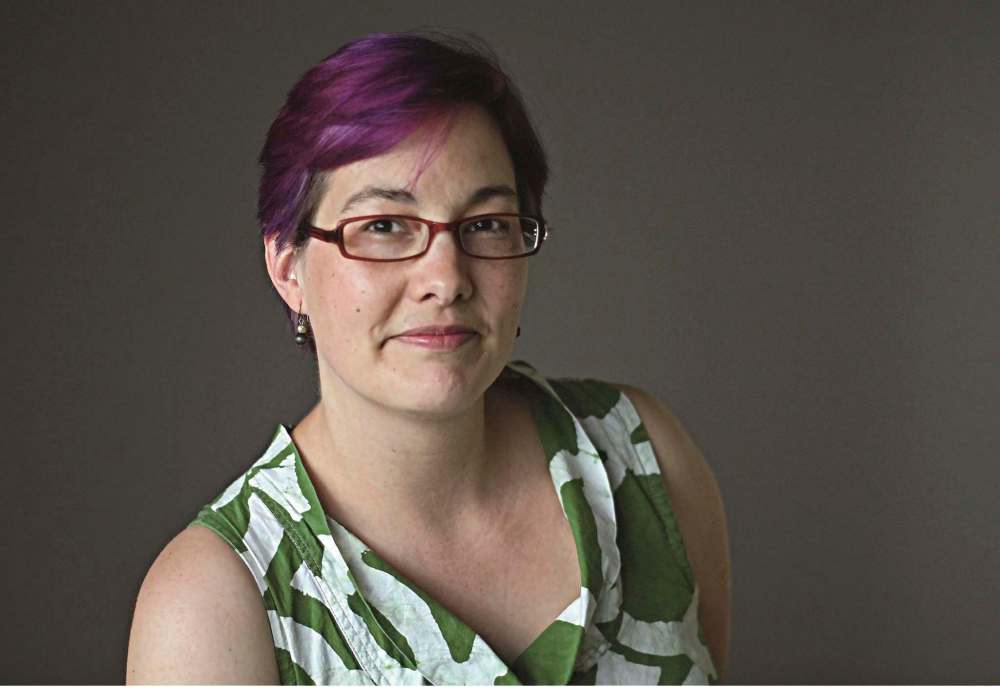
Kory Stamper is one of those lexicographers, whom she admits are a very particular breed. “If you like solitude and Old English, we have a spot for you,” she says with a laugh.
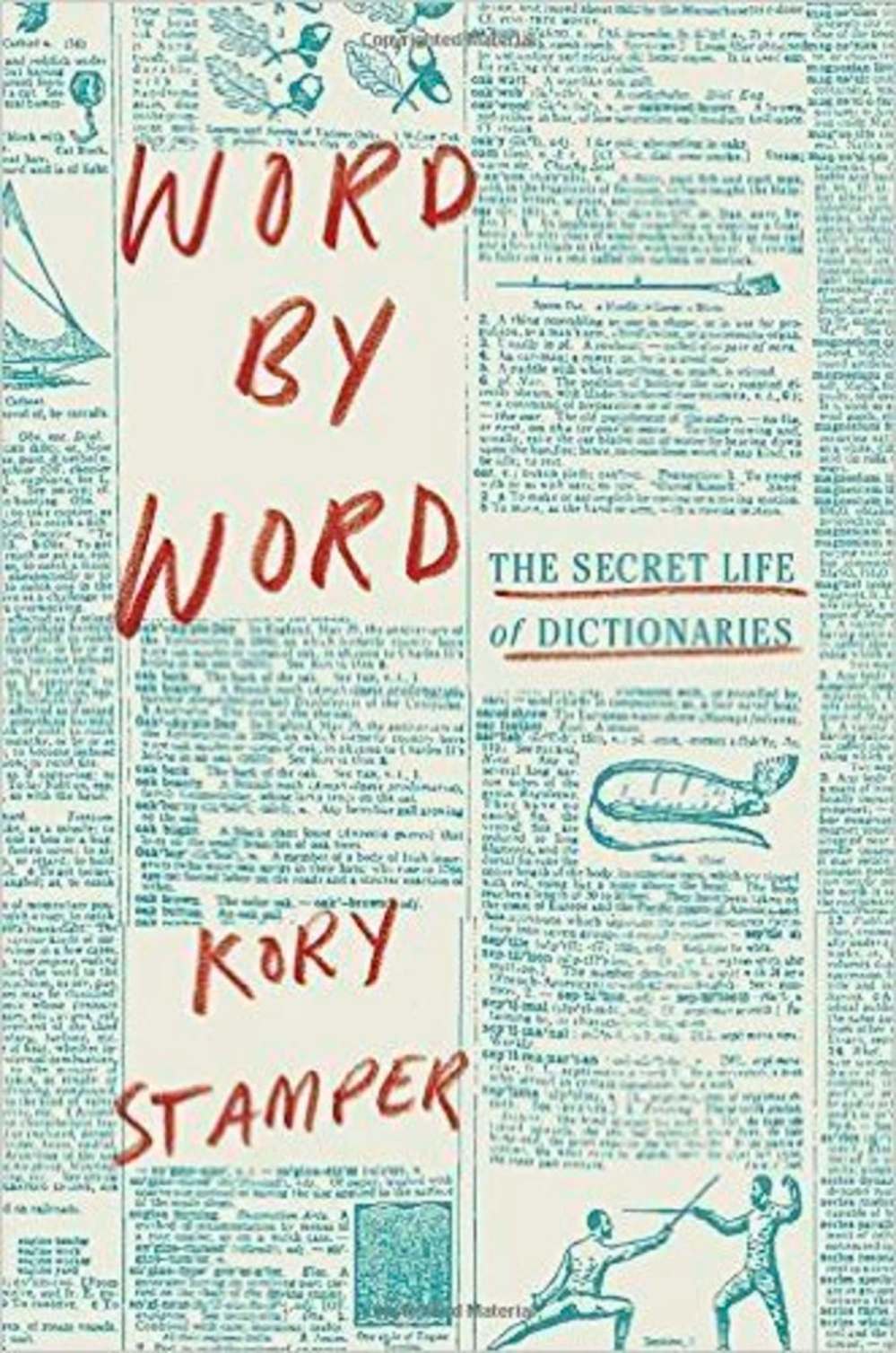
An editor at Merriam-Webster, she is also the author of the new non-fiction book Word by Word: The Secret Life of Dictionaries (Pantheon, $40), a fascinating and funny look at how these taken-for-granted reference tools are created and the constant struggle to keep them updated — much to the chagrin of people who would prefer the language to stay static.
“Every generation feels like the new technology is ruining English; we have people dating back to the 12th century complaining that the French are ruining English,” says Stamper, reached after a long day of answering emails and tweeting some of the more hilarious requests, including one from an adamant reader who believed the word should be “teethpaste,” since we brush more than one tooth.
People have always lamented technology and the allegedly detrimental effect of progress on language. Back in the fifth century BC, Greek philosopher Socrates railed against writing things down, claiming it would lead to intellectual and moral decay. (He thought everything should be committed to memory.)
Today it’s the Internet, texting and social media that bear the brunt of disdain from people who believe the dictionary should protect the purity of English, which is a bit of a mongrel to begin with. (“English is such a whore,” Stamper says. “It just takes languages from all over the world and pilfers them of vocabulary.”)
Even those who long ago gave up on forcing everyone to use the literally accurate use of “literally” or to write “decimate” only in situations where one-tenth of something is destroyed can agree that we must be saved from the OMGs and LOLs weaselling their way past lexicographers and into the dictionary.
These people believe the dictionary has a prescriptive role, rather than the descriptive role it actually has, which is to document the way a language is being used, rather than the way we might wish people would use it.
“Prescriptivists can sit in the status quo — or what they perceive to be the status quo, because the actual status quo is not at all what they perceive it to be,” Stamper says, “but the platonic ideal of the status quo, they like to sit in that because I think they use it as a gauge: this is what marks an educated person from an uneducated person.
“This is an easy shorthand for them to say, ‘I understand English and that person doesn’t.’ It makes them feel better about themselves.”
There’s no denying the Internet has had a huge impact on lexicography. However, Stamper says, contrary to how it might feel, the World Wide Web is neither causing language to change more quickly, nor corrupting it beyond repair.
“I think the Internet is making us see language change more quickly,” she explains. “I don’t know that it’s making language change any faster than it already changes. I think the difference is there is no lag time on the Internet between when a person writes something and when it gets edited and when it gets published.
“We also have access to a lot more different types of English, which, as a lexicographer, is very exciting. The thing that’s really great about the Internet is instead of showing us just this really narrow slice of language development and movement, it shows us a huge swath instead. And that’s super-exciting for lexicographers and also super-intimidating, because there’s just no way you can keep up with it.”
The narrow slice she refers to includes the longtime required reading material for lexicographers, such as newspapers, journals, books, magazines and other edited sources. But now, especially as those “credible” sources are increasingly edited with less fastidiousness and adherence to in-house style (the New York Times, for instance, quietly dissolved its copy editing desk recently), lexicographers turn — with a careful eye — to online sources that include blogs and social media.
Contrary to what the-sky-is-falling language scolds believe, this does not mean a nonsense word like U.S. President Donald Trump’s “covfefe” is going to take up residence before “cow” in the dictionary, just because it was used a lot after he tweeted it (although see the phrase “on fleek” for a bizarre example to the contrary).
But it does mean lexicographers can more easily monitor the way and frequency with which words are being used, especially in communities beyond those traditionally served by mainstream media.
“We definitely chart the blips, because you never really know when one of those words is going to be a blip and when it’s going to last…” Stamper says, pointing to “chad” as a word that underwent a huge surge during the 2000 U.S. election. “We’re charting “woke,” we’re charting “lit,” we’re charting T-H-O-T thot, we’re charting all of these slang words that you’re seeing a lot on Twitter and on the Internet.”
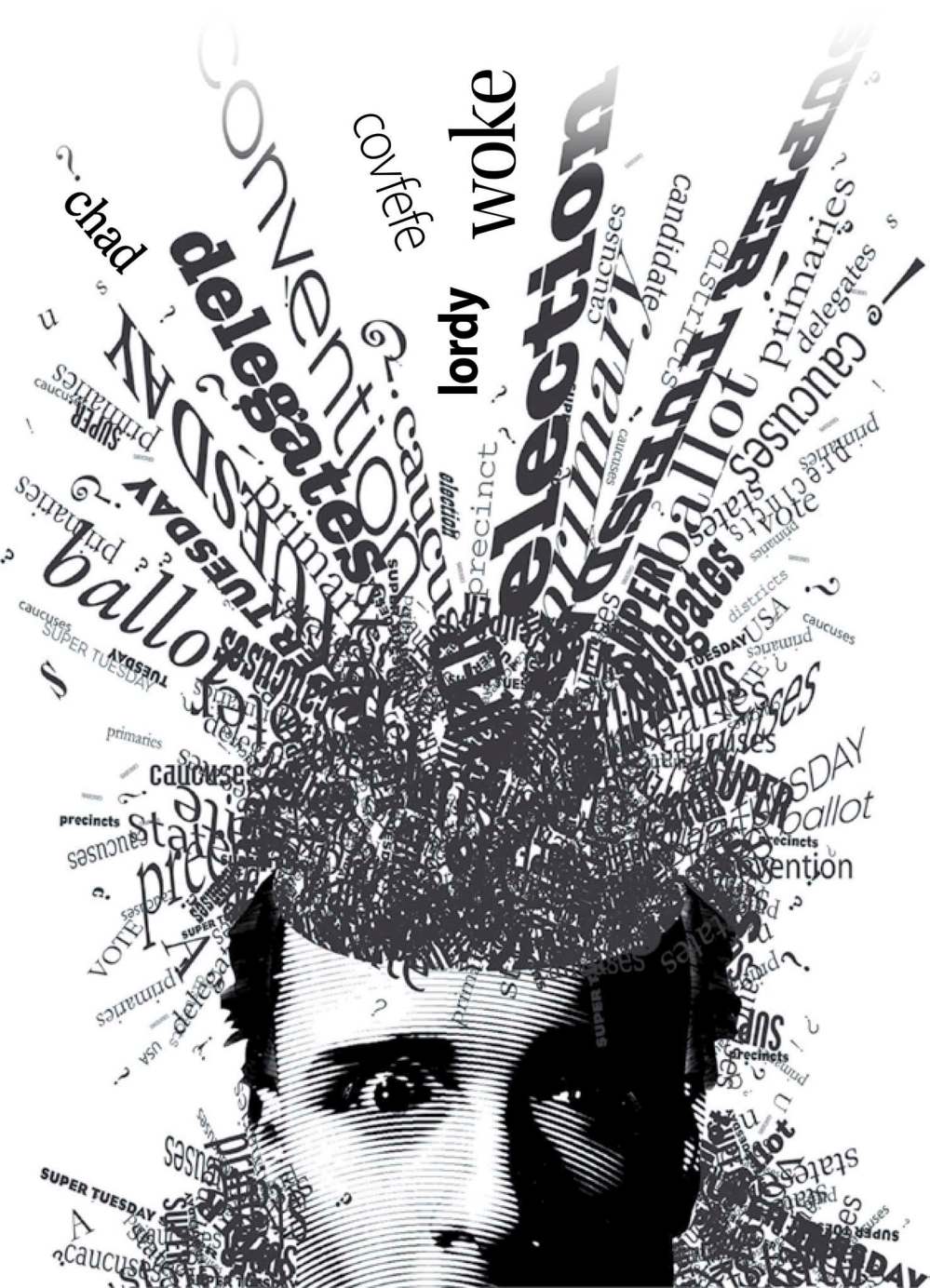

“Woke” is an interesting example of a word that is bubbling to the surface. Indicating an awareness of social injustice, it’s used to refer to those who actively question the dominant paradigm — “she’s woke” — and became entwined with the Black Lives Matter movement. It’s part of an activist hashtag (#staywoke) but it has also turned up in scholarly debate of racism.
“Woke has sort of gone mainstream, but it’s been used in African-American Vernacular English since the ‘60s,” Stamper says. “So even if woke doesn’t stay mainstream, it will still be used in AAVE because it has been for almost 60 years now.
“In that way, even the idea of blips of usage is a complicated thing, because it’s much more like a word moves up and down through different layers of language. It might have its origin in one layer and then an event pushes it up through the surface. And then it falls back down.”
Luckily, we have the lexicographers to document its rise and fall, because Lordy/OMG, it’s tough to keep track on your own.
jill.wilson@freepress.mb.caTwitter: @dedaumier
Jill Wilson is the editor of the Arts & Life section. A born and bred Winnipegger, she graduated from the University of Winnipeg and worked at Stylus magazine, the Winnipeg Sun and Uptown before joining the Free Press in 2003. Read more about Jill.
Jill oversees the team that publishes news and analysis about art, entertainment and culture in Manitoba. It’s part of the Free Press‘s tradition, since 1872, of producing reliable independent journalism. Read more about Free Press’s history and mandate, and learn how our newsroom operates.
Our newsroom depends on a growing audience of readers to power our journalism. If you are not a paid reader, please consider becoming a subscriber.
Our newsroom depends on its audience of readers to power our journalism. Thank you for your support.
Jill Wilson is the editor of the Arts & Life section. A born and bred Winnipegger, she graduated from the University of Winnipeg and worked at Stylus magazine, the Winnipeg Sun and Uptown before joining the Free Press in 2003. Read more about Jill.
Jill oversees the team that publishes news and analysis about art, entertainment and culture in Manitoba. It’s part of the Free Press‘s tradition, since 1872, of producing reliable independent journalism. Read more about Free Press’s history and mandate, and learn how our newsroom operates.
Our newsroom depends on a growing audience of readers to power our journalism. If you are not a paid reader, please consider becoming a subscriber.
Our newsroom depends on its audience of readers to power our journalism. Thank you for your support.
Advertisement Advertise With Us
Advertisement Advertise With Us
History
Updated on Tuesday, June 13, 2017 6:48 AM CDT: Adds photos, formats text
Updated on Tuesday, June 13, 2017 7:07 AM CDT: Corrects typo