The forgotten ancestors of American music
Documentary investigates Indigenous influence on rock, blues and more
Advertisement
Read this article for free:
or
Already have an account? Log in here »
To continue reading, please subscribe:

Digital Subscription
One year of digital access for only $205*
- Enjoy unlimited reading on winnipegfreepress.com
- Read the E-Edition, our digital replica newspaper
- Access News Break, our award-winning app
- Play interactive puzzles
*First annual payment billed as $205.00 + GST for one year. This annual subscription will automatically renew at $233.00 + GST every 52 weeks (10% off the regular annual price of $259.35). Offer available to new and qualified returning subscribers only. Cancel any time.
To continue reading, please subscribe:
Add Free Press access to your Brandon Sun subscription for only an additional
$1 for the first 4 weeks*
- Enjoy unlimited reading on winnipegfreepress.com
- Read the E-Edition, our digital replica newspaper
- Access News Break, our award-winning app
- Play interactive puzzles
*Your next Brandon Sun subscription payment will increase by $1.00 and you will be charged $17.95 plus GST for four weeks. After four weeks, your payment will increase to $24.95 plus GST every four weeks.
Read unlimited articles for free today:
or
Already have an account? Log in here »
Hey there, time traveller!
This article was published 26/08/2017 (3310 days ago), so information in it may no longer be current.
Like the 2013 music documentary Muscle Shoals, which posited a poetic connection between hit songs and water — in that case, the Tennessee River and the Fame recording studio of Muscle Shoals, Ala. — Rumble: The Indians Who Rocked the World also concerns itself with a kind of metaphorical musical tributary, albeit one that is not literally wet.
Its theme is how Native Americans — their musical style and their musicianship — have fed the great river of American popular song, from rock to blues, jazz, country and funk.
The film most eloquently makes its case in the early going, when playing a recording by Charley Patton, a blues guitarist and singer who is believed to have Indigenous ancestry.
As Tuscarora singer Pura Fé points out the unmistakable Indian rhythms and vocal qualities, you might find yourself thinking, “How could I have missed that before?”
This is not dry ethnomusicology, however.
Rather, co-directors Catherine Bainbridge and Alfonso Maiorana offer brief (only occasionally repetitive) profiles of musicians with Aboriginal ancestry, several of whom may be widely known.
Half-Shawnee power-chord pioneer Link Wray, for instance — whose 1958 instrumental hit Rumble lends the film its title — is one such, oft-unsung guitar hero.
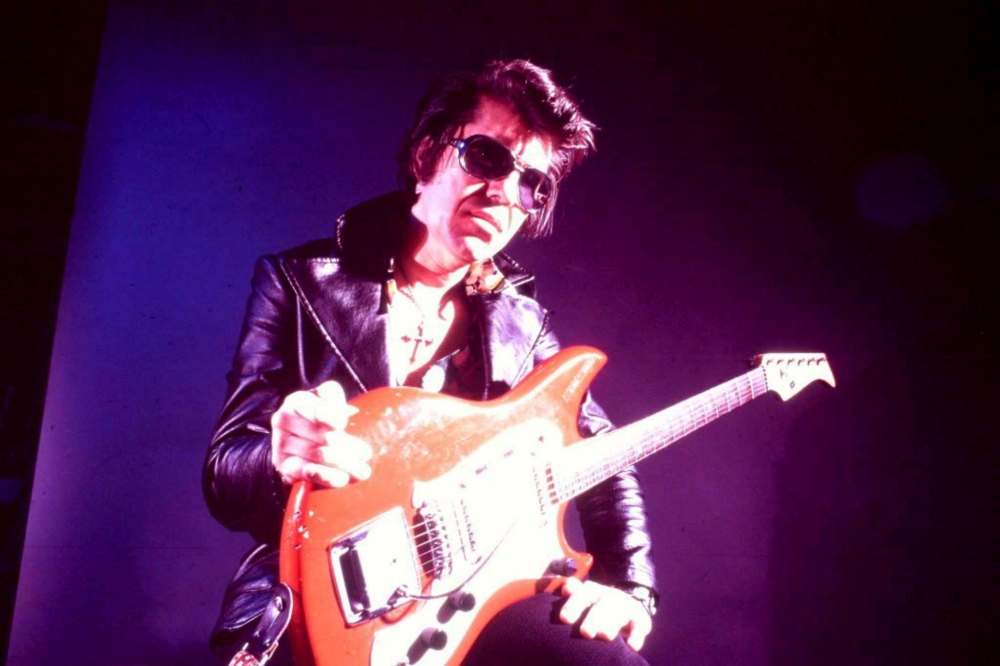
But the film also spotlights such Aboriginal musicians as Metallica bassist Robert Trujillo; heavy metal drummer Randy Castillo; blues singer Howlin’ Wolf; folk singer Buffy Sainte-Marie; rocker Jimi Hendrix; the soul-singing Neville Brothers and guitarist Stevie Salas, who is also one of the film’s producers.

The 1970s pop group Redbone, which was known for performing in clothing inspired by traditional garb, sometimes opened their TV appearances with an Aboriginal dance before breaking into one of their hits.
The group’s song Come and Get Your Love experienced renewed attention in 2014 when that 1973 hit was featured in Guardians of the Galaxy.
But how many people who hear that toe-tapping song today automatically can hear the Aboriginal music that courses through it?
About a musical genre not known for quiet contemplation, Rumble asks us to be still for a moment and to listen to the heartbeat — at once familiar and newly strange — that pumps the lifeblood that flows through the songs this country is known for.
— Washington Post