Get yourself winterized
Supermarket nutrition tours provide a refresher course on fresh foods
Advertisement
Read this article for free:
or
Already have an account? Log in here »
To continue reading, please subscribe:

Digital Subscription
One year of digital access for only $205*
- Enjoy unlimited reading on winnipegfreepress.com
- Read the E-Edition, our digital replica newspaper
- Access News Break, our award-winning app
- Play interactive puzzles
*First annual payment billed as $205.00 + GST for one year. This annual subscription will automatically renew at $233.00 + GST every 52 weeks (10% off the regular annual price of $259.35). Offer available to new and qualified returning subscribers only. Cancel any time.
To continue reading, please subscribe:
Add Free Press access to your Brandon Sun subscription for only an additional
$1 for the first 4 weeks*
- Enjoy unlimited reading on winnipegfreepress.com
- Read the E-Edition, our digital replica newspaper
- Access News Break, our award-winning app
- Play interactive puzzles
*Your next Brandon Sun subscription payment will increase by $1.00 and you will be charged $17.95 plus GST for four weeks. After four weeks, your payment will increase to $24.95 plus GST every four weeks.
Read unlimited articles for free today:
or
Already have an account? Log in here »
Hey there, time traveller!
This article was published 14/11/2017 (3166 days ago), so information in it may no longer be current.
Is your car ready for the winter? Did you get it tuned up and topped up with winter-weather fluids? What about you? Are you ready for the winter holidays? What about getting a “pre-holiday season nutritional tune-up?”
It’s a healthy habit to take a little time to review your food habits and “check in” with updated information. Some folks might discover that changes are needed. Others might have change thrust upon them due to illness or other changes in their health.
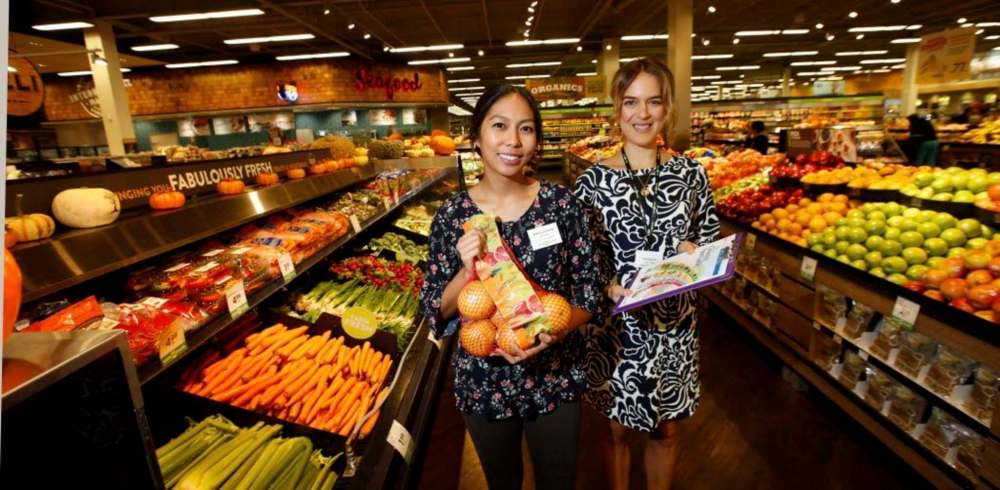
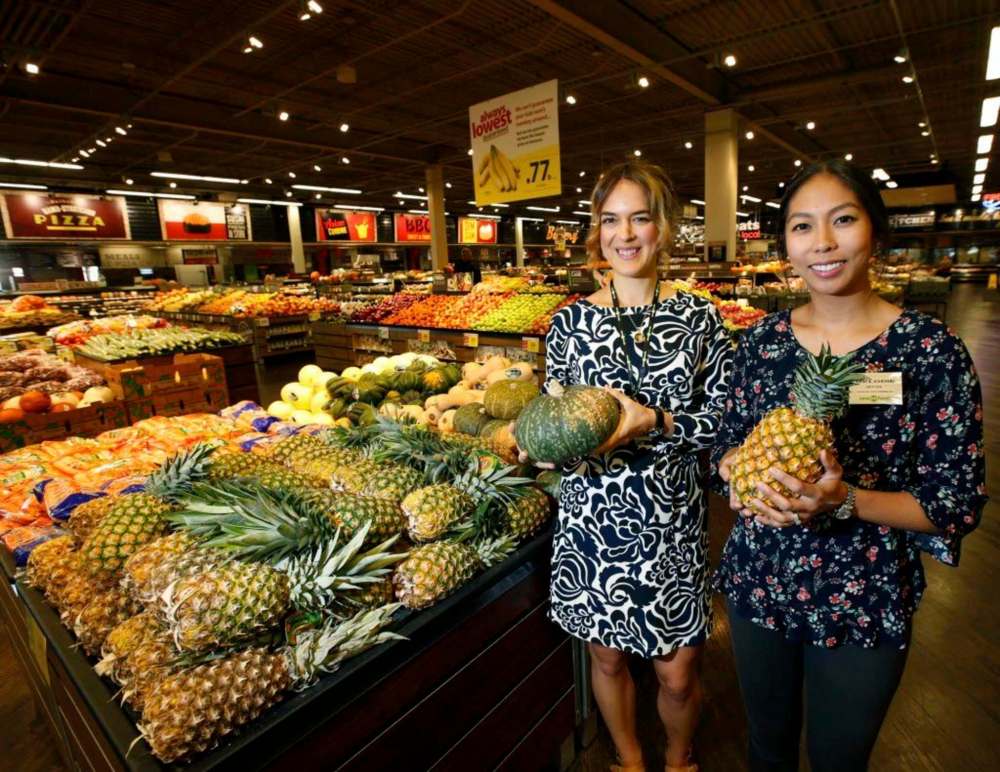
A good place to start is a visit with a registered dietitian who can walk you through the labels and aisles at the grocery store. Save-On Foods is offering this free service to anyone who is interested. If you or your group have a particular interest or concern, you can let them know and the dietitians can tailor the topic. School tours are usually 45 minutes long, and adult tours are 60 to 75 minutes to accommodate extra questions.
“Nutrition tours are offered to customers of all ages as well as school and youth groups,” says Melodie Ho, a registered dietitian and tour leader.
“Tour topics can include nutrition on a budget; feeding a young family; diabetes; heart health; and general healthy eating principles for young, growing children.”
Other groups include various mommy and me classes and meetups, daycare centres and other program providers that influence what the children in their care might be eating.
Adult groups have also included TOPS (Take Off Pounds Sensibly) and newcomers, who get an opportunity to improve their English skills while learning where to find familiar foods, discovering new ones and learning how to ask staff for help finding items.
“The pharmacist also often recommends the tour to diabetes patients who spot the brochure when they come to fill prescriptions,” she says.
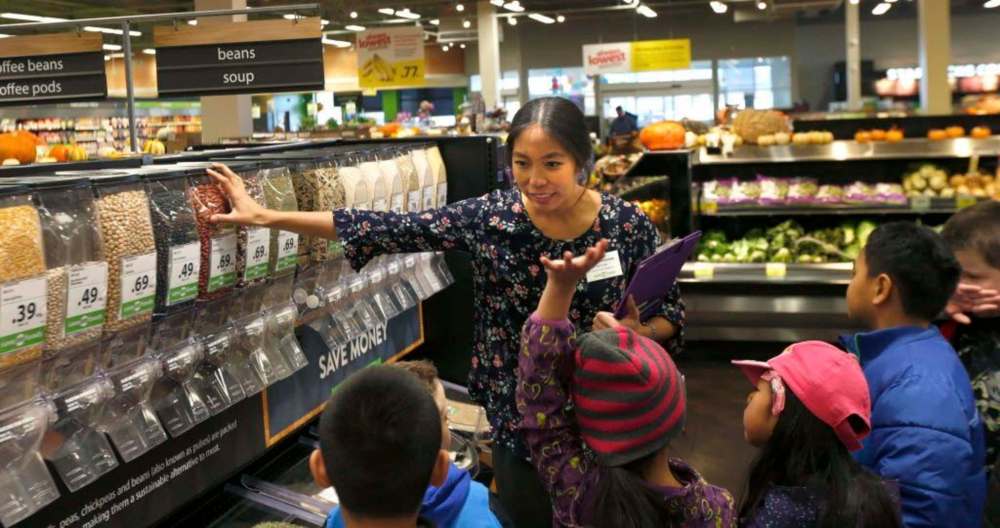
I tagged along with a group of first- to third-graders from R.F. Morrison School earlier this fall to see what a tour looks like. The students walked over from the school and were keen to go.
“Kids love the tour, it gives them an opportunity to talk about what they do with their parents and also to share with their parents what they’ve learned on the tour,” says Ho.
They were broken into two groups of eight. Amanda Hamel, also a registered dietitian and tour leader, takes one group.
“We cover the food guide rainbow because it’s easy for the children to visualize and it’s something they’ve seen in school, so they are familiar with it,” says Hamel.
“We usually focus on how foods help them to move and grow.”

The tour starts in the produce section and both leaders introduce themselves and do a quick review of the rainbow, starting with the green stripe — and “green is for foods that help you glow.”
“Fruits and vegetable have lots of colours,” says Ho.
“How can we eat them?”
“With your teeth!” says one of the kids.
That is technically the correct answer but Ho was looking for “fresh or cooked, and if fresh isn’t available frozen or canned.”
The group moves on to the meat and alternatives aisles to look at proteins or “grow foods” and discuss whole versus processed meats. Then it’s on to the bean aisle.
“This is a good aisle for anyone who is vegetarian and doesn’t eat meat,” says Ho.
The group steps over to the seafood section and the seafood tanks.
“The kids love this part of the tour — it’s a bit like going to the aquarium,” she says.
“Lobsters! Crabs! Look at that one — it’s trying to climb out!”
Someone wants to know why there is running water. Ho explains that it keeps the shellfish healthy.
We’re at the halfway point and the kids are seated on stools next to the seafood counter.

“The students also receive a little dish of fruits and some bread as a snack,” says Ho.
“We try to offer something trendy or new that might be a first, as well as a whole grain bread product to try.”
The reviews are predictably mixed with some children happily gobbling down the fruit and others picking through the little dishes for things they like.
They switch leaders and Hamel continues the tour and covers whole grain breads — the yellow part of the rainbow.
She points out that the bread is available in different colours — some darker, some lighter — some with many seeds and grains on top. She talks a little about fibre and how bread is a “go” food — a carbohydrate for energy. The bakery is right behind us filled with daintily iced cakes and cookies and the kids can’t help but notice. Hamel points to her picture of the rainbow.
“Can you see cake on the rainbow?” she asks.
She’s fooled them — it’s not there. But that’s OK.
“Cakes and cookies are sometime foods that we eat for special occasions,” she says.
From there it’s onto the egg section, and then to talk about the difference between a plain yogurt and a sweetened one and how to add flavours to a plain yogurt. Hamel also talks about some alternatives to dairy milk, including nut and soy milks.
The end of the tour takes us to a top secret place — the behind-the-scenes part of the store, plus the students get to see how the milk slides out into the fridge, which — let’s face it — is probably the No. 1 thing kids want to know about the grocery store.
“Germs can make you sick and the cold keeps the food from growing germs,” says Hamel.
The kids are invited to feel how cold the fridge is and Hamel explains that the lower temperature keeps the food fresh. This room is where the food arrives before the staff put it on the shelves. She poses the question, “How does the food get here?
“It comes from farms all over the world and it’s transported here by truck or by plane,” she says.
The students have come to the end of their nutritional journey, so it’s time to rejoin their classmates back at the fish tanks.
Nutrition tours are offered at all Save-On-Foods in Winnipeg and are available free of charge for members of its More Rewards loyalty program and all school/youth groups. Minimum group size is seven, and are based on interest.
For information about the program or general nutrition questions, contact a store dietitian using the online Ask-A-Dietitian feature in the nutrition section of the Save-On-Foods website (saveonfoods.com). You can book a tour using the online form.
“If you don’t have a computer you can visit the customer service desk where they will take your contact information and have the nutritionist call you,” says Ho.
“We also encourage participants to invite their loved ones, friends or colleagues who may also be interested in learning more about nutrition and healthy eating.”
Twitter: @WendyKinginWpg