

What if we did less, but achieved more?
Former Winnipegger's book focuses on women not wanting it all

Advertisement
Read this article for free:
or
Already have an account? Log in here »
To continue reading, please subscribe:
Digital Subscription
One year of digital access for only $1.44 a week*
- Enjoy unlimited reading on winnipegfreepress.com
- Read the E-Edition, our digital replica newspaper
- Access News Break, our award-winning app
- Play interactive puzzles
*Billed as $5.77 plus GST every four weeks. After 52 weeks, price increases to the regular rate of $19.95 plus GST every four weeks. Offer available to new and qualified returning subscribers only. Cancel any time.
To continue reading, please subscribe:
Add Free Press access to your Brandon Sun subscription for only an additional
$1 for the first 4 weeks*
- Enjoy unlimited reading on winnipegfreepress.com
- Read the E-Edition, our digital replica newspaper
- Access News Break, our award-winning app
- Play interactive puzzles
*Your next Brandon Sun subscription payment will increase by $1.00 and you will be charged $17.95 plus GST for four weeks. After four weeks, your payment will increase to $24.95 plus GST every four weeks.
Read unlimited articles for free today:
or
Already have an account? Log in here »
Hey there, time traveller!
This article was published 03/02/2018 (3041 days ago), so information in it may no longer be current.
When it comes to the subject of productivity and women, a lot has been written about “having it all.”
We’re supposed to boss up and smash that glass ceiling with our sky-high career ambitions, all while sitting on extracurricular boards and committees, maintaining mutually fulfilling relationships with our partners/families/friends, hitting the gym five times a week, keeping spotless and stylish homes, cooking nutritious meals (to be eaten at a device-free table — what are you, an animal?), planning Pinterest-perfect parties, “drinking more water,” walking the dog, making the appointments, doing yoga every morning and looking “put together.” And, oh yeah, potentially having and raising well-adjusted, happy kids — who come with their own lists of expectations and pressures.
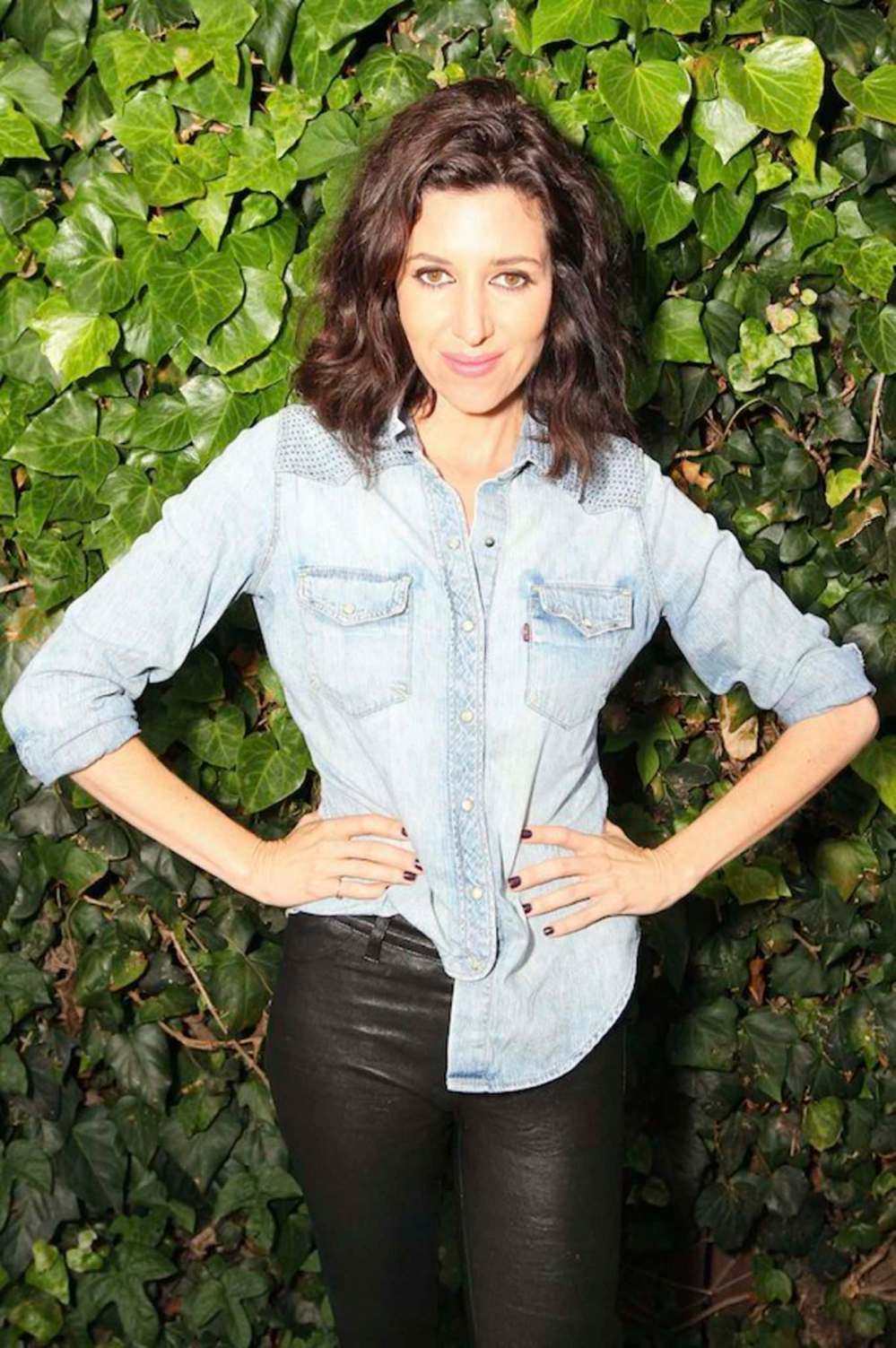
Somewhere along the way, “having it all” became “doing it all,” and the shiny promise of “you can have it all” became “you should want it all.”
But what if we didn’t subscribe to that? What if we did less, but ended up achieving more?
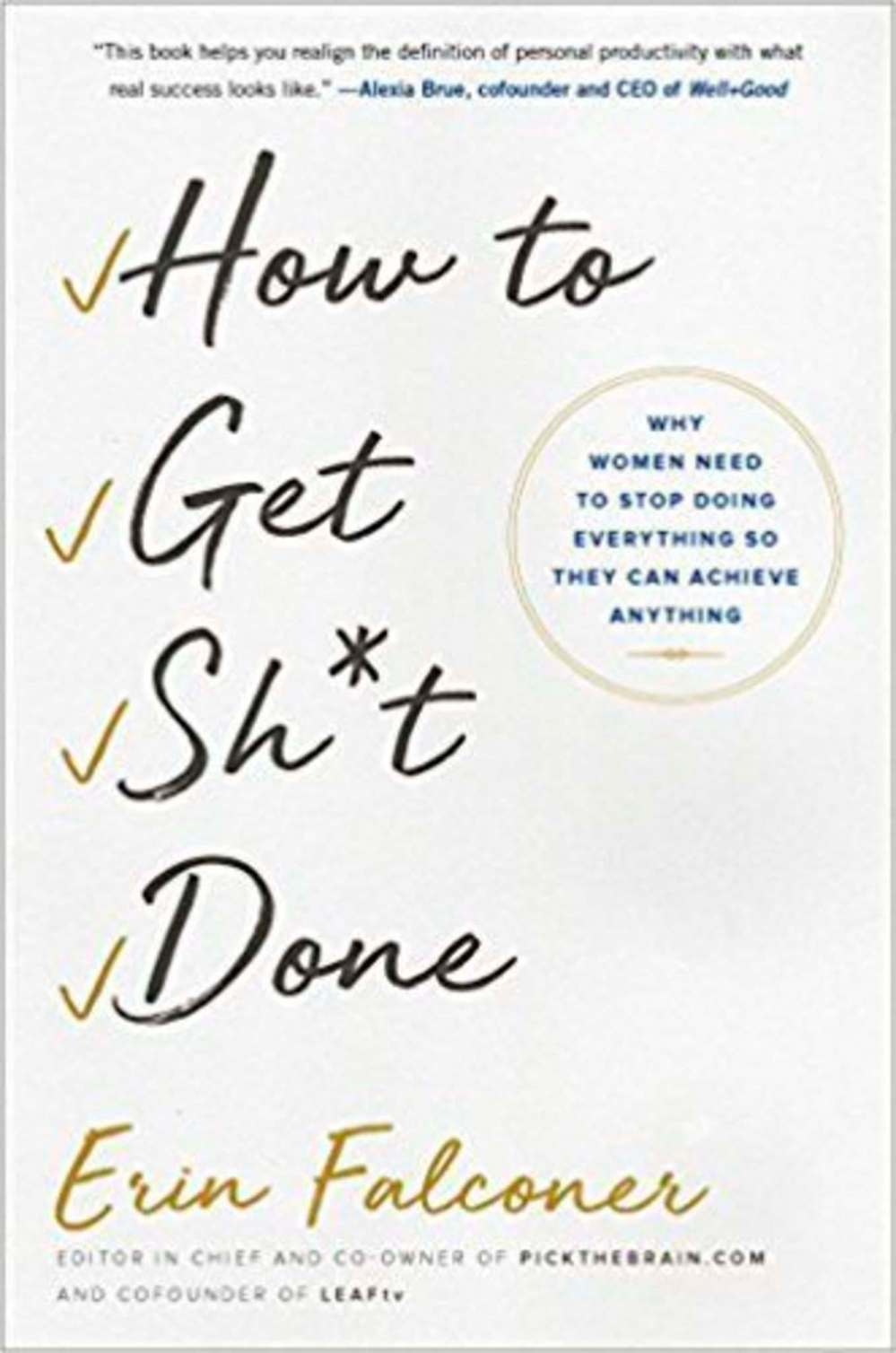
That’s the central premise of Erin Falconer’s debut book, How to Get Sh*t Done: Why Women Need To Stop Doing Everything So They Can Achieve Anything (246 pages, North Star Way, $35). Released last month, it’s a refreshingly un-self-helpy self-help book that examines productivity through a feminist lens and advocates eschewing endless to-do lists and impossible expectations for meaningful (and achievable) goals that reflect who you actually are and what you actually want. Crushing a to-do list might give you a fleeting dopamine high, but if all those tasks are not in service of your goals — or your happiness, or your health — why are you doing them?
“If we continue to pursue productivity for productivity’s sake, women will continue to position themselves diametrically opposed to satisfaction,” Falconer writes. “You may feel like the most productive person alive, but without a purpose, you’re just busy.”
Falconer has called Los Angeles home since 2001, but she was born and raised right here in Winnipeg. “It’s nice to see a 204 area code on my phone,” the Balmoral Hall alumna says when I call. “Not only am I from Winnipeg, Winnipeg has a soft place in my heart. I’m very sentimental about it — in fact, I’m so sentimental about it that my first son was born in September and his middle name is Winnie.”
Falconer is a name in the self-improvement scene; she’s the co-owner and editor of Pick the Brain, a popular self-improvement blog, and the co-founder of LEAFtv, a lifestyle site featuring how-to videos geared toward women. Her path to success hasn’t been linear, and she’s candid about her low points. (How to Get Sh*t Done is filled with wry insights and anecdotes from her personal life, which makes the book read more like counsel from your most reasonable girlfriend as opposed to detached advice from on high.)
But when she was approached by a literary agent to write a book, she heard the voice most women carry around in their heads, “Who would read this book? What do you have to add to the conversation? What have you ever done?”
The truth was, Falconer had actually accomplished a lot and had a lot to say — the only one who didn’t recognize that was her.
“It was in that moment where I was like, there’s a problem here,” she says.
“And when I stopped and looked around at all of the other the great, smart, ambitious women I was working with, it was like, ‘Oh wait, you look like you’re suffering from the same thing I’m suffering from, and we don’t even know it.’ We’re just going, going, going and we’re not stopping to appreciate anything or live life. This is not only completely untenable, it’s unenjoyable. I wanted to explore why we’re on this fast track into a brick wall.”
Falconer includes exercises in the book that encourage readers to really evaluate what they want and what makes them happy, and to separate out the ‘shoulds’ — a word she’d like women to excise from their vocabularies, along with “sorry.” Also, no one ever got sh*t done by being a yes-woman.
“I still catch myself,” she says.
“It’s so engrained in me, as it is with a lot of women, to say sorry when we don’t need to apologize. But the good news is, I’m catching myself. Now, if I say yes when I mean no — which is a lot more rare these days — I catch myself. I think that’s more important than living perfectly, being mindful of your behaviour.”
As for “wanting” or “having it all?” Yeah, about that:
“I was doing a podcast and we got onto that subject of “wanting it all,” Falconer says.
“I said, I need to be clear: I do not want it all. Wanting it all sounds exhausting, wanting it all sounds never-ending. Even if you could have it all, where do you go from there? Do you just stop living? It’s the wrong mentality, no matter where you look at. I believe in throwing that notion out completely.”
In an era in which women are told to “lean in” — a term coined by Facebook chief operating officer Sheryl Sandberg and the author of the 2013 book Lean In: Women Work, and the Will to Lead — the more moderate “wanting some” might sound radical. It might even sound like failure. That’s what happens, as Falconer points out, when we have a narrow view of what success looks like.
“I don’t want to call out Sheryl Sandberg, but I feel like when women who have a voice in this industry do talk about productivity, that’s their default setting: lean in, tough it out, be more like a man,” she says. “Taking that analogy further, if you’re leaning in, at a certain point you’re going to tip over. That’s the problem — just chasing, chasing, chasing. My whole thing is put your shoulds back, stand back, take a step back and take a look at everything and see where you want to go.”
Falconer’s book has only been out a month and, already, it has resonated with many women.
“I have gotten so many great messages,” she says.
“A very common thread is people bought the book expecting it to be one thing — a classic book on productivity — and when they got it, saying, ‘This isn’t what I was expecting at all, this is so much better.’ It hits you on a personal, deeper level as opposed to ‘here are some tips and tricks you can do,’ which I know is what people were expecting. A lot of women have said, ‘Oh my God, this is exactly the way I’ve been feeling.’ And that’s what I wanted. I wanted the book to be an eye-opener about the basic way you’re living your life.”
jen.zoratti@freepress.mb.caTwitter: @JenZoratti
Jen Zoratti is a columnist and feature writer working in the Arts & Life department, as well as the author of the weekly newsletter NEXT. A National Newspaper Award finalist for arts and entertainment writing, Jen is a graduate of the Creative Communications program at RRC Polytech and was a music writer before joining the Free Press in 2013. Read more about Jen.
Every piece of reporting Jen produces is reviewed by an editing team before it is posted online or published in print – part of the Free Press‘s tradition, since 1872, of producing reliable independent journalism. Read more about Free Press’s history and mandate, and learn how our newsroom operates.
Our newsroom depends on a growing audience of readers to power our journalism. If you are not a paid reader, please consider becoming a subscriber.
Our newsroom depends on its audience of readers to power our journalism. Thank you for your support.
Jen Zoratti is a columnist and feature writer working in the Arts & Life department, as well as the author of the weekly newsletter NEXT. A National Newspaper Award finalist for arts and entertainment writing, Jen is a graduate of the Creative Communications program at RRC Polytech and was a music writer before joining the Free Press in 2013. Read more about Jen.
Every piece of reporting Jen produces is reviewed by an editing team before it is posted online or published in print – part of the Free Press‘s tradition, since 1872, of producing reliable independent journalism. Read more about Free Press’s history and mandate, and learn how our newsroom operates.
Our newsroom depends on a growing audience of readers to power our journalism. If you are not a paid reader, please consider becoming a subscriber.
Our newsroom depends on its audience of readers to power our journalism. Thank you for your support.
Advertisement Advertise With Us
Advertisement Advertise With Us