Love and loss
Royal Wood talks new album, marriage and grieving process

Advertisement
Read this article for free:
or
Already have an account? Log in here »
To continue reading, please subscribe:

Digital Subscription
One year of digital access for only $205*
- Enjoy unlimited reading on winnipegfreepress.com
- Read the E-Edition, our digital replica newspaper
- Access News Break, our award-winning app
- Play interactive puzzles
*First annual payment billed as $205.00 + GST for one year. This annual subscription will automatically renew at $233.00 + GST every 52 weeks (10% off the regular annual price of $259.35). Offer available to new and qualified returning subscribers only. Cancel any time.
To continue reading, please subscribe:
Add Free Press access to your Brandon Sun subscription for only an additional
$1 for the first 4 weeks*
- Enjoy unlimited reading on winnipegfreepress.com
- Read the E-Edition, our digital replica newspaper
- Access News Break, our award-winning app
- Play interactive puzzles
*Your next Brandon Sun subscription payment will increase by $1.00 and you will be charged $17.95 plus GST for four weeks. After four weeks, your payment will increase to $24.95 plus GST every four weeks.
Read unlimited articles for free today:
or
Already have an account? Log in here »
Hey there, time traveller!
This article was published 24/05/2018 (2982 days ago), so information in it may no longer be current.
It can be tough to reconcile experiencing overlapping emotions of extreme love and extreme grief, and this was the struggle Canadian singer-songwriter Royal Wood faced before starting work on his newest album, Ever After the Farewell.
Wood’s father’s health began to decline rapidly — he was diagnosed with Alzheimer’s, but it was chronic obstructive pulmonary disease that ended up being his cause of death just a few months later. At the same time, Wood had been working on a couple of new tracks and was out on tour when he met his now-wife, Alison Waldbauer, and fell madly in love.
Within the span of weeks, his father had died, his love life had blossomed, and he was in the U.K. working on a collection of new songs that would end up becoming Ever After the Farewell.
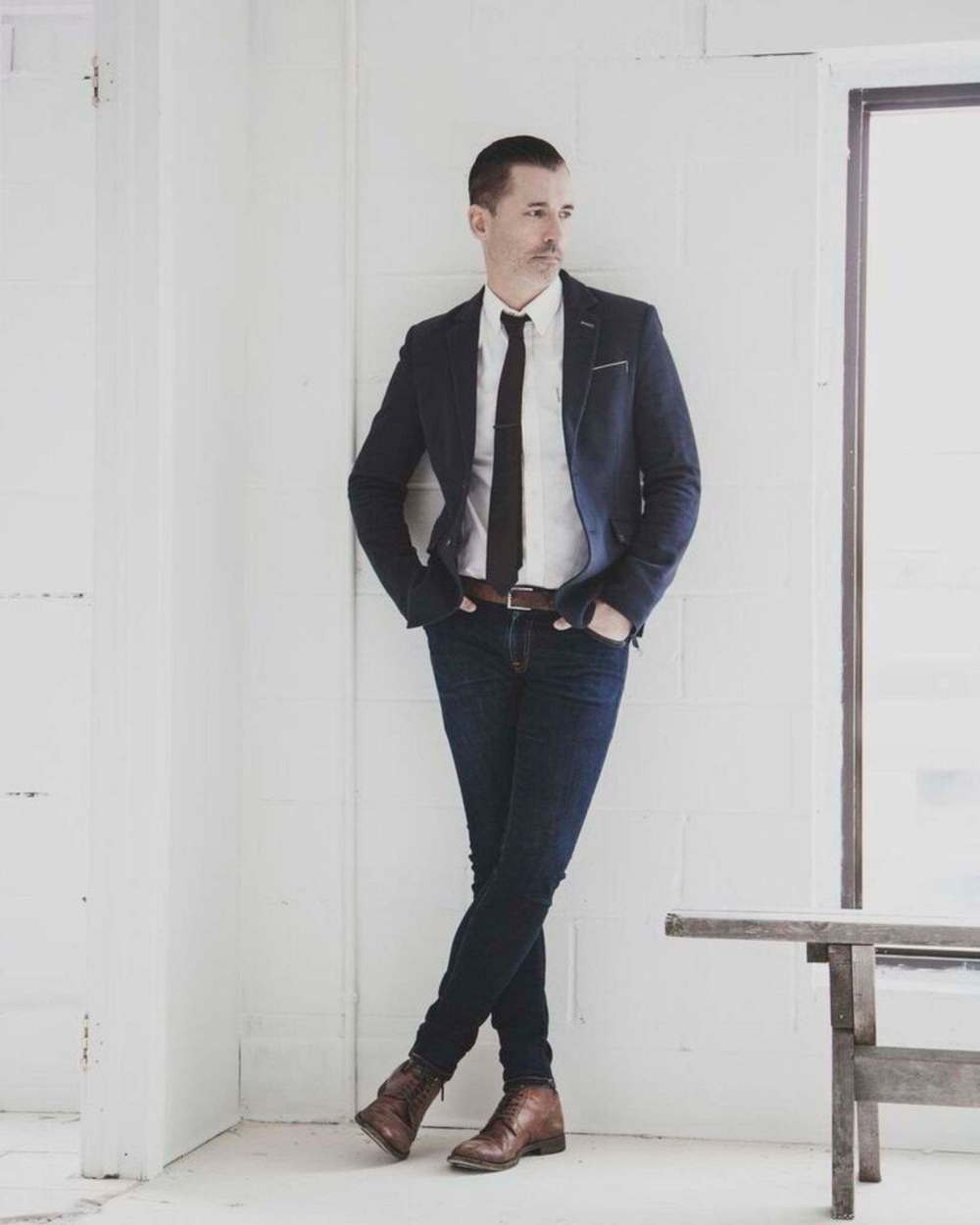
But instead of focusing on the sadness of grief while writing, he instead focused on the love that can be found within it, and that, paired with his new-found romantic love, helped create what he considers to be the best work of his career.
Royal Wood sat down with the Free Press in Winnipeg last month to chat about how Ever After the Farewell came together during that emotional whirlwind.
Free Press: A lot of the press materials about this record kind of talk about love and loss like they are opposing ideas; I don’t really feel that way, but what was your approach to those concepts?
Royal Wood: I appreciate that perspective actually — I was grieving the man that I love more than anything in the world, my father, who I thought would be around for another 20 years. He has Alzheimer’s, which happened really fast, but he also had something called COPD so his lungs took him way before his mind did, so I still got to have meaningful conversations with him.
He didn’t want his mind to go; he was a man of words and was charming and outgoing and loved music and life and just to see all that stripped away was not what he deserved. So yeah, I dealt with that and at the same time, I met my now-wife and fell crazy for someone, so I had that roller-coaster of grief and love and then the guilt of feeling all the happiness with someone when losing your father, and the guilt of feeling grief when you should be feeling all these good, positive emotions. So it was an odd time, but a cathartic time because I put it into making a record, and my dad is my biggest fan and Ali’s my biggest fan and there’s nowhere else they would have wanted me to be. At a time like that I should making music.
FP: And the way it was presented was in a very condensed timeline; your dad got sick, you fell in love, he passed away, you made the record — all very fast. Is that actually how it panned out?
RW: It was actually a very short span of time. Obviously dealing with my father was the last few years, but it went into high gear in the last six months of his life, so that’s when his lungs really… what we thought were allergies turned out to be COPD. So that was just super condensed and sped up and at the same time, meeting Ali was just like a week after hitting record, where I had been in the U.K. and wrote two songs (I was there on tour as well as to write) and then came home, went out on tour, and then met my wife. And right after that, literally after that, I went back out on tour, got a phone call — dad’s passed away — jump on a plane, fly home, say goodbye to my dad, jump on a plane, fly back to the U.K. and start working on this record.
FP: Do you believe in fate?
RW: I do. Well I mean it’s an interesting concept of things. I think we apply our own meaning on a daily basis to make sense of the world and I do believe that our intent leads us down a path that… you’re self-creating that destiny and that fate. I know my fate was definitely to meet Ali, I know my fate was definitely to make this record, but it was preordained by me. I made that fate happen because I wanted to, but there’s that internal thing that’s guiding. That’s the, I don’t know, the universe? Allah? God? Whatever you’re following. That quiet, still voice inside, I feel like that’s fate talking.
FP: What was your hope for this record? You mentioned it was kind of cathartic but I’m sure revisiting all those feelings so soon after the fact must not have been an easy thing.
RW: Well, to be honest I never really know if I’m making a record. There’s a playwright, Arthur Miller, who wrote Death of a Salesman and a few others and he was once asked when he was in his 80s or 90s if he was working on another play and his response was, ‘I don’t know, but I probably am,’ and I always feel that way with music and writing and records. Even though I was working in the U.K., I was also working in L.A. and Nashville and New York and back in Toronto and at my farm studio, it’s just this particular project overtook everything else and felt more right than anything else I was doing. So I wasn’t hoping for it to be the record, I was just following that voice.
FP: So, why make the album in London?

RW: Back to fate (laughs), I was in a coffee shop in Toronto and a song came on called Goldby an artist Jamie Scott, and I Shazam-ed it and then I bought the record… the song came on that was a duet with Ron Sexsmith, and Ron’s a great friend so I asked him who this guy was and Ron said, ‘Oh he’s this really great songwriter in the U.K. If you’re over there you should write a song with him.’ And then my publisher, oddly enough, about a week later, said, ‘We want you to go to the U.K. office to meet publishers there,’ and I said, ‘Well, oddly enough, there’s a U.K. writer I want to sit with, can you guys set it up?’ And Jamie and I met for a day, just to have a chat and see if we get along and we instantly clicked like we were friends for life, and wrote two songs instead of one. By the end of the day he said, ‘Mate, come back and make more songs,’ and so two weeks later, after all the stuff with my dad, I jumped on a plane and went back. It was just an amazing time and exactly what I needed in my life.
FP: Sonically, I feel like there are a lot more elements of folk than in your past work — what steered you down that route?
RW: Yeah, I’ve definitely touched on it on every record obviously but I feel like with each passing record I’ve become more and more at home just doing it for me. I started making music for me, and every artist loses their way slightly. I mean my team, there’s probably 50 people either under my employ or I am somehow connected to… a crazy breadth of people that I work with, and you can kind of lose sight of the music there for a bit. And I feel like I did around We Were Born To Glory, and after that and going through my divorce and everything, Ghost Lightand this record, I just don’t give a f*** anymore — pardon my French — I just want to make music that I would listen to at home. Music that I would put on, open a bottle of wine and make dinner for my wife; what would we want to listen to? There’s such a time when you have all these people chirping in your ear that you must sound like this, and radio sounds like this, and it’s missing these elements — that’s not art, that’s not music, and I think everyone can tell when it’s not genuine, so why do it?
erin.lebar@freepress.mb.ca Twitter: @NireRabel
Our newsroom depends on a growing audience of readers to power our journalism. If you are not a paid reader, please consider becoming a subscriber.
Our newsroom depends on its audience of readers to power our journalism. Thank you for your support.
Concert preview
Royal Wood
Friday, 7 p.m.
The Garrick
Tickets $23, available at Ticketfly.com
Our newsroom depends on a growing audience of readers to power our journalism. If you are not a paid reader, please consider becoming a subscriber.
Our newsroom depends on its audience of readers to power our journalism. Thank you for your support.
Advertisement Advertise With Us
Advertisement Advertise With Us