

Putting a new face on ‘natural’
City makeup store takes healthy stand against chemicals in cosmetics
Advertisement
Read this article for free:
or
Already have an account? Log in here »
To continue reading, please subscribe:
Monthly Digital Subscription
$1 per week for 24 weeks*
- Enjoy unlimited reading on winnipegfreepress.com
- Read the E-Edition, our digital replica newspaper
- Access News Break, our award-winning app
- Play interactive puzzles
*Billed as $4.00 plus GST every four weeks. After 24 weeks, price increases to the regular rate of $19.95 plus GST every four weeks. Offer available to new and qualified returning subscribers only. Cancel any time.
Monthly Digital Subscription
$4.99/week*
- Enjoy unlimited reading on winnipegfreepress.com
- Read the E-Edition, our digital replica newspaper
- Access News Break, our award-winning app
- Play interactive puzzles
*Billed as $19.95 plus GST every four weeks. Cancel any time.
To continue reading, please subscribe:
Add Free Press access to your Brandon Sun subscription for only an additional
$1 for the first 4 weeks*
*Your next subscription payment will increase by $1.00 and you will be charged $16.99 plus GST for four weeks. After four weeks, your payment will increase to $23.99 plus GST every four weeks.
Read unlimited articles for free today:
or
Already have an account? Log in here »
Hey there, time traveller!
This article was published 07/08/2018 (2807 days ago), so information in it may no longer be current.
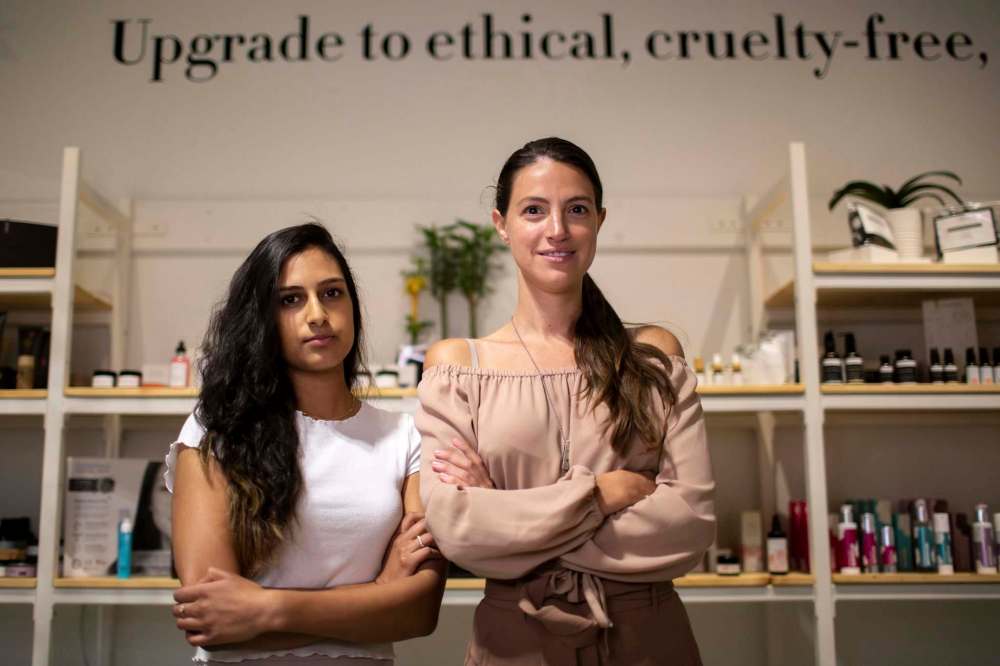
Winnipeg mom Julie Michaud is skeptical whenever she comes across a “natural” claim for beauty product.
“What you define as ‘natural’ may be different from what someone else defines as ‘natural,’ “ says the 35-year-old entrepreneur.
“For example, for some people it might mean taking a flower, crushing it and then they have something natural to offer.”
By the same token a product might have “natural” ingredients that are lab-made chemicals derived from a plant or animal.
Michaud tends to spend a little more time than the average person thinking about what goes into cosmetics and other beauty products. She is the owner of Portia-Ella at the Outlet Collection Winnipeg Mall. The store specializes in cosmetics and other personal-care products made by Canadian companies, and Michaud prefers an alternative term to “natural” to describe all the goods available in their store.
“We use ‘ethical’ because it refers to ethical practices.”
To Michaud, “ethical” encompasses doing no harm, or as little as possible.
That involves plenty of considerations — from taking care of the environment, animals and communities on the other side of the world to more local concerns, including our own bodies, of course.
And Michaud may be onto something.
More consumers are drawn to products that are ethical, which involve fair-trade practices and strive to eliminate ingredients containing potentially harmful chemicals to the environment and human health, according to a 2017 industry trend report by Mordor Intelligence.
The trend is welcome by one of Canada’s leading researchers on chemicals used in consumer products.
Dr. Meg Sears is the scientific chair of Prevent Cancer Now, a non-profit focused on preventing cancer through research, awareness, education and advocacy.
A PhD in chemical engineering, she lauds the efforts of small businesses like Portia-Ella, and the Canadian brands it carries, because they are at the vanguard of best practices.
“I think they’ve got the right approach, and that’s taking the least toxic options.”
While products on the market today are deemed safe by Health Canada, based on scientific research, Sears argues the current testing model for safety does not consider the effects of long-term exposure.
“When a company wants approval for a chemical, it’s going to test at high doses because that is the classical method for toxicology,” says Sears, a research associate at the Children’s Hospital of Eastern Ontario’s Research Institute.
This kind of testing often shows clear-cut effects. Based on those findings, regulators often set acceptable, low-dose levels for chemicals found in everything from packaging to food to lipstick, soap and toys.
Sears argues testing provides an incomplete snapshot of a chemical’s potential to harm to human health. A more effective measure would examine the impact of “environmentally relevant doses.” This would not only evaluate the long-term exposure to low levels of a chemical found in one consumer product. It would also look at the implications of bio-accumulation based on the notion we are not exposed to the same chemical through just one product. The substance is often used in multiple products that millions of consumers use. As a result, the compound often builds up in the environment, in turn increasing our exposure through the air we breathe, the food we eat and the water we drink.
Moreover consumers of beauty products, for example, may not even know they are being exposed to low doses of chemicals shown to be harmful at higher doses and suspected to play a role in rising rates of cancer and other diseases.
For instance, Sears points to one widely used class of chemicals called phthalates, which are often added to fragrances to make them last longer.
More than a 1,000 different phthalates are used in multiple products, “and all that have been tested show some kind of endocrine disrupting properties,” she adds.
“What that (an endocrine disruptor) means is a chemical looks enough like a hormone in terms of binding to particular sites in the body.”
And this has the potential to mess around with many of the body’s chemical processes, including cell division.
“For example in the very first days of development of an embryo, there is chemical signalling that determines how the brain will develop,” Sears says.
Any process involving a hormone — insulin, included — could be affected. In fact, phthalates have been associated with diabetes, excess weight gain and insulin resistance in human studies, as listed on the non-profit website diabetesandenvironment.org. They could also impact brain health. Sears points to a recent study, published in The Journal or Neuroscience, involving rats and that showing low doses of these chemicals led to neuro-developmental problems.
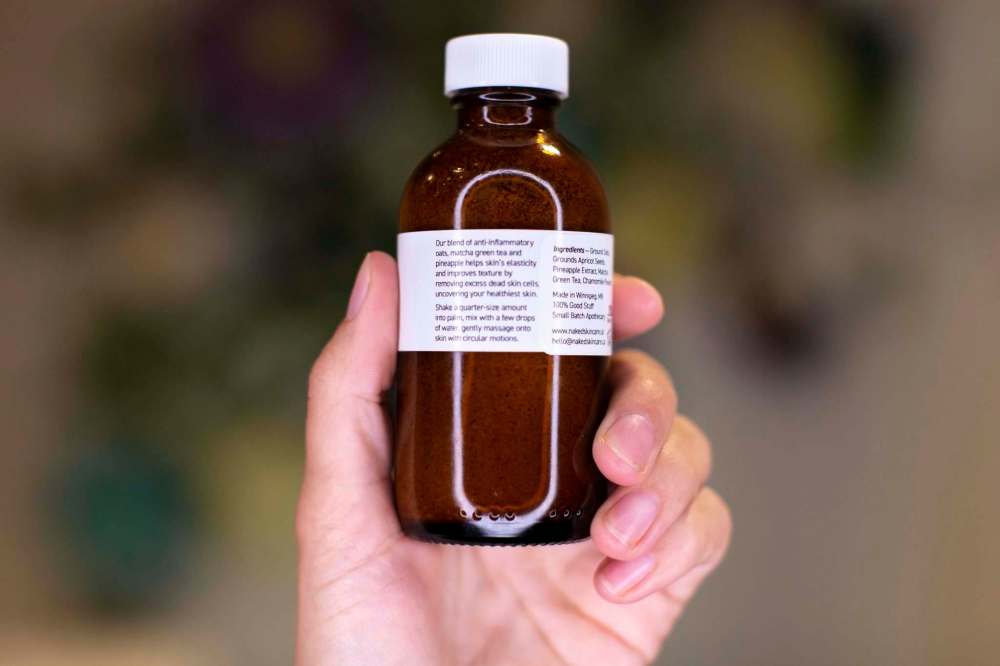
Yet beauty-product consumers seeking to reduce exposure face challenges because phthalates often do not show up on the list of ingredients. Instead, the compounds are often listed under the catch-all ‘fragrance.’
“Fragrances are really a black box of who knows what,” Sears says, adding many companies claim the ingredients are industry secrets.

At Portia-Ella, “fragrance” on product’s ingredient list is a red flag. That’s why the retailer only carries products with ingredients people can generally easily identify.
“If you ever see something that you doubt, Google it and you can find out what it actually is,” Michaud says, adding websites like the Environmental Working Group can be a great resource.
When it comes to beauty products, for Michaud, the best and most straightforward approach is similar to healthy eating.
“Think of it as eating fresh food is better than eating processed food,” she says. “What we consume can have a long-term effect on the environment, but it also has an effect on our bodies.”
joelschles@gmail.com
History
Updated on Wednesday, August 8, 2018 11:49 AM CDT: Typo fixed.