Silent syndrome
Women fight to win attention for PCOS, a major cause of infertility and other serious health issues
Advertisement
Read this article for free:
or
Already have an account? Log in here »
To continue reading, please subscribe:

Digital Subscription
One year of digital access for only $205*
- Enjoy unlimited reading on winnipegfreepress.com
- Read the E-Edition, our digital replica newspaper
- Access News Break, our award-winning app
- Play interactive puzzles
*First annual payment billed as $205.00 + GST for one year. This annual subscription will automatically renew at $233.00 + GST every 52 weeks (10% off the regular annual price of $259.35). Offer available to new and qualified returning subscribers only. Cancel any time.
To continue reading, please subscribe:
Add Free Press access to your Brandon Sun subscription for only an additional
$1 for the first 4 weeks*
- Enjoy unlimited reading on winnipegfreepress.com
- Read the E-Edition, our digital replica newspaper
- Access News Break, our award-winning app
- Play interactive puzzles
*Your next Brandon Sun subscription payment will increase by $1.00 and you will be charged $17.95 plus GST for four weeks. After four weeks, your payment will increase to $24.95 plus GST every four weeks.
Read unlimited articles for free today:
or
Already have an account? Log in here »
Hey there, time traveller!
This article was published 05/11/2018 (2892 days ago), so information in it may no longer be current.
When Sasha Ottey was diagnosed with polycystic ovary syndrome a decade ago, she learned that it affects at least 10 per cent of women and is a leading cause of infertility, not to mention a major risk factor for diabetes, heart disease and high blood pressure.
Yet many people, including doctors, had never heard of PCOS.
Ottey, now 38, quit her job as a microbiologist and founded PCOS Challenge: The National Polycystic Ovary Syndrome Association, which has grown to 50,000 members worldwide.
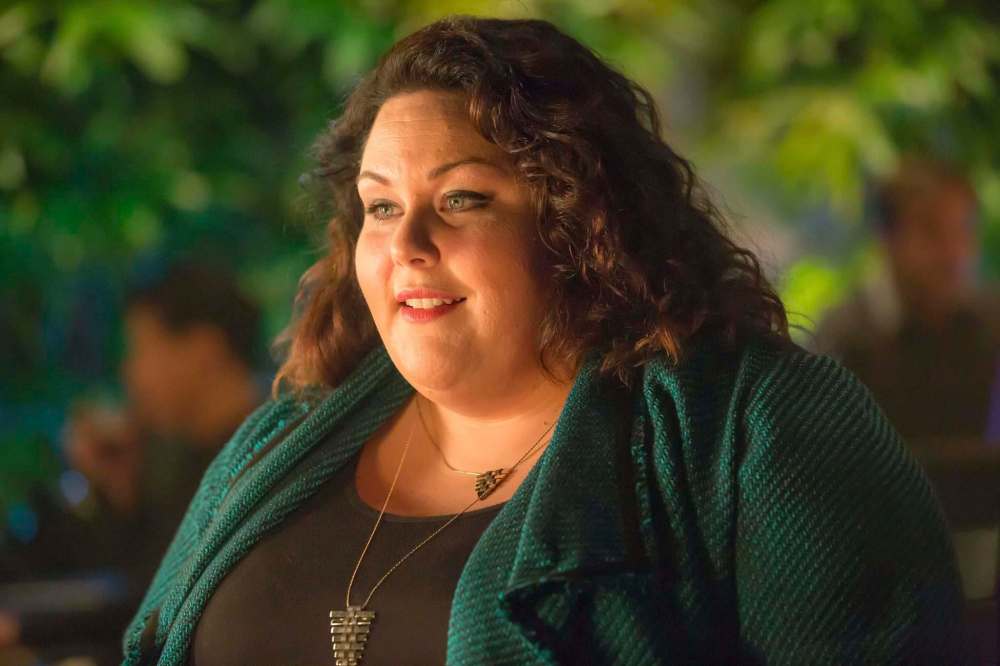
The nonprofit, based in Atlanta, where Ottey lives, is working hard to lift PCOS out of obscurity. And if popular culture is an indicator, the disorder is on the cusp: Millions of viewers of the NBC hit show This Is Us have been touched by the character of Kate’s struggles with PCOS-related obesity and infertility.
Still, this enigmatic reproductive and metabolic syndrome continues to be understudied, underfunded and underdiagnosed. Even the name is problematic, because experts now realize that some women with the syndrome don’t have ovarian cysts and that some with cysts don’t have the syndrome.
“I want a precise name. I don’t like the name. But changing the name is controversial,” said Katherine Sherif, a PCOS specialist at Thomas Jefferson University. “A reason to keep the name is that physicians and women are finally becoming more aware of what it is.”
PCOS Challenge and its allies have helped. Last month, for example, the organization persuaded people at some iconic landmarks around the world — including Calgary Tower, Perth Concert Hall and Niagara Falls — to light them in teal, the PCOS awareness colour.
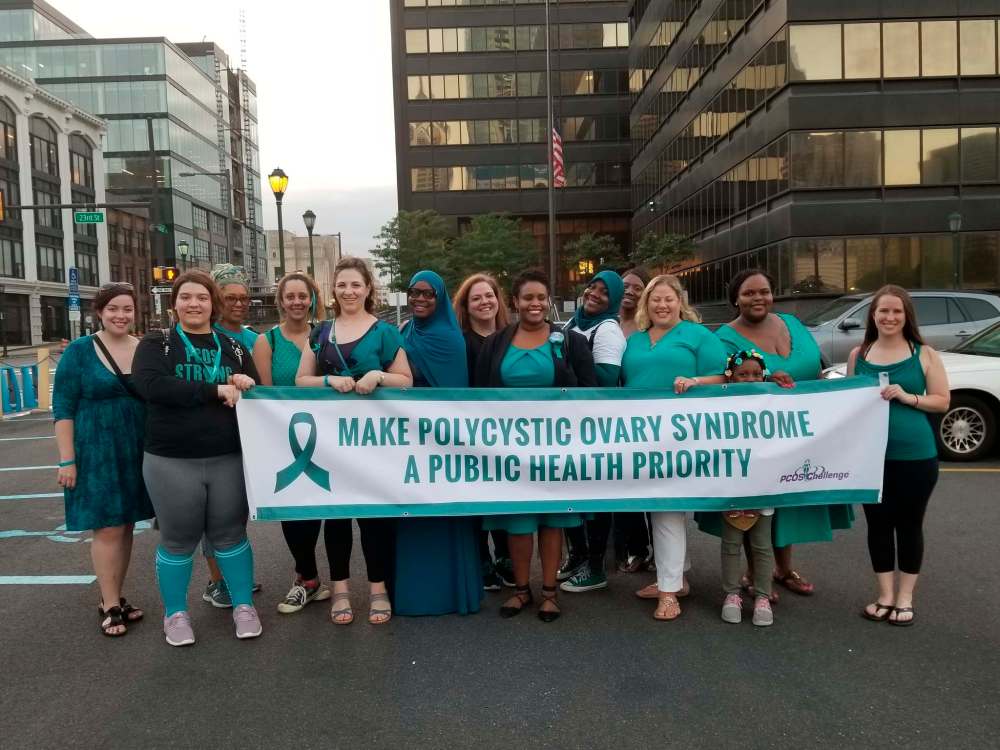
Ottey and about 25 “cysters” gathered at the foot of the Philadelphia Electric Company building on Sept. 1 while its crown lights intermittently scrolled “World PCOS Day.” After speeches, a group posed with an aspirational banner: “Make polycystic ovary syndrome a public health priority.”
“For too long,” Ottey said, “PCOS has been a silent epidemic.”
Exactly what causes PCOS remains unclear. It is a set of endocrine and metabolic defects, probably caused by one or more genetic flaws. Although the severity varies, sufferers have excessive male hormones, particularly testosterone, and rarely ovulate — which may or may not lead immature eggs to form cysts. Symptoms may include irregular periods, obesity, male-pattern hair growth or hair loss and acne.
Despite the puzzles, University of Pennsylvania obstetrician-gynecologist Anuja Dokras, leader of the Penn Polycystic Ovary Center, is among those who see progress.
“A lot has changed over the past 20 years,” she said. “It may not look like that on the surface. But there has been an explosion in research. The pharmaceutical industry is now interested. And there is a recognition of the metabolic and emotional issues” that come with PCOS.
That complexity was not appreciated when the syndrome was first described in 1935 by two American gynecologists, who believed it to be rare.
To address the intricacy — and to improve diagnosis and treatment — PCOS experts from around the world in July issued the first international clinical guidelines. Diagnosis requires two of three crucial criteria: elevated male sex hormones, periods that are irregular or rare, and at least 12 follicular cysts on one or both ovaries.
The guidance covers the gamut of complications, including sleep apnea, eating disorders, depression and endometrial cancer. It also reflects ongoing debate about the mainstays of management.
Contraceptive pills containing estrogen and a progestin are the first-line therapy because they suppress testosterone and regulate periods. But many experts advocate adding or substituting metformin, a diabetes drug that reduces insulin resistance, the aspect of PCOS that makes women susceptible to obesity, diabetes, hypertension and heart disease.
“Several times a week, women tell me their ob-gyn said, ‘Take the birth control pill and come back when you want to get pregnant,’ “ Sherif said. “But my go-to drug is metformin, because I hope to treat the underlying problem. When you are less insulin-resistant, you make less testosterone.”
Dokras, the Penn specialist, said she and Richard Legro, a Penn State College of Medicine reproductive endocrinologist, are about to launch a U.S. government-funded study “to see whether birth control or metformin is best.”
A newer area of research involves anti-Mullerian hormone, a substance made by cells in the ovarian follicles that is elevated in most women with PCOS. In May, French scientists published a study — conducted in mice — that suggests high AMH levels during pregnancy may reprogram the fetus and trigger PCOS in adulthood. The researchers reversed PCOS symptoms in maturing mice using cetrorelix, a fertility drug. The findings, they wrote, offer “a new potential therapeutic avenue to treat the condition during adulthood.”
The advocates, meanwhile, are lobbying for research funding on a par with the toll of PCOS. It “affects more women than breast cancer, rheumatoid arthritis, multiple sclerosis and lupus combined,” says their change.org petition.
● ● ●
Puberty can be tough and kids can be cruel.
So it is not surprising that Hannah Tabeling went through torment as a 230-pound 14-year-old with severe acne, hair growing on her chest, and stomach problems.
“Throughout middle school, I faced a lot of bullying,” she recalled. “My anxiety became increasingly worse, to the point where I would have crying fits every other day.”
Here’s the surprising part: In the space of a few years, amid an odyssey of doctors, medications, and lifestyle changes to manage her PCOS, Tabeling found her way — and her voice.
To be sure, she had the advantage of support from her mother, Ashley Levinson, a longtime PCOS sufferer and advocate.
But Tabeling — now a 17-year-old, straight-A student with a red belt in kung fu — also had courage. Last year, she testified before U.S. Congress to urge passage of a resolution recognizing the seriousness of the disorder.
“Today I still fear gaining all the weight back, that I may grow more hair in weird places, that my acne could come back,” she told the lawmakers. “When I get older, I may never be able to have kids. That’s why I want a future where there… is a medication specifically for PCOS. I want more doctors to know what PCOS is and how to diagnose it.”
Being outspoken is not easy, but Tabeling recommends it.
“Women and teens shouldn’t feel they have to hide themselves,” she said. “That was my problem. I’m scared to talk to people. But just recently I came to a point where I realized I can’t do that. I need to have a voice.”
Hannah’s mother has been an uber-advocate for PCOS for almost two decades, serving as an advisor to women’s health organizations, giving media interviews, blogging, and winning awards for her tireless activism.
One of her messages is that PCOS is a lifelong health-management challenge. Women can never just coast.
But you won’t hear her sounding preachy or judgy because, truth be told, she ignored that vital message for about a decade, with a terrible toll on her health. While some of it was beyond her control — long hours on her feet as a surgical nurse probably worsened her back problems — she acknowledges that she stopped taking her insulin resistance drug. Stopped seeing her PCOS specialist. Stopped getting annual checkups. Stopped exercising and watching her diet.
As a result, her weight ballooned. She faced a spiral of problems, including abnormal bleeding that ultimately required a hysterectomy, and repeated spinal surgeries for damaged vertebra.
Now 47, the Mantua, N.J. resident says, “I’m regaining control.”
She is intent on setting a good example for Hannah.
“You feel embarrassed and guilty that your body is not co-operating,” Levinson said. “It’s not just the physical strain. It’s a huge emotional strain. But I always say you never give up because there is no alternative. I love life way too much to give up on myself. You have to keep fighting.”
● ● ●
Denine Kirby was thin for much of her life.
“But when I turned 30, I noticed my body was changing,” she said. “I started to gain weight, even though I didn’t change my diet. I developed acne. I never had acne as a teenager.”
At 38, she was diagnosed with PCOS, illustrating the vagaries of the disorder.
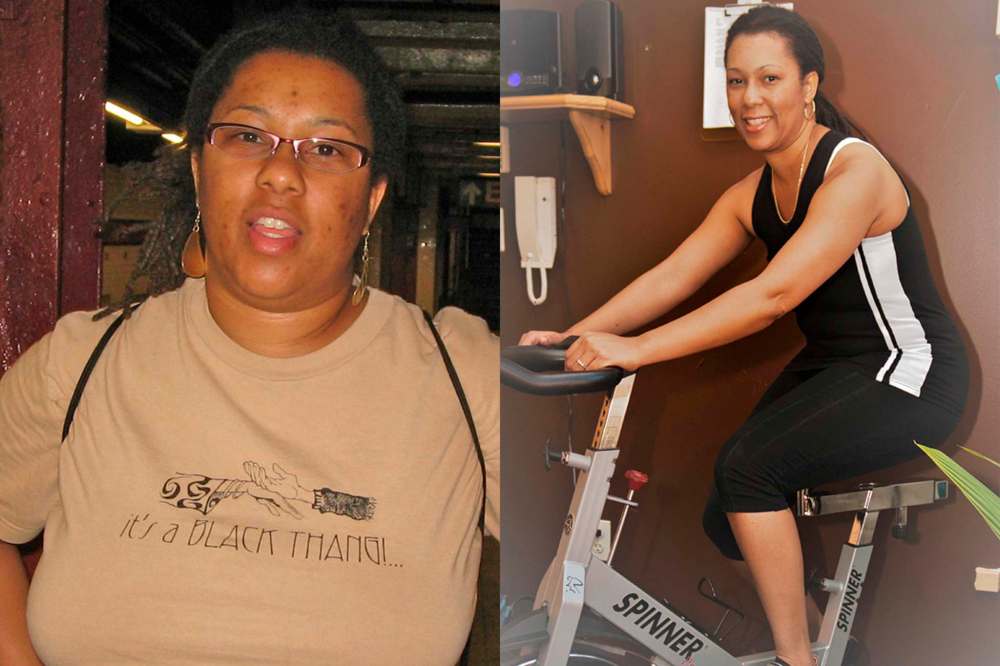
By then, she weighed more than 200 pounds and was hypertensive, diabetic and racked by anxiety: “My testosterone was at the same level as a man. I had hair on my upper lip and chin. People started calling me ‘sir.’ “
Now, at 48, the West Philadelphia resident is a lean and serene spinning and yoga instructor, a Temple University exercise specialist who works with seniors to prevent falls, and a vegan who swears by quinoa and millet.
Her self-transformation began with a lunch-hour aerobics class. “I would just do what I could do,” she recalled. “I couldn’t sustain a whole class.”
She began taking long walks. Added a stationary bike. Took a strength-training class. She also gradually changed her diet, reforming not only what she ate, but how she felt and thought about it.

“I really had to train my mind and tell myself: I’m not dying and I’m not going to pass out if I’m hungry,” she said. “I would get cranky and lash out at people. I meditated and really explored my feelings around food.”
Two years ago, she regained a lot of weight and “sat in the doctor’s office and boo-hooed.” Then she recommitted to her regimen. This year, for the first time since her diagnosis, tests showed that her blood glucose level is healthy, not borderline diabetes.
“Most people don’t get that it’s a process,” she said. “They want overnight success. You have to be really disciplined. At the same time, the first thing I tell women is: Stop beating yourself up. Maybe the goal should be, if you normally have two sodas a day, have one. And when you slip up, say, ‘Tomorrow is another day.’ ”
— Philadelphia Inquirer
History
Updated on Monday, November 5, 2018 6:50 AM CST: Adds photos
Updated on Monday, November 5, 2018 7:16 AM CST: Adds photo