

All apologies
Former Nirvana manager's reverential recollections of Cobain tender -- nearly to a fault
Advertisement
Read this article for free:
or
Already have an account? Log in here »
To continue reading, please subscribe:
Monthly Digital Subscription
$1 per week for 24 weeks*
- Enjoy unlimited reading on winnipegfreepress.com
- Read the E-Edition, our digital replica newspaper
- Access News Break, our award-winning app
- Play interactive puzzles
*Billed as $4.00 plus GST every four weeks. After 24 weeks, price increases to the regular rate of $19.95 plus GST every four weeks. Offer available to new and qualified returning subscribers only. Cancel any time.
Monthly Digital Subscription
$4.99/week*
- Enjoy unlimited reading on winnipegfreepress.com
- Read the E-Edition, our digital replica newspaper
- Access News Break, our award-winning app
- Play interactive puzzles
*Billed as $19.95 plus GST every four weeks. Cancel any time.
To continue reading, please subscribe:
Add Free Press access to your Brandon Sun subscription for only an additional
$1 for the first 4 weeks*
*Your next subscription payment will increase by $1.00 and you will be charged $16.99 plus GST for four weeks. After four weeks, your payment will increase to $23.99 plus GST every four weeks.
Read unlimited articles for free today:
or
Already have an account? Log in here »
Hey there, time traveller!
This article was published 06/04/2019 (2581 days ago), so information in it may no longer be current.
While Danny Goldberg didn’t know Kurt Cobain for a long time, he witnessed to the highest highs and lowest lows experienced by the Nirvana frontman — the release of the band’s breakthrough 1991 album Nevermind, Cobain’s meeting and marrying Hole frontwoman Courtney Love, their struggles with heroin addiction and Cobain’s eventual suicide at age 27 in April 1994.
Goldberg, a longtime entertainment manager, is a generation older than Cobain, referred to by Cobain as his “second father” and by a handful of others as the “Kurt Whisperer.” He cut his teeth working for Led Zeppelin before starting Gold Mountain Entertainment, a management company whose clients included Nirvana, Hole, Sonic Youth, Rickie Lee Jones, Bonnie Raitt and others. He went on to head Atlantic Records, Warner Records, Mercury Records and more; he now runs Gold Village Entertainment, a management company whose clients include Steve Earle, Martha Wainright and the Trews.
Serving the Servants is Goldberg’s fourth book, and not the first time he’s written about Nirvana and Cobain. In his 2008 memoir Bumping Into Geniuses: My Life Inside the Rock and Roll Business, Goldberg spends a chapter recalling his time as co-manager of Nirvana. In Serving the Servant he’s able to go far deeper into the logistics of managing the band, his relationship with Cobain (as well as other members of Nirvana, Love and others in the band’s orbit) and the ways in which the Nirvana frontman tried to balance a punk/feminist ethos and the fruits of his success as the world’s biggest rock band.
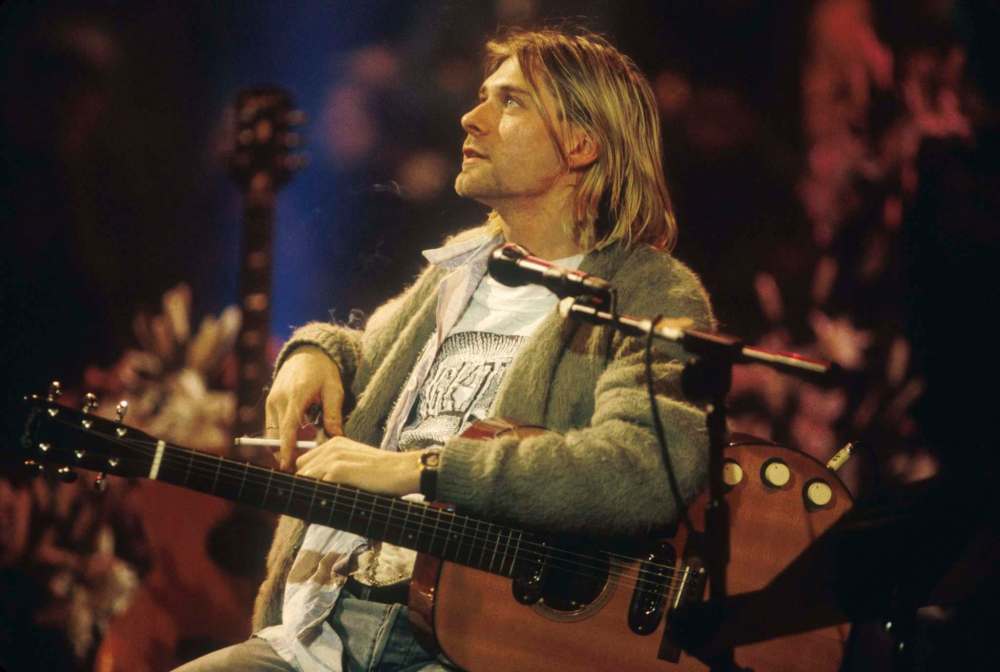
In the book’s introduction, Goldberg notes that he had to reconstruct details of some events from his own files in addition to getting others to fill in some of the blanks, adding that others’ recollections of certain events clashed with his own, and while he has “almost cinematic clarity for a handful of events,” that he “found numerous instances where one person’s cherished anecdote clashed with mine or with another’s.”
All of which is to say that Goldberg’s recollections of his four years with Cobain can’t be the singular, definitive account of the time; coming a quarter-century after Cobain’s death, it’s unlikely there’ll be any one account that will get it all right. (Goldberg mentions that even Cobain’s widow Love got in touch with him for details about the period for a memoir of her own that is apparently forthcoming.)
Having said that, Goldberg offers a lucid, candid account of his time as Nirvana’s manager, fondly remembering his time with the band while peppering his straightforward prose with behind-the-scenes passages detailing the business of managing a personality as volatile as Cobain’s. It’s a solid addition to the Cobain/Nirvana literary canon that includes Michael Azzerad’s 1993 book Come as You Are: The Story of Nirvana and Charles R. Cross’ 2001 Cobain bio Heavier Than Heaven.
Cobain was born in Aberdeen, Wash., in 1967; his parents divorced when he was nine, an event that profoundly impacted his life and world view. The abusive relationship he witnessed his mother suffering through and the ridicule he faced at school as an outsider made Cobain an introvert who never felt he fit in. He dropped out of high school shortly before graduating, eventually moving to Olympia, a city 80 kilometres from Aberdeen that boasted a flourishing music scene.
Cobain would form Nirvana in Olympia with bass player Krist Novoselic and drummer Chad Channing in the late 1980s, releasing Bleach on Seattle indie imprint Sub Pop. (Channing would eventually be replaced by Dave Grohl on drums). Goldberg came on board as the band’s manager shortly after, shuttling the band from meeting to meeting with major-label record executives before settling on the Geffen imprint DGC for the release of 1991’s Nevermind.
The album’s lead-off single, Smells Like Teen Spirit, became the band’s biggest hit, was spun on virtually every style of radio station across the country and became a “grunge” anthem. The pep-rally-themed video, conceived by Cobain, got heavy airplay on MTV. The album has since sold over 30 million copies worldwide.
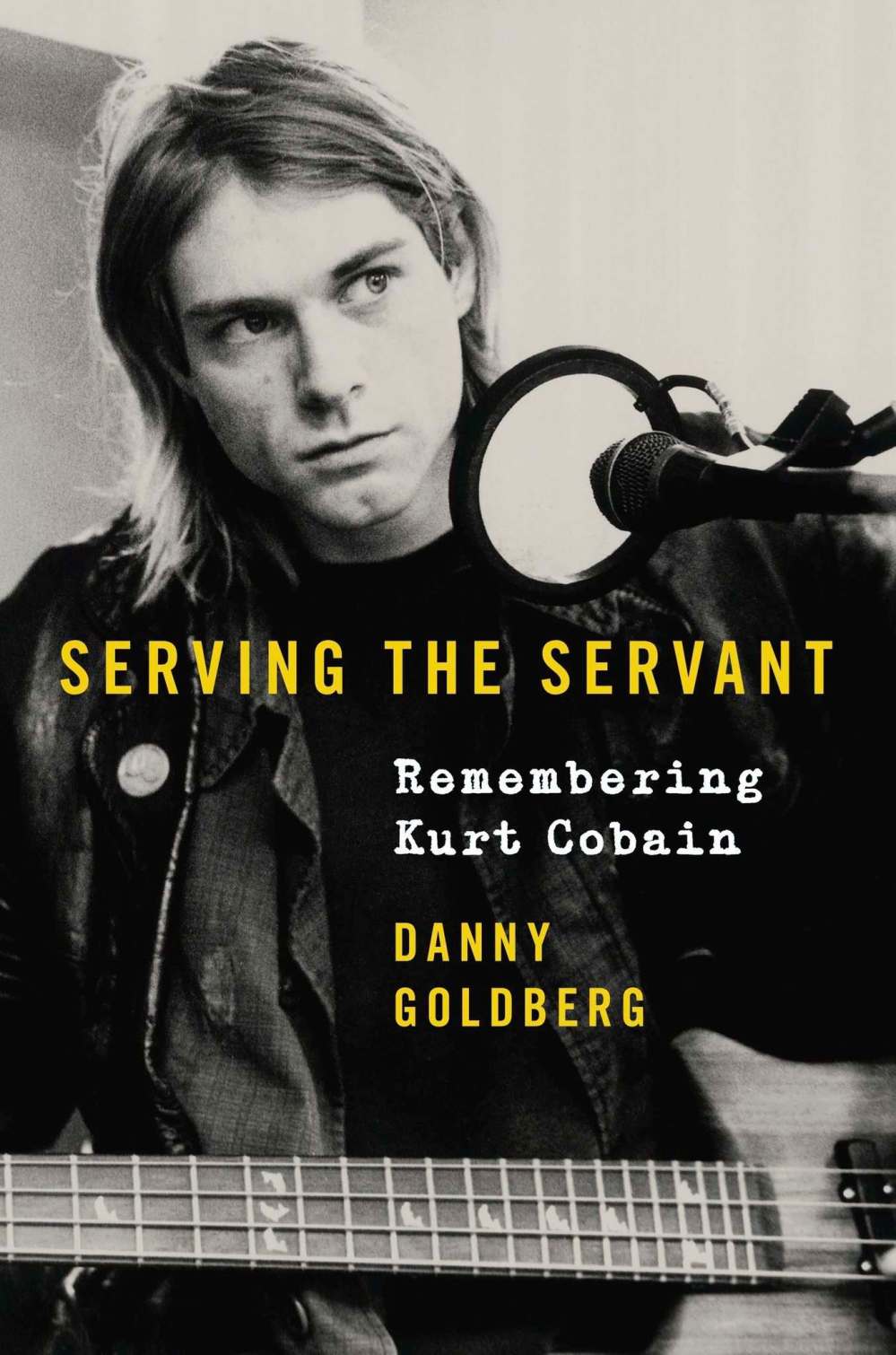
Where Goldberg is at his best is when he’s detailing the dollars-and-cents and logistics components of creating the band’s two studio albums, Nevermind and 1993’s In Utero (Nirvana also released a collection of rarities, 1992’s Incesticide, as well as the 1994 acoustic release MTV Unplugged in New York). A number of A&R talking heads from labels, PR people and musicians (including Novoselic and Love, but not Grohl) are interviewed about the albums, tours and overall impact of the band on a generation of fans, as well as Cobain’s personal struggles.
As a high-profile, major-label artist, Cobain tried to retain his connections to his punk and underground roots, the artists he came to love from those scenes. He’d wear T-shirts promoting obscure bands when appearing on magazine covers and television appearances such as Saturday Night Live, and would advocate for lesser-known acts such as the Melvins, Meat Puppets and others to accompany them on tours or land record deals.
At the same time, says Goldberg, Cobain relished his rock star status, and was always surprisingly focused on next steps when it came to the band and its successes.
Cobain also struggled with his stance on political issues such as gay rights and feminism. He was deeply allied with the movements, and tried to promote their causes without becoming a “political band,” biting his tongue while playing to crowds filled with macho, sexist, homophobic men. (Somewhat related: Goldberg’s account of the feud between Cobain and Guns n’ Roses singer Axl Rose is priceless.)

Throughout his life, Cobain struggled with stomach issues; while he was examined by a number of doctors, none was ever able to diagnose the issue. He had dabbled in self-medication prior to fronting one of the world’s biggest bands, but with fame came money and access to all manner of drugs. Heroin was Cobain’s drug of choice, and he and Love grappled with addiction numerous times leading up to the birth of their daughter, Frances Bean Cobain, in August 1992. A Vanity Fair piece by Lynn Hirschberg published shortly after Frances’ arrival cast the two as junkies, and their child was placed in the care of Love’s half-sister, Jaime Manelli.
After several stints in rehab, an intervention on Cobain and Love was staged by Goldberg and a handful of others in late March, with little success. On April 1, Cobain and Love did enter rehab in L.A., but it was short-lived; Cobain escaped the facility was found dead of a self-inflicted gunshot wound on April 8 in his Seattle home. His suicide note was widely circulated in the media (and subsequently online) following his death, and includes the Neil Young lyrics “It’s better to burn out than to fade away.”
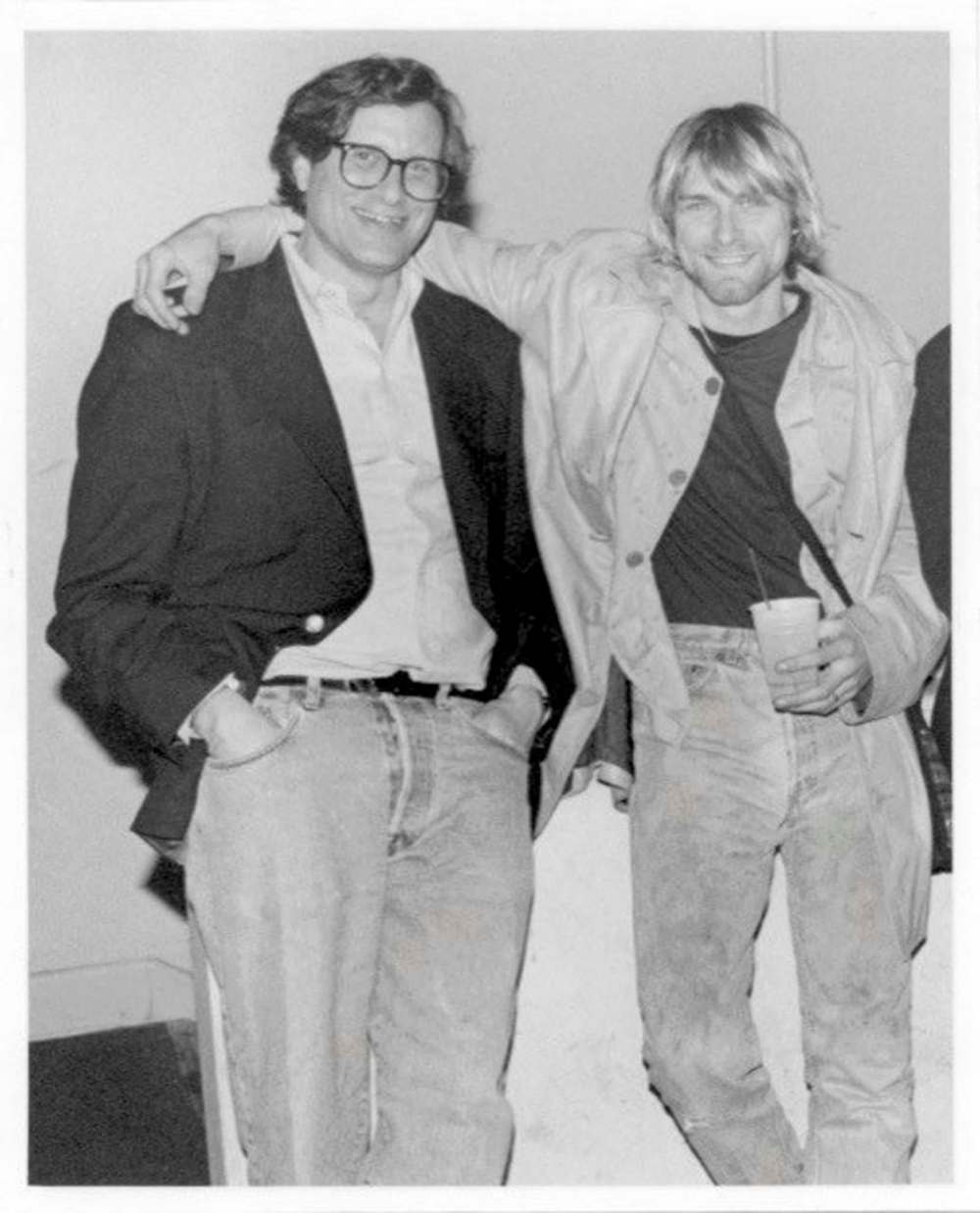
The subtitle of Goldberg’s book, Remembering Kurt Cobain, hints at the reverence the author offers in his retelling of his years with Cobain. At times Cobain’s (and Love’s — she was also Goldberg’s client) drug use seems underplayed, and Cobain is painted in a very positive/victimized brush throughout.
From someone so close to Cobain who was often considered a father figure, that’s not surprising, and for the most part it isn’t an issue — in fact, at times it’s to the reader’s benefit. Goldberg’s accounts of the days leading up to and after Cobain’s suicide are riveting and heartfelt, and his clear devotion and love for Cobain, Love and Nirvana shine through in his recounting of Cobain’s meteoric rise to fame and his tragic ending.
Free Press literary editor Ben MacPhee-Sigurdson was 19 and working at Record Baron on McPhillips Street when he learned of Kurt Cobain’s death.