

Show examines end-of-life issues
Playwright brings levity to heavy topic

Advertisement
Read this article for free:
or
Already have an account? Log in here »
To continue reading, please subscribe:
Monthly Digital Subscription
$1 per week for 24 weeks*
- Enjoy unlimited reading on winnipegfreepress.com
- Read the E-Edition, our digital replica newspaper
- Access News Break, our award-winning app
- Play interactive puzzles
*Billed as $4.00 plus GST every four weeks. After 24 weeks, price increases to the regular rate of $19.95 plus GST every four weeks. Offer available to new and qualified returning subscribers only. Cancel any time.
Monthly Digital Subscription
$4.99/week*
- Enjoy unlimited reading on winnipegfreepress.com
- Read the E-Edition, our digital replica newspaper
- Access News Break, our award-winning app
- Play interactive puzzles
*Billed as $19.95 plus GST every four weeks. Cancel any time.
To continue reading, please subscribe:
Add Free Press access to your Brandon Sun subscription for only an additional
$1 for the first 4 weeks*
*Your next subscription payment will increase by $1.00 and you will be charged $16.99 plus GST for four weeks. After four weeks, your payment will increase to $23.99 plus GST every four weeks.
Read unlimited articles for free today:
or
Already have an account? Log in here »
Hey there, time traveller!
This article was published 18/04/2019 (2553 days ago), so information in it may no longer be current.
Death is a pretty heavy topic, but Debbie Patterson hopes the audience at her latest Prairie Theatre Exchange show, How It Ends, leaves the theatre feeling lighter.
Admittedly, a play addressing end-of-life issues isn’t an easy sell, but the Winnipeg playwright/performer stresses the evening won’t be a downer.
“The tone of the piece is really interesting, because it’s so easy to get maudlin or morose around these issues,” Patterson says. “It’s also really easy to think about grief rather than your own death, and I really wanted people to contemplate their own deaths; I think that’s a really valuable exploration.
“S, in order not to go to that maudlin place, it’s really fun. The tone turns on a dime constantly.”
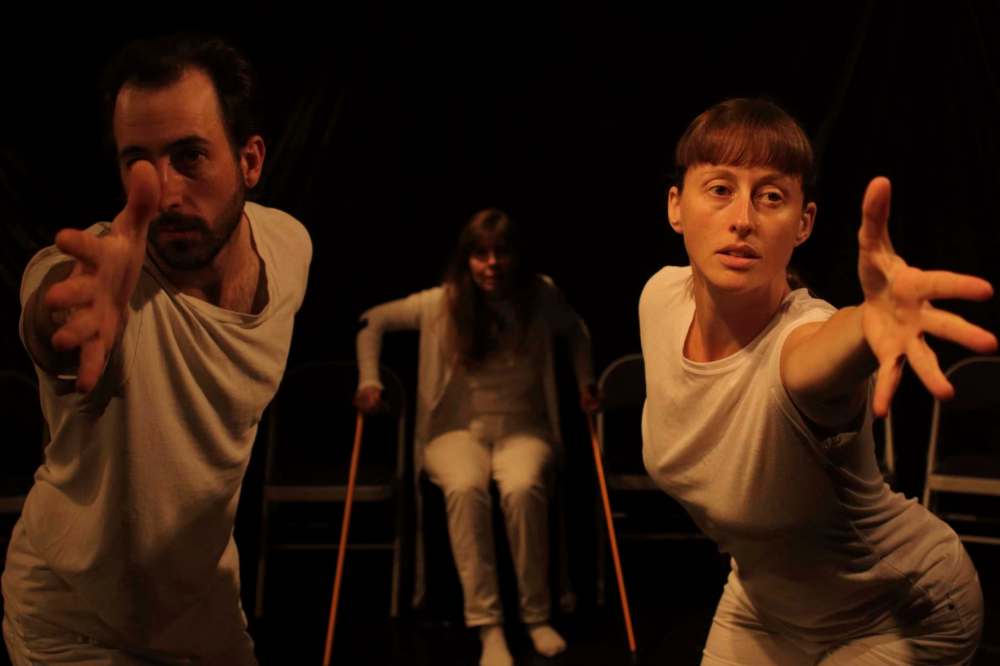
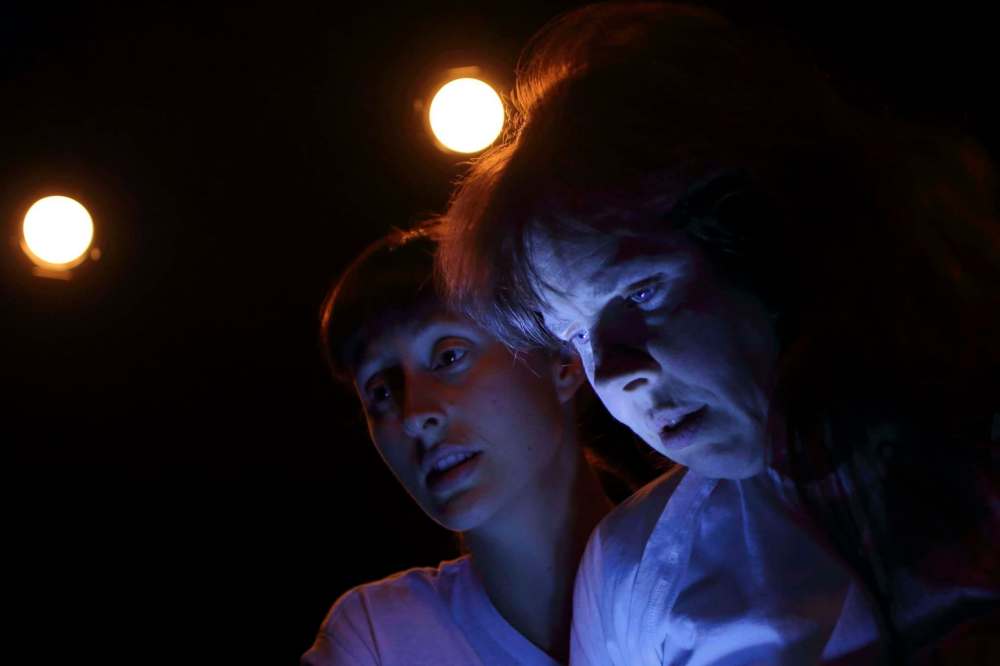
The hour-long work — part of PTE’s new Leap Series, which presents more experimental plays — leads the audience on a physical journey throughout the theatre and has some interactive elements or “group activities,” as Patterson calls them. The work also incorporates elements of dance, and features Winnipeg’s Johanna Riley, who performs with Winnipeg’s Contemporary Dancers and co-founded Young Lungs Dance Exchange, and Toronto-based choreographer/dancer Marie Josée Chartier.
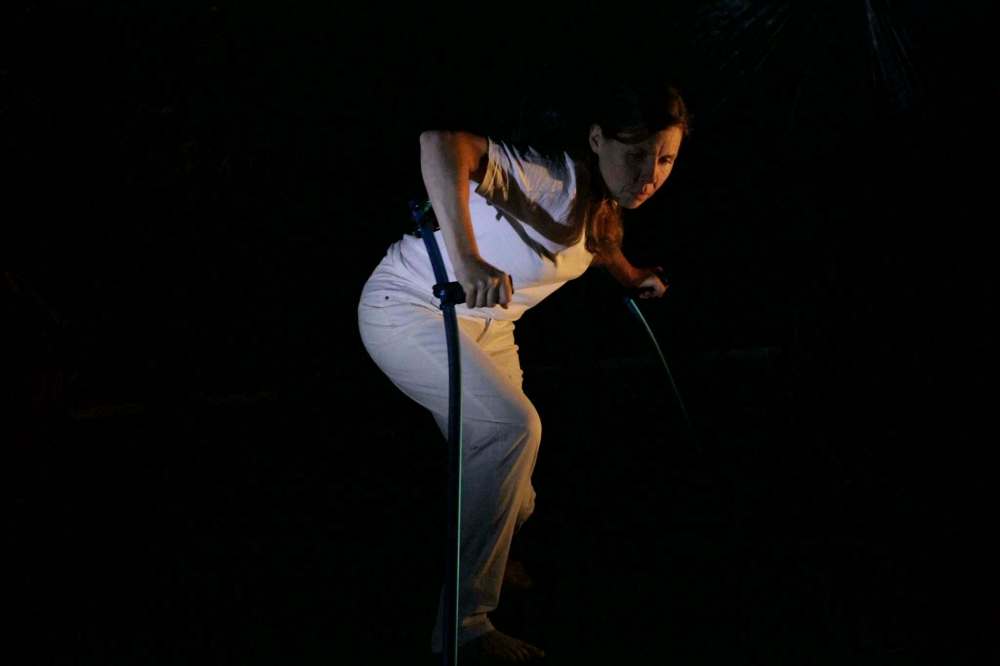
“I’m looking at the question (of the end of life) through the disability lens, through exploring the body’s vulnerabilities,” Patterson explains. “I wanted the audience to be able to see beautiful bodies that are at the peak of perfection and being amazing, and to celebrate what a joyful gift it is to live in our bodies. The best way I could think to do that is to watch beautiful dancers.”
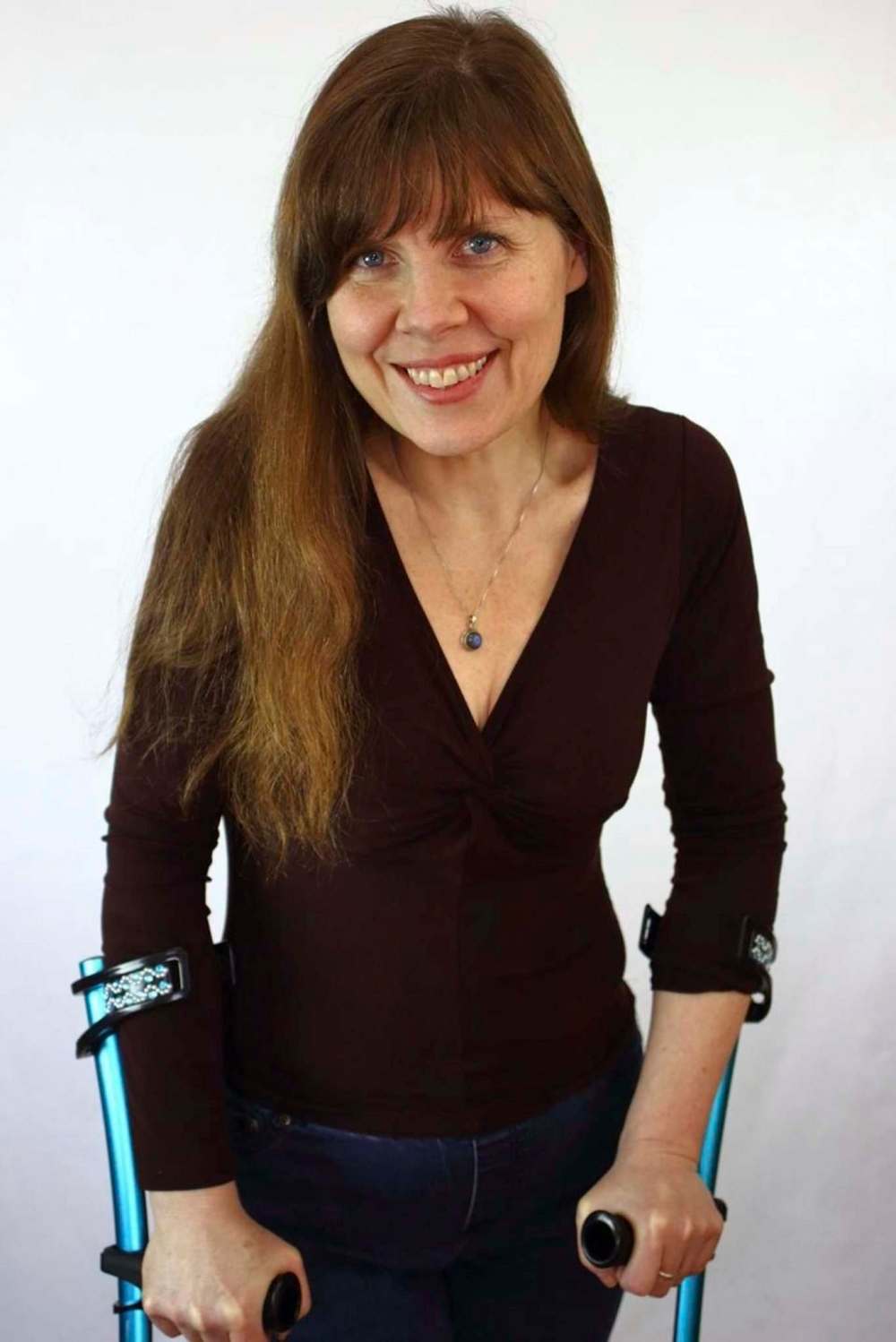
Patterson’s ability to look through that lens stems from personal experience. The playwright has multiple sclerosis, an autoimmune disease of the central nervous system, and uses a wheelchair. She is the founder of Sick + Twisted Theatre, a company dedicated to creating work that accurately represents living with a disability.
“It’s super valuable,” she says of how her illness has affected her approach to life. “It sounds trite to call a disability a gift, but it is. I think it’s made me a better person. It’s made me better at living in this body in this world.”
As with her recent work, Sargent & Victor & Me, Patterson employed a verbatim text approach in How It Ends, weaving people’s actual words into the dialogue.
“I’ve been working with verbatim text for a number of years now; I really like the way real people talk,” she says. “It’s so much more interesting than the way scripts are written.”
She interviewed around a dozen people she thought would have wisdom or insight into end-of-life choices, and then amalgamated their voices into four different characters, played by herself, Riley, Chartier and Winnipeg actor Andrew Cecon. The plot follows a brother and sister trying to cope with their own mortality as they age; a flashback shows the audience how their mother’s death informed their ideas about how to live.
Patterson says her interview subjects — who included a disability-rights activist and an AIDS worker who had guided many terminal patients through their final moments — couldn’t help but shape her own evolving opinions about end-of-life choices.

“As an exploration of what makes life worth living, I’m constantly surprised at what people think and what I think,” she says, laughing.
“Some people talk about assisted suicide as a refusal to relinquish control, to just allow nature to take its course or allow your body to do what it has to do. But other times it seems like medical intervention is the other way of maintaining control and staying alive as long as possible.
“It seems to me that it’s all about surrender, that healthy dying is about being able to surrender, to acknowledge that you don’t have control.
“For me, my own journey with disability has been that same process of realizing that I don’t have control over things and I actually never did — all you can do is respond in an authentic way. Just respond.”
jill.wilson@freepress.mb.caTwitter: @dedaumier
Jill Wilson is the editor of the Arts & Life section. A born and bred Winnipegger, she graduated from the University of Winnipeg and worked at Stylus magazine, the Winnipeg Sun and Uptown before joining the Free Press in 2003. Read more about Jill.
Jill oversees the team that publishes news and analysis about art, entertainment and culture in Manitoba. It’s part of the Free Press‘s tradition, since 1872, of producing reliable independent journalism. Read more about Free Press’s history and mandate, and learn how our newsroom operates.
Our newsroom depends on a growing audience of readers to power our journalism. If you are not a paid reader, please consider becoming a subscriber.
Our newsroom depends on its audience of readers to power our journalism. Thank you for your support.
Theatre preview
How It Ends
Prairie Theatre Exchange Leap Series
Opens Thursday, April 18, runs to Sunday, April 28
Tickets: $20 at pte.mb.ca or 204-942-5483
Jill Wilson is the editor of the Arts & Life section. A born and bred Winnipegger, she graduated from the University of Winnipeg and worked at Stylus magazine, the Winnipeg Sun and Uptown before joining the Free Press in 2003. Read more about Jill.
Jill oversees the team that publishes news and analysis about art, entertainment and culture in Manitoba. It’s part of the Free Press‘s tradition, since 1872, of producing reliable independent journalism. Read more about Free Press’s history and mandate, and learn how our newsroom operates.
Our newsroom depends on a growing audience of readers to power our journalism. If you are not a paid reader, please consider becoming a subscriber.
Our newsroom depends on its audience of readers to power our journalism. Thank you for your support.
Advertisement Advertise With Us
Advertisement Advertise With Us