

It’s always a good time for a stretch
It's a healthy habit that helps office workers and athletes stave off aches and pains

Advertisement
Read this article for free:
or
Already have an account? Log in here »
To continue reading, please subscribe:
Monthly Digital Subscription
$1 per week for 24 weeks*
- Enjoy unlimited reading on winnipegfreepress.com
- Read the E-Edition, our digital replica newspaper
- Access News Break, our award-winning app
- Play interactive puzzles
*Billed as $4.00 plus GST every four weeks. After 24 weeks, price increases to the regular rate of $19.95 plus GST every four weeks. Offer available to new and qualified returning subscribers only. Cancel any time.
Monthly Digital Subscription
$4.99/week*
- Enjoy unlimited reading on winnipegfreepress.com
- Read the E-Edition, our digital replica newspaper
- Access News Break, our award-winning app
- Play interactive puzzles
*Billed as $19.95 plus GST every four weeks. Cancel any time.
To continue reading, please subscribe:
Add Free Press access to your Brandon Sun subscription for only an additional
$1 for the first 4 weeks*
*Your next subscription payment will increase by $1.00 and you will be charged $16.99 plus GST for four weeks. After four weeks, your payment will increase to $23.99 plus GST every four weeks.
Read unlimited articles for free today:
or
Already have an account? Log in here »
Hey there, time traveller!
This article was published 22/04/2019 (2560 days ago), so information in it may no longer be current.
Try this: sit on the ground with your legs in front of you and reach for your toes. Can you touch them? Can you remember being able to touch them? As you get older, you may find that your toes are a bit farther away and straining to reach them can take a lot more effort than it used to.
While it’s tempting to shrug it off and assume losing flexibility is a result of aging, that’s not always the case. A lack of flexibility can affect your balance and posture and make you more prone to chronic pain.
Gilbert Magne, a Winnipeg-based physiotherapist and certified strength and conditioning specialist at Precision Movement & Therapies, says stretching should be specific to be most effective.
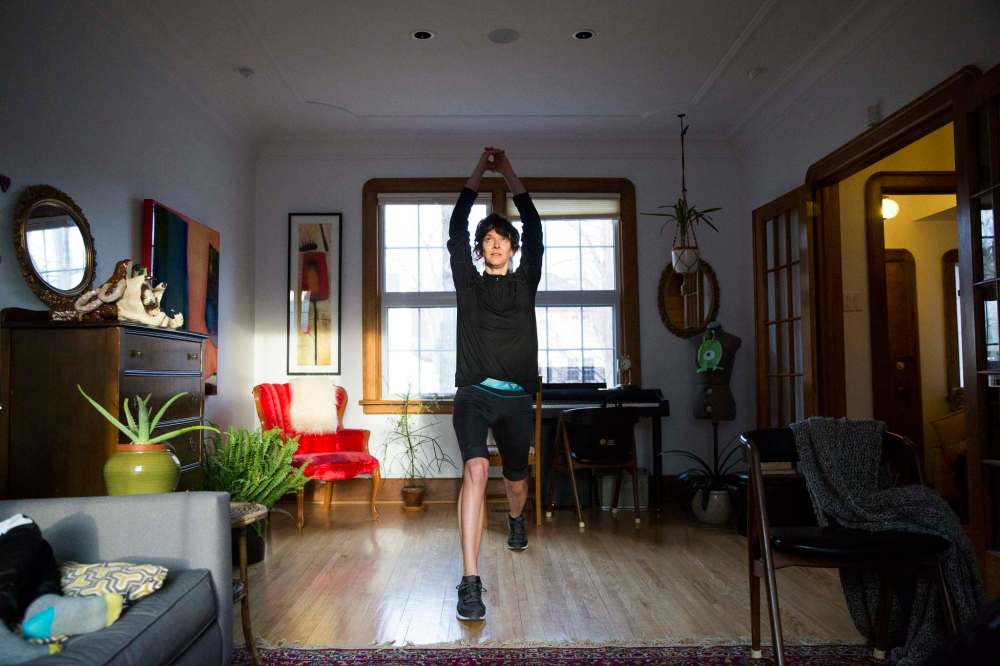
“Everyone has different needs based on what they do day-to-day, what activities they want to do and what injuries they may have had,” says Magne. “If you want to improve your range of motion, results are achieved by stretching five times per week for a total of five minutes.”
According to the 2007-08 Canadian Community Health Survey by Statistics Canada, approximately one in 10 Canadians aged 12 to 44 — nine per cent of males and 12 per cent of females for an estimated 1.5 million people — have experienced chronic pain.
Many of us know physical activity is a part of healthy living, but what about stretching? Is that part of your regular exercise routine or an afterthought that gets done if time permits?
When you’re short on time, you might be tempted to skip stretching so you can log a few extra minutes on the treadmill or another set in the weight room. But stretching is important for improving circulation, preventing injury and building a better range of motion and mobility.
A better range of motion means you can jump higher and lunge lower, which translates to more effective workouts. Whether you’re a marathon runner or spend most of your time in front of a computer, stretching is a healthy habit that can really pay off.
There are two primary types of stretching: dynamic and static. The former is recommended prior to working out to increase body temperature and joint flexibility as well as preventing injuries.
For example, a lunge with a twist is a dynamic stretch that engages your hips, legs and core muscles.
Static stretching is a good cool-down after a workout, such as holding a pectoral stretch against a wall for several seconds, as it allows you to release tension and helps prevent the shortening of muscles.
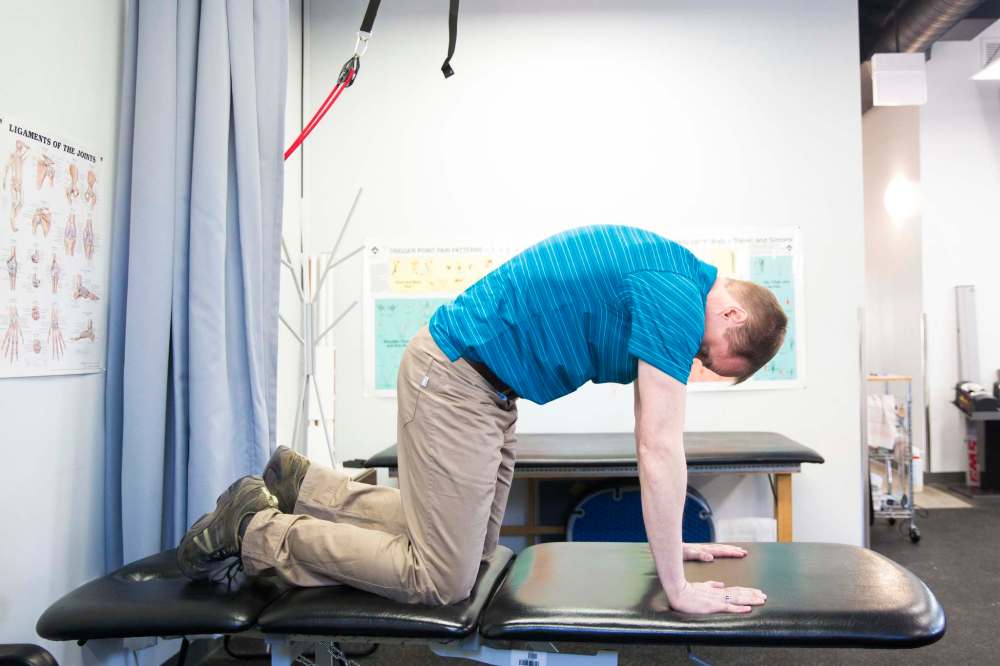
“Dynamic movement before a workout helps get the joints ready — gradually ramping up the intensity of the stretch to match the activity you want to do,” Magne says. “Static stretching after a workout can help reduce muscle soreness you may get with exercise.”
Sylvia Buchholz is an avid runner who runs to and from work three times a week in Winnipeg. She lives in River Heights and works downtown and her commute is exactly five kilometres each way.
“Running is my main mode for commuting to work. I run with a backpack to carry my clothes and lunch,” she says. “If I’m not stretching a minimum of five days per week, I’m at high risk for injury.”
Buchholz says it’s also crucial for her to stretch as she works primarily at a desk. Her back is prone to injury so if she misses more than three days in a row of stretching.
“Stretching is, without question, the single best method for maintaining my lower back and preventing other injuries.”
Buchholz learned stretches and techniques from a physiotherapist who, after assessing her back, told her which muscles she specifically needed to target for tightness.
“If you have a good assessment, you’ll be aware of which areas you need to focus on, and you can adapt all sorts of stretches accordingly.”
If you’re feeling sluggish by mid-afternoon, a stretch break can energize you in less time than it would take for a barista to whip up your typical Americano.
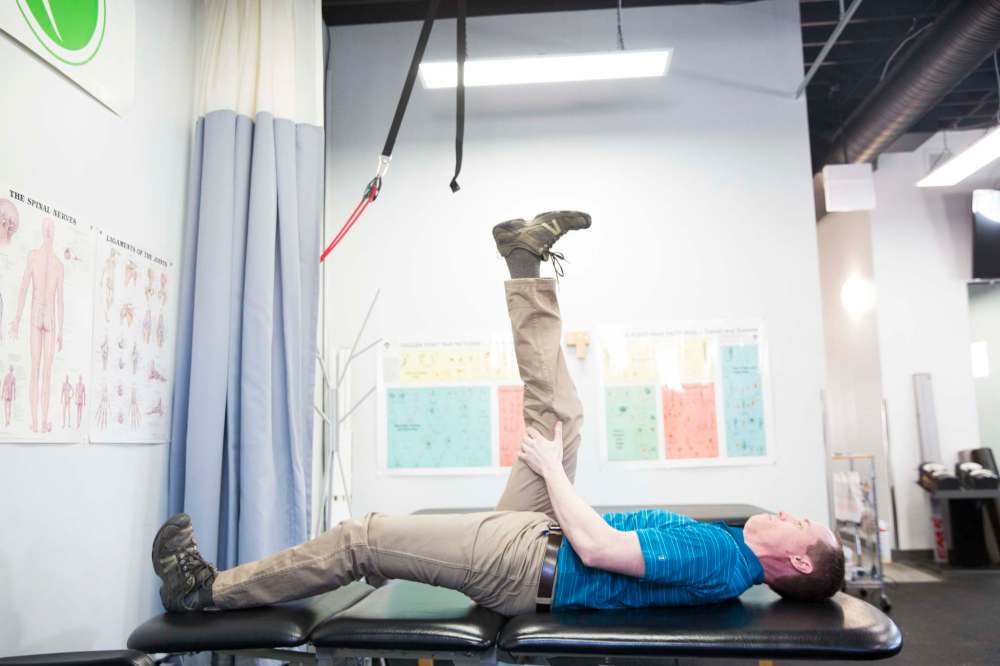
For those who sit at a desk for most of the day, you could be doing your posture a disservice. The Canadian Centre for Occupational Health and Safety says working at a computer can often involve few changes in body position, which can lead to muscle pain and strain. It recommends taking mini-breaks throughout the day, using that time to stretch or find other tasks that don’t involve sitting at a computer.
“Anyone working in an office or doing repetitive things will benefit from stretching throughout the day to counterbalance the tasks they’re doing,” says Magne. “Due to the amount of sitting the majority of people do in a day, many areas of the body have a tendency to get tight.”
Check your posture right now — are you slumping forward as you sit? This forward posture adds stress to the muscles in your neck and back. Sedentary days can lead to neck and shoulder problems and tightness in the hips.
Just a few minutes of stretching increases blood flow through your entire body — including your brain.
You may be thinking: “But my body can’t perform complicated twists and contortions.” Don’t worry, neither can mine! Even simple movements — such as lifting your arms above your head, rotating your neck from side and squeezing your shoulder blades together — can be helpful.
Magne recommends a Bruegger’s stretch to help reduce tension and improve posture. Stop what you’re doing and try it: sit tall at the edge of your chair. Rest your hands, palms-up, on your thighs and squeeze your shoulder blades together (but don’t shrug your shoulders.) Retract your chin into your neck and keep your head looking forward and held high. Hold for 10-15 seconds or about three deep breaths.
Try to add six or seven minutes of stretching to your morning routine — it’s a great way to energize your body and lengthen and tone your muscles.
“I do a daily sun salutation first thing in the morning,” Buchholz says. “I had to build it into my morning routine, otherwise, I’d rarely do it and would probably get stuck in an endless cycle of injury.”
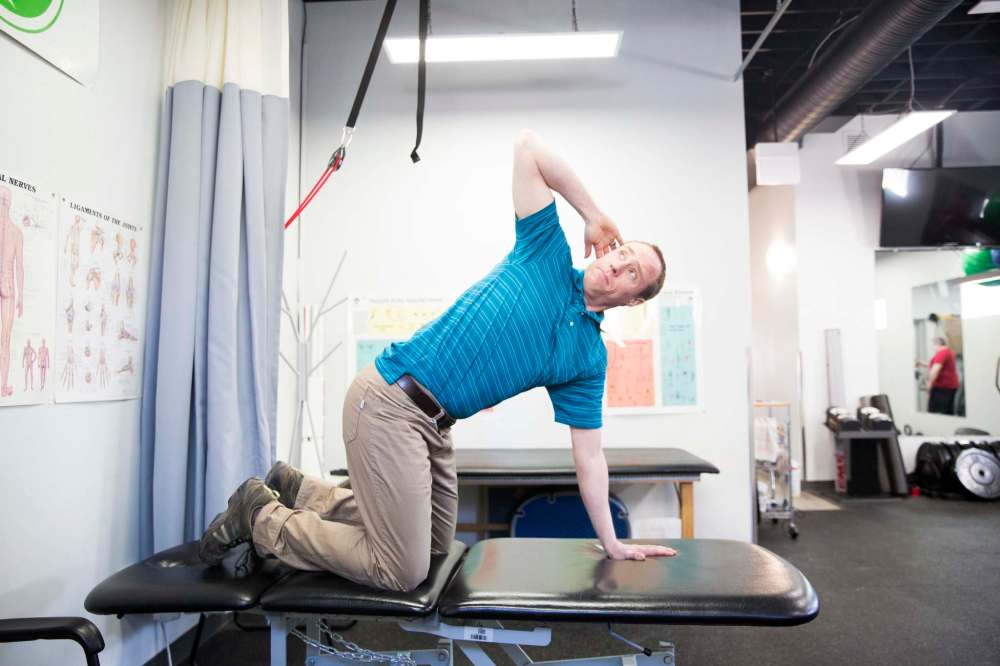

How you stretch depends on your level of mobility — in the end, just moving is beneficial. Stretches can be done at varying levels of intensity based on your fitness level. There are straightforward and more challenging versions of hundreds of stretches — just make sure you choose one that is appropriate for you.
Sabrina Carnevale is a freelance writer and communications specialist, and former reporter and broadcaster who is a health enthusiast. She writes a twice-monthly column focusing on wellness and fitness.
sabrinacarnevale@gmail.com
Twitter: @SabrinaCsays
Sabrina Carnevale is a freelance writer and communications specialist, and former reporter and broadcaster who is a health enthusiast. She writes a twice-monthly column focusing on wellness and fitness.
Our newsroom depends on a growing audience of readers to power our journalism. If you are not a paid reader, please consider becoming a subscriber.
Our newsroom depends on its audience of readers to power our journalism. Thank you for your support.
Sabrina Carnevale is a freelance writer and communications specialist, and former reporter and broadcaster who is a health enthusiast. She writes a twice-monthly column focusing on wellness and fitness.
Our newsroom depends on a growing audience of readers to power our journalism. If you are not a paid reader, please consider becoming a subscriber.
Our newsroom depends on its audience of readers to power our journalism. Thank you for your support.
Advertisement Advertise With Us
Advertisement Advertise With Us