

You’ve got the power!
Set aside the fears and myths behind pull-ups and push-ups

Advertisement
Read this article for free:
or
Already have an account? Log in here »
To continue reading, please subscribe:
Monthly Digital Subscription
$1 per week for 24 weeks*
- Enjoy unlimited reading on winnipegfreepress.com
- Read the E-Edition, our digital replica newspaper
- Access News Break, our award-winning app
- Play interactive puzzles
*Billed as $4.00 plus GST every four weeks. After 24 weeks, price increases to the regular rate of $19.95 plus GST every four weeks. Offer available to new and qualified returning subscribers only. Cancel any time.
Monthly Digital Subscription
$4.99/week*
- Enjoy unlimited reading on winnipegfreepress.com
- Read the E-Edition, our digital replica newspaper
- Access News Break, our award-winning app
- Play interactive puzzles
*Billed as $19.95 plus GST every four weeks. Cancel any time.
To continue reading, please subscribe:
Add Free Press access to your Brandon Sun subscription for only an additional
$1 for the first 4 weeks*
*Your next subscription payment will increase by $1.00 and you will be charged $16.99 plus GST for four weeks. After four weeks, your payment will increase to $23.99 plus GST every four weeks.
Read unlimited articles for free today:
or
Already have an account? Log in here »
Hey there, time traveller!
This article was published 06/05/2019 (2535 days ago), so information in it may no longer be current.
It’s no secret that pull-ups and push-ups are difficult to master.
Sure, biology and physiology may have joined forces to make them more difficult for women, but when has that ever stopped us? Just because they’re more difficult doesn’t mean they’re impossible or not worth trying, right? Even I can do push-ups and assisted pull-ups (which uses a resistance band.) With proper training, it can be done!
But even the fittest people can only lift their own body weight so many times before their grip, upper body and core give out completely. Women have a tougher time with push-ups and pull-ups than men do because we have less muscle mass in our upper bodies.
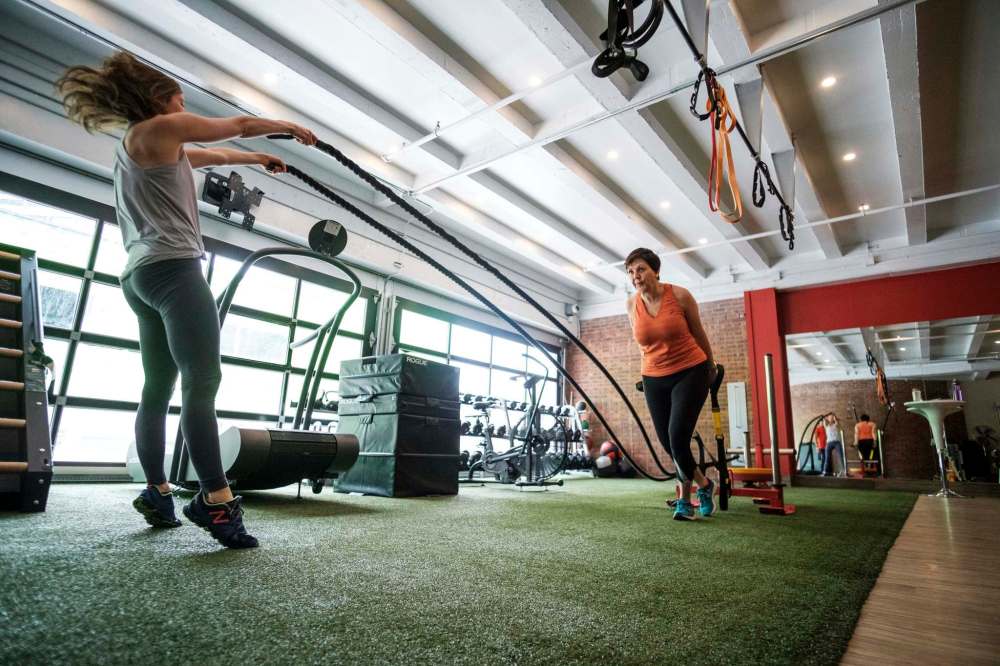
So, what’s the secret?
Carl Berryman is a certified personal trainer at Yoga Public in downtown Winnipeg where he teaches a strength-training class called SWET (Strong Women Empowered Together.) The class focuses on small-group training with a maximum of six-participants.
“Push-ups and pull-ups require a lot of brute strength,” he says. “It’s one thing to lift a dumbbell or a barbell but it’s another to be able to push your own body weight in ways that you don’t normally.”
First, let’s go over the pull-up: grasp a raised bar using an overhand grip with your arms fully extended. Hang so that your legs dangle and use your arms and back to pull yourself up until your chin passes the bar.
If fighting gravity was easy, everybody would do it. (Using an underhand grip is a chin-up, which some people find easier by comparison because you use different muscles.)
For push-ups: get onto your hands and knees with your hands slightly wider than your shoulders and flat to the ground. Extend your legs behind you so your torso is in a straight line. Bend your elbows to lower your chest and form a 45-degree angle with your elbows. Then push up, like the name of the exercise says, and repeat.
Berryman says form is critical but you also need to understand which muscle groups you’re using so you can engage them simultaneously.
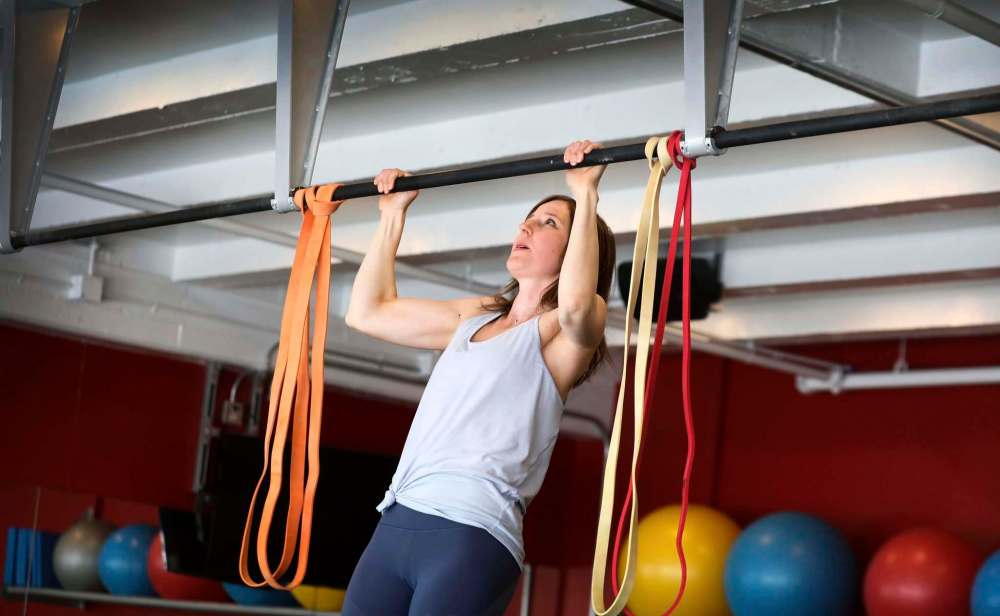
“With push-ups, there’s a lot more involved than your chest and shoulders. You also use your core, glutes and hamstrings,” he says. “Same thing with pull-ups. It’s not just your arms — you need strong lats, traps and core.”
A good starting point, Berryman says, is to do negative push-ups and pull-ups, which focus on the lowering aspect of the exercise — meaning your muscles are trying to stay contracted while they are lengthening.
For pull-ups, start with your chin over the bar and descend as slowly as possible until 10 seconds has elapsed and your arms are fully straightened. For push-ups, start in a standard pushup position and slowly lower yourself down, for about three to four seconds. When your stomach is on the ground, get back on all fours and reset or push up from your knees.
Albina Moran has been training with Berryman and the SWET group for almost a year.
“My goal is to do a pull-up. I’ve always wanted to and I know it takes a lot of strength,” says the 59-year-old. “When I first started, I couldn’t even stand on the box to reach the bar. I was very shaky. But the way these ladies inspire me, I’m getting there.”
There are also modified versions of the exercises. Use a pull-up machine, if one is available, or try a resistance band to simulate pull-ups. And try push-ups against a counter, wall or by supporting some of your weight on your knees.
So what’s the key to mastering the exercises? Practise, strength and determination. There are times (and I speak from experience) where women have been told it’s unfeminine to have muscles because we’re not supposed to look “bulky.” This can lead women to purposely avoid doing exercises — i.e. pull-ups and push-ups — which build muscles and strength.
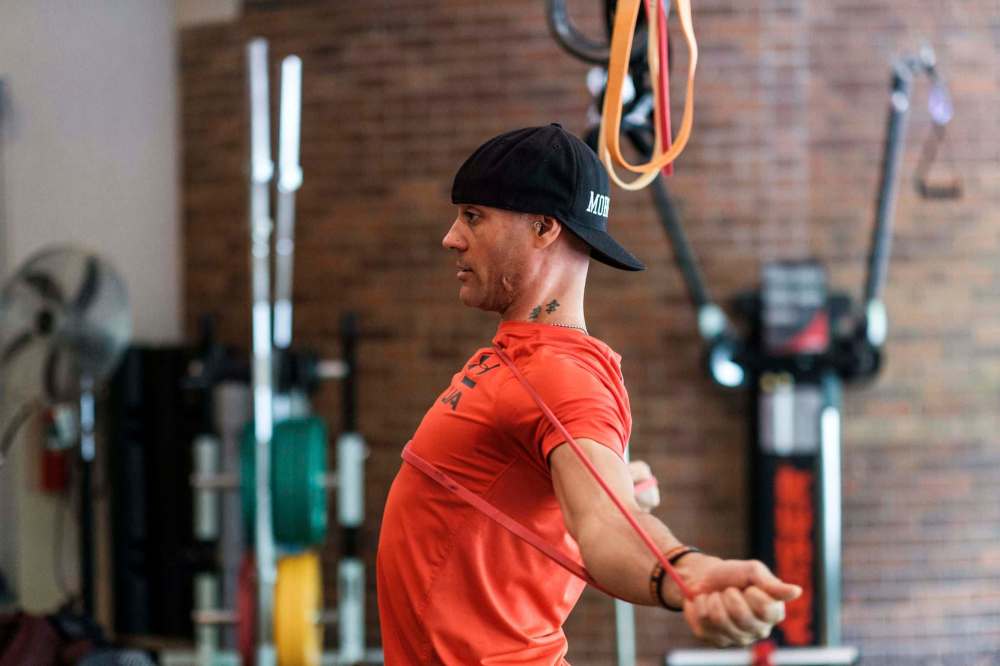
For Moran, strength training is about gaining a feeling of accomplishment.
“Everytime we do something in class, I go home and say ‘I did that!’” she says. “The best part is the encouragement you get from the other women. I’m almost 60 years old and I find these young ladies very empowering, inspiring and they help me celebrate my accomplishments, no matter how big or small.”
A common misconception about women and weight training is that lifting heavy weights will transform them into female Arnold Schwarzeneggers, so they either avoid lifting weights or stick with light dumbbells. But women can’t put on those Arnie muscles because women’s lower testosterone levels limit their muscle bulk.
Remember: strength doesn’t always equal size. Certain workouts can train your muscles to get stronger, gaining muscle density, without necessarily making them larger in size. This is typically done by using higher weights and fewer sets and repetitions.
Jennilee Marcial, another SWET class participant, believes strength training is also important for activities away from the gym.
“The best part about strength training is being able to use what I’ve gained in strength outside of class,” she says. “Like carrying my groceries by myself and practical things, like opening jars and pushing doors. Whatever it is, knowing that I have the strength to do it.”
The mental block might be the biggest obstacle to overcome when doing push-ups and pull-ups.
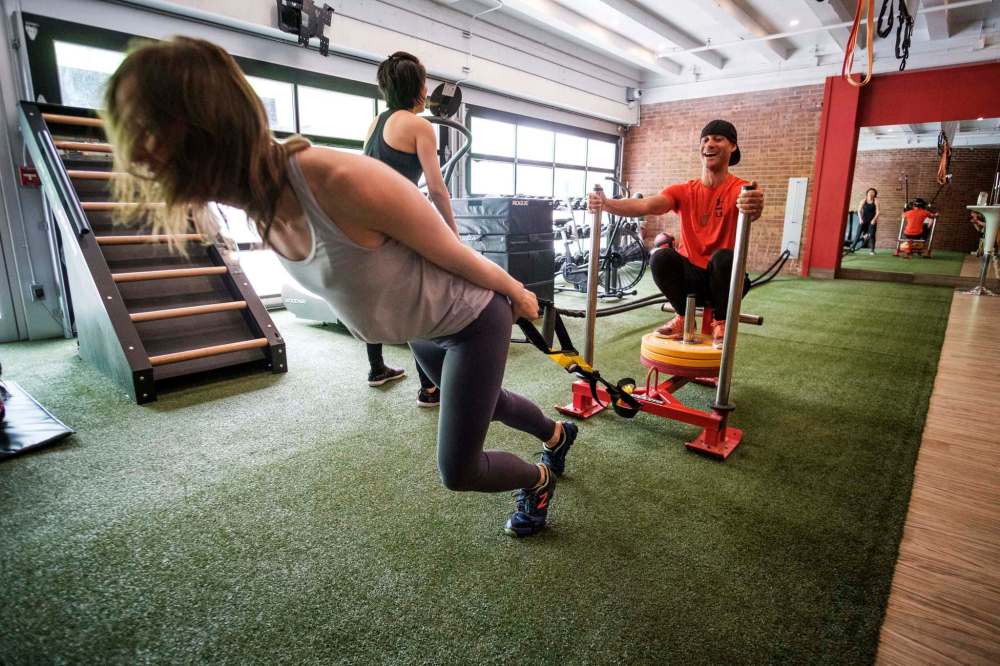
“First and foremost, it’ll never be about the what or the how — you have to put the who in the forefront,” Berryman says. “Get in a room with other people who empower you, whether that’s a trainer or a group of other women who share the same fears and ambitions.
“Step two is accepting where you are and realizing that no matter what it is, push-ups or pull-ups, the only way you’ll get better is small, progressive steps, and saying to yourself, ‘What did I do yesterday and what can I do to improve a little bit today?’ “
Lindsay Schulter began attending SWET classes a year ago and says hesitation can be the biggest hurdle.
“Those butterflies in your stomach before you attempt something that you feel you can’t do, a lot of times, that’ll hold you back from even trying,” she says. “Something we work on here is ‘3-2-1-go’ and not letting ourselves linger in the nervousness and training ourselves to ignore the hesitation.”
Let’s not forget about how important muscles and physical strength are to overall health, mobility and quality of life. One of the most significant changes that comes with aging is the atrophy of muscle mass. According to a Statistics Canada report that measured muscular strength among Canadians aged 60 to 79, reduced strength is associated with impaired mobility, risk of falls and disability.
Muscle atrophy begins relatively early in life, in your mid-to-late 30s. Physically inactive people can expect to lose up to five per cent of their muscles per decade thereafter and the process accelerates further after 60.

While regular physical activity is beneficial at any age, it becomes more vital as we grow older — especially weightlifting and other forms of strength training, which can keep muscles firm and flexible.
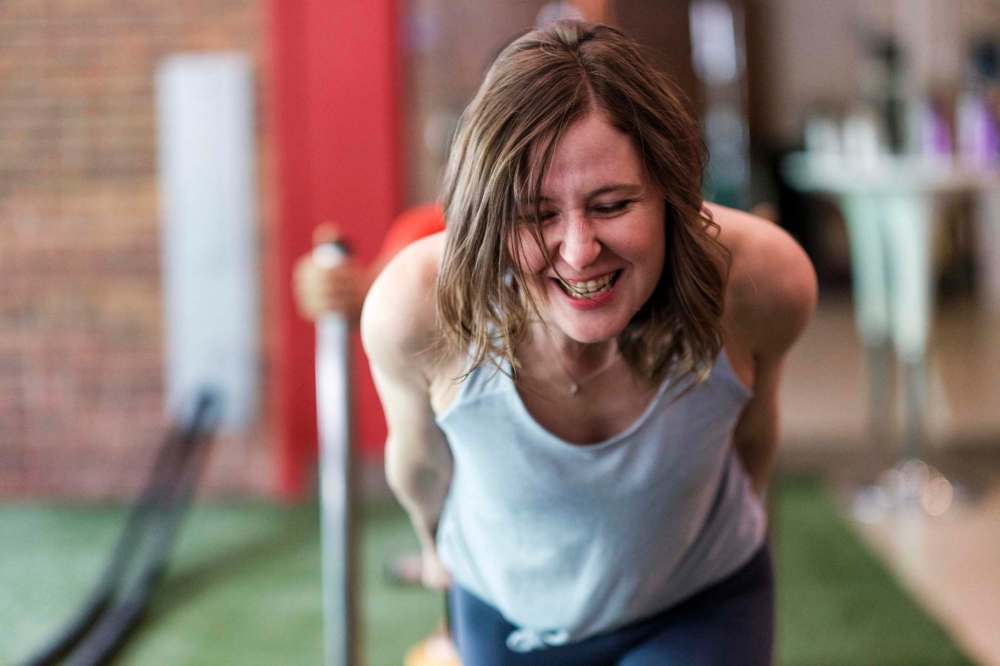
Moran has no plans of stopping anytime soon.
“We have a saying at the gym, ‘You got this!’” says Moran. “If I wanted to give up, I wouldn’t be here.”
Got any ideas or thoughts to share with Sabrina? Email her at sabrinacarnevale@gmail.com
Twitter: @SabrinaCsays
Sabrina Carnevale is a freelance writer and communications specialist, and former reporter and broadcaster who is a health enthusiast. She writes a twice-monthly column focusing on wellness and fitness.
Our newsroom depends on a growing audience of readers to power our journalism. If you are not a paid reader, please consider becoming a subscriber.
Our newsroom depends on its audience of readers to power our journalism. Thank you for your support.
Sabrina Carnevale is a freelance writer and communications specialist, and former reporter and broadcaster who is a health enthusiast. She writes a twice-monthly column focusing on wellness and fitness.
Our newsroom depends on a growing audience of readers to power our journalism. If you are not a paid reader, please consider becoming a subscriber.
Our newsroom depends on its audience of readers to power our journalism. Thank you for your support.
Advertisement Advertise With Us
Advertisement Advertise With Us