

Live-action Aladdin a whole new world
Comparisons are inevitable between remake and 1992 animated classic

Advertisement
Read this article for free:
or
Already have an account? Log in here »
To continue reading, please subscribe:
Digital Subscription
One year of digital access for only $1.44 a week*
- Enjoy unlimited reading on winnipegfreepress.com
- Read the E-Edition, our digital replica newspaper
- Access News Break, our award-winning app
- Play interactive puzzles
*Billed as $5.77 plus GST every four weeks. After 52 weeks, price increases to the regular rate of $19.95 plus GST every four weeks. Offer available to new and qualified returning subscribers only. Cancel any time.
To continue reading, please subscribe:
Add Free Press access to your Brandon Sun subscription for only an additional
$1 for the first 4 weeks*
- Enjoy unlimited reading on winnipegfreepress.com
- Read the E-Edition, our digital replica newspaper
- Access News Break, our award-winning app
- Play interactive puzzles
*Your next Brandon Sun subscription payment will increase by $1.00 and you will be charged $17.95 plus GST for four weeks. After four weeks, your payment will increase to $24.95 plus GST every four weeks.
Read unlimited articles for free today:
or
Already have an account? Log in here »
Hey there, time traveller!
This article was published 23/05/2019 (2568 days ago), so information in it may no longer be current.
Aladdin is just the latest in an ever-growing line of live-action remakes of animated Disney classics. As such, it earns the highest praise these things can possibly get, which is “much better than expected.”
Directed by Guy Ritchie, Aladdin is not a shot-for-shot remake, and it strikes a good balance between giving fans what they want (and expect) and doing its own thing. The general shape of the story is the same, with a few minor (and welcome) departures: Aladdin (Mena Massoud) is living on the streets of Agrabah and stealing to survive when he meets and falls in love with Princess Jasmine (Naomi Scott), who must marry a prince. When Aladdin ends up in the possession of a magic lamp and is granted three wishes by a genie, he asks to be transformed into a prince, and promises to use his last wish to set the genie free.
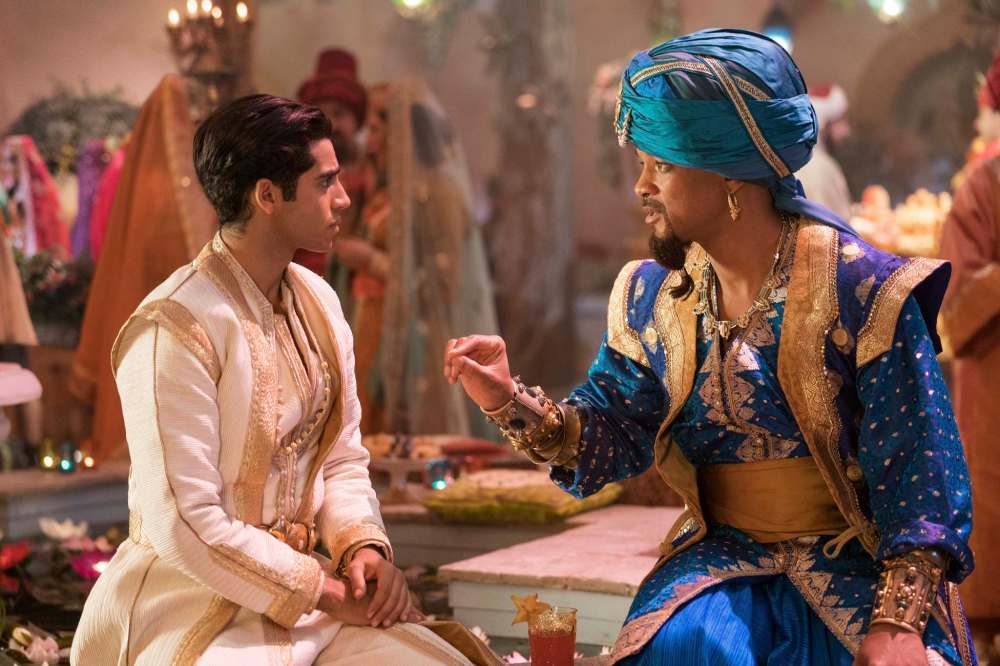
For those of us who grew up in the 1990s — this reviewer included — the animated original is a defining movie of our childhood. It’s also how many of us were introduced to the off-kilter comedic genius of Robin Williams, whose performance as Genie is iconic. Williams gave Genie so much more than his voice; he gave him his entire personality, and most of his ultra-quotable lines, too, which were famously ad-libbed. The larger-than-life character served as the perfect vessel for the comedian’s electric, elastic energy. Genie was like the inside of Robin Williams’ brain, animated.
So, yes, Will Smith had incredibly big curly shoes to fill. Those open-minded enough to accept a new Genie into their lives will find themselves charmed by Smith’s performance, which is perhaps less manic than Williams’ but thoroughly entertaining in its own right. He delivers a few of Williams’ most recognizable lines, but it feels more like homage than imitation. He does a truly commendable job making such a familiar and beloved character his own.
Though people who see this move will do it, comparing Genies is unfair, and highlights the fundamental problem with these remakes: humans simply can’t do what cartoons can do. Genie can’t quite be the slapstick shapeshifter he was in the animated version. The animals feel more like pets than sidekicks. While Aladdin’s monkey Abu is cheeky enough, Iago, the parrot informant of the Sultan’s double-crossing grand vizier Jafar, will make you long for the grating serenade of Gilbert Gottfried.
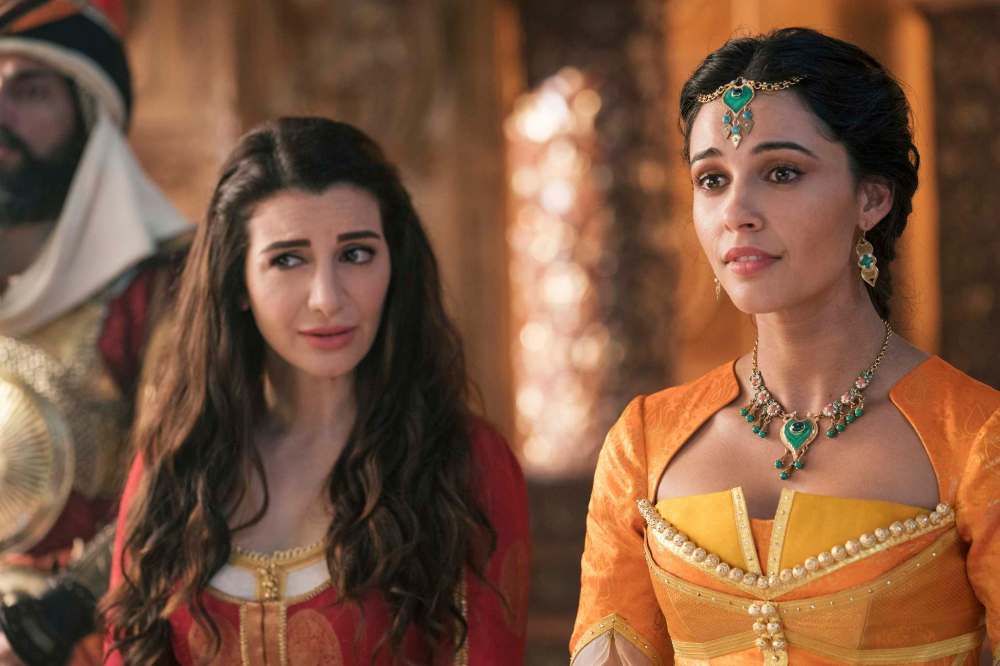
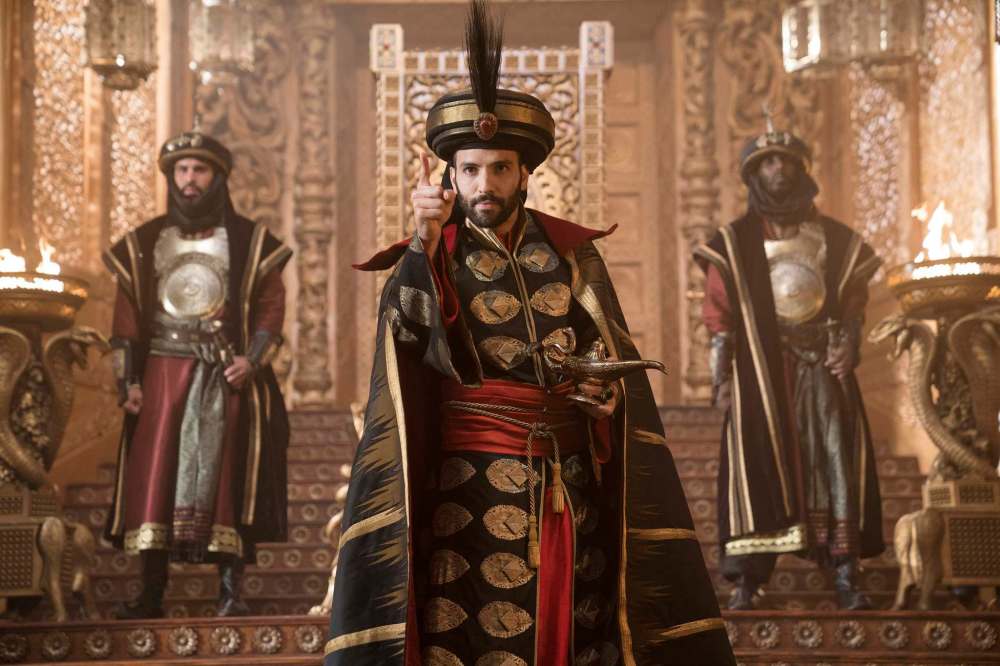
Massoud, however, is perfectly cast as loveable scamp Aladdin, right down to that toothy, mischevious grin. And Saturday Night Live alumna Nasim Pedrad is absolutely hilarious as a new character, Jasmine’s horndog handmaiden Dalia, who develops a thing for Genie. Marwan Kenzari is honestly too hot (and young) to be Jafar, but he’s a convincing villain nonetheless.
Princess Jasmine is more empowered — and less naked — this time out. Princess Jasmine 2.0. is ambitious and righteous, and has designs on becoming sultan one day. She’s also got a shiny new song, a rather on-the-nose empowerment anthem about how she refuses to be silenced. Her sexual enslavement by Jafar, Princess Leia-style, is thankfully omitted, as is the scene in which Jafar traps and tries to suffocate her in a rapidly filling hourglass. Despite the quasi-feminist rebrand, her character still feels disappointingly two-dimensional.
For those expecting “woke” Aladdin, this is not it. Diverse casting is admirable but it alone cannot solve the problem of Agrabah, the film’s generic, vaguely Middle Eastern-ish desert country that borrows elements from so many different cultures that it results in a confusing, Halloween-costume mishmash. And although there’s no shortage of vivid, eye-popping colours deployed in both costuming and set design, Agrabah is frequently gaudy when it should be sumptuous.

Where the film really shines is in its musical numbers. The eminently hummable songs of composer Alan Menken and lyricists Howard Ashman and Tim Rice are given lavish music video treatment, and the songs, as usual, soar.
To be sure, Aladdin is an entertaining magic carpet ride. Just don’t expect it to transport you to a whole new world.
jen.zoratti@freepress.mb.ca
Twitter: @JenZoratti
Jen Zoratti is a columnist and feature writer working in the Arts & Life department, as well as the author of the weekly newsletter NEXT. A National Newspaper Award finalist for arts and entertainment writing, Jen is a graduate of the Creative Communications program at RRC Polytech and was a music writer before joining the Free Press in 2013. Read more about Jen.
Every piece of reporting Jen produces is reviewed by an editing team before it is posted online or published in print – part of the Free Press‘s tradition, since 1872, of producing reliable independent journalism. Read more about Free Press’s history and mandate, and learn how our newsroom operates.
Our newsroom depends on a growing audience of readers to power our journalism. If you are not a paid reader, please consider becoming a subscriber.
Our newsroom depends on its audience of readers to power our journalism. Thank you for your support.
Movie Review
Aladdin
Starring Will Smith, Mena Massoud and Naomi Scott
Grant Park, Kildonan Place, McGillvray, Polo Park, St. Vital, Towne
PG
128 minutes
★★★ 1/2 out of ★★★★★
Jen Zoratti is a columnist and feature writer working in the Arts & Life department, as well as the author of the weekly newsletter NEXT. A National Newspaper Award finalist for arts and entertainment writing, Jen is a graduate of the Creative Communications program at RRC Polytech and was a music writer before joining the Free Press in 2013. Read more about Jen.
Every piece of reporting Jen produces is reviewed by an editing team before it is posted online or published in print – part of the Free Press‘s tradition, since 1872, of producing reliable independent journalism. Read more about Free Press’s history and mandate, and learn how our newsroom operates.
Our newsroom depends on a growing audience of readers to power our journalism. If you are not a paid reader, please consider becoming a subscriber.
Our newsroom depends on its audience of readers to power our journalism. Thank you for your support.
Advertisement Advertise With Us
Advertisement Advertise With Us