Reading up on the art of the book
Unique tomes tell tale of what's inside

Advertisement
Read this article for free:
or
Already have an account? Log in here »
To continue reading, please subscribe:

Digital Subscription
One year of digital access for only $205*
- Enjoy unlimited reading on winnipegfreepress.com
- Read the E-Edition, our digital replica newspaper
- Access News Break, our award-winning app
- Play interactive puzzles
*First annual payment billed as $205.00 + GST for one year. This annual subscription will automatically renew at $233.00 + GST every 52 weeks (10% off the regular annual price of $259.35). Offer available to new and qualified returning subscribers only. Cancel any time.
To continue reading, please subscribe:
Add Free Press access to your Brandon Sun subscription for only an additional
$1 for the first 4 weeks*
- Enjoy unlimited reading on winnipegfreepress.com
- Read the E-Edition, our digital replica newspaper
- Access News Break, our award-winning app
- Play interactive puzzles
*Your next Brandon Sun subscription payment will increase by $1.00 and you will be charged $17.95 plus GST for four weeks. After four weeks, your payment will increase to $24.95 plus GST every four weeks.
Read unlimited articles for free today:
or
Already have an account? Log in here »
Hey there, time traveller!
This article was published 29/07/2019 (2574 days ago), so information in it may no longer be current.
When we hear the term “artists’ books,” we often think of coffee-table tomes packed with glossy reproductions.
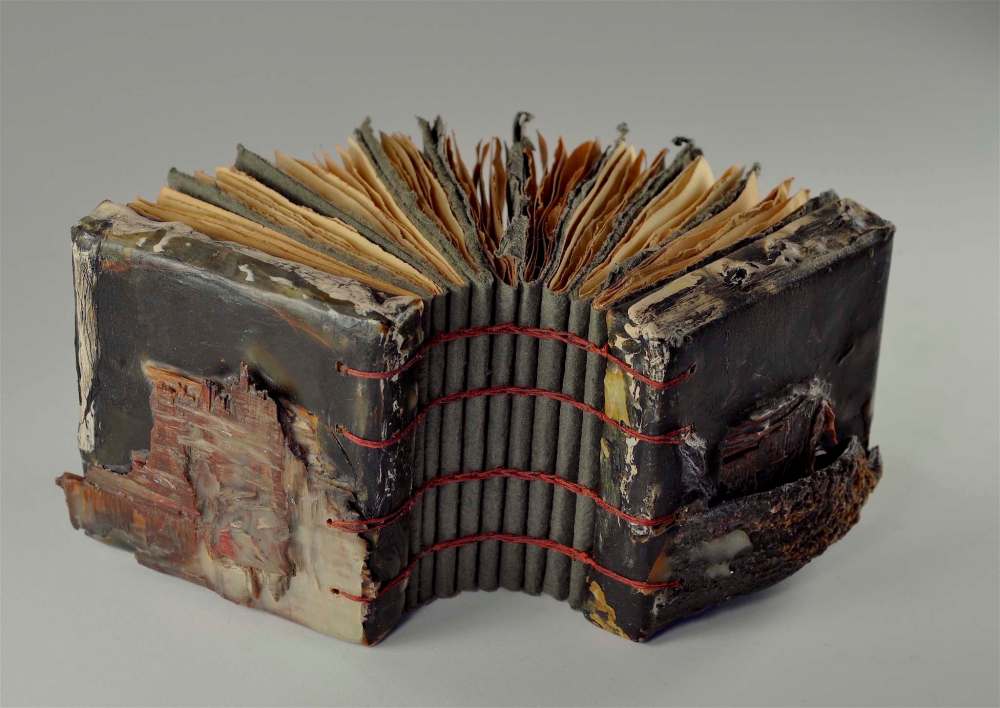
In a more specific sense, artists’ books — also referred to as bookworks, book art or livres d’artistes — are objects made by artists that reference and respond to the book form. The history of this small but significant visual art niche includes a lot of debate about what constitutes an artist’s book and even some sticky disagreements over punctuation (apostrophe or no?).
Art of the Book, an international juried exhibition organized by the Canadian Bookbinders and Book Artists Guild (CBBAG), demonstrates the depth and range of contemporary artists’ books, as well as achievements in calligraphy, papermaking, fine binding and restoration.

The show, which has been travelling across the country, will run at Winnipeg’s Centre culturel franco-manitobain from Aug. 22 until Oct. 3. At this month’s First Fridays in the Exchange Art Talk/Art Walk, we’ll be speaking with three Winnipeg artists whose works are included in that exhibition: Erwin Huebner, Debra Frances Plett and Ann Stinner.
Artists’ books can be widely distributed multiples or unique sculptural objects. Some are deeply personal, while others are collaborative cross-media projects. Some are text-based, some use pictures and some mix it up.
What’s important, according to Plett, is that “the components of the book express what’s inside.”
Huebner agrees: “The structure of the book has to be intimately linked to the content.”
His work often explores the connections between art and science. “I’ve been involved in doing books for a long time, but I also do science as my career,” he explains. (Huebner teaches in the department of biological science at the University of Manitoba.)
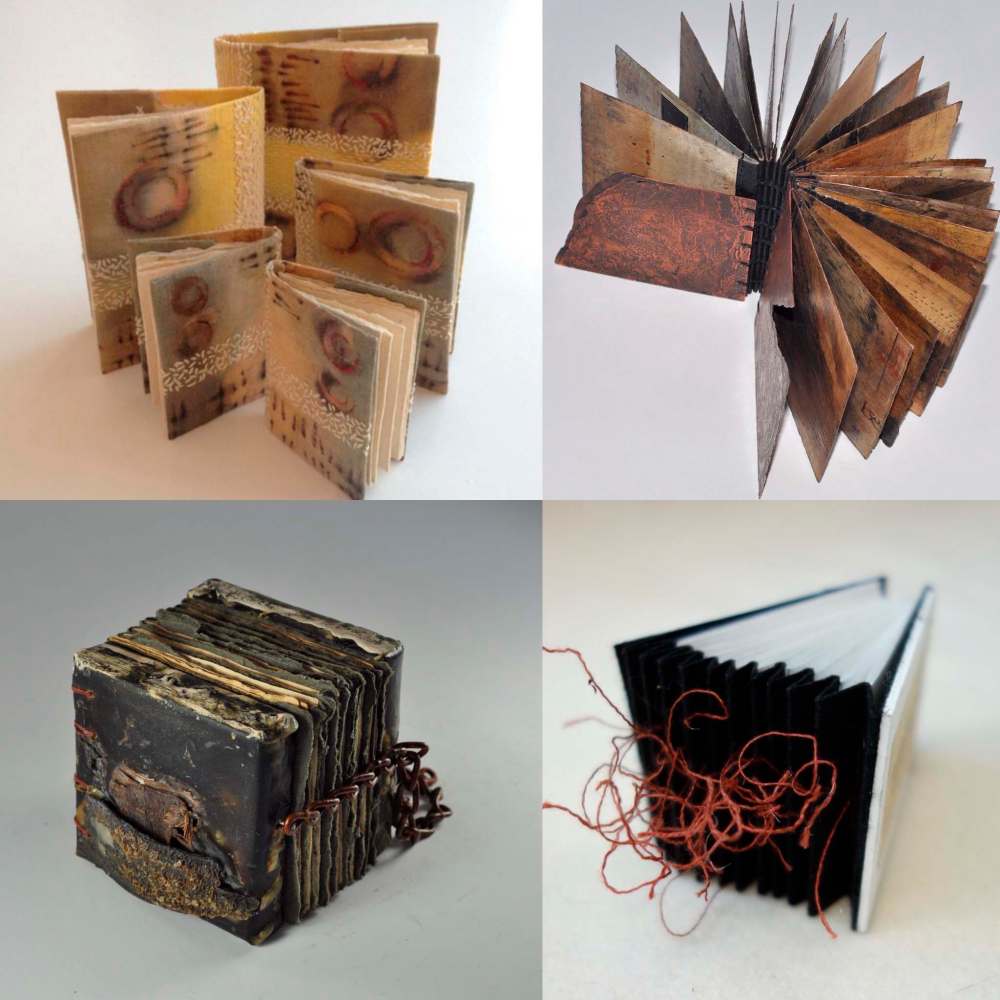
“A lot of my books have science as the subject matter, but I like to explore that content using a structure that links with that science.”
He’s used an egg structure to look at embryo development and crafted a sturgeon-skin cover for a book about fish. A book referencing monarch butterflies included paper made of milkweed, the monarch’s food source.
Stinner has made a series of works about sheep that connect content with form by using wool and sheep-derived parchment for materials.
Her work often starts with an autobiographical spark.
“It relates to my experience, because my family comes from Yorkshire and they were involved in sheep farming, I spent two years visiting sheep farms, sketching and doing research,” Stinner says.

When a beloved pine tree in Plett’s yard fell during an electrical storm, she recycled parts into a series of live-edge book covers.
“It felt like a way I could keep that tree alive and honour it, because it was a meaningful tree, the backdrop to all our family events,” she relates.
Plett, who often collaborates with other artists such as Winnipegger Sue Gordon, has worked with ceramics, etched copper and even beaver tails, depending on the subject matter. Stinner picks up unusual materials when she travels, but she improvises with what’s available, once using Tyvek housewrap with some of the lettering showing through.
Huebner has constructed books from glass and worked with highly customized paper, including some made from the actual blue jeans that were cut off his legs by medical personnel after a serious accident.
There are challenges in crafting artists’ books. Plett likes that book art is “creative but also precise,” relying on traditional skills and forms that often date back centuries. Stinner is also interested in what she calls the engineering aspects of putting together a book, “even if that means a whole lot of mistakes along the way.”
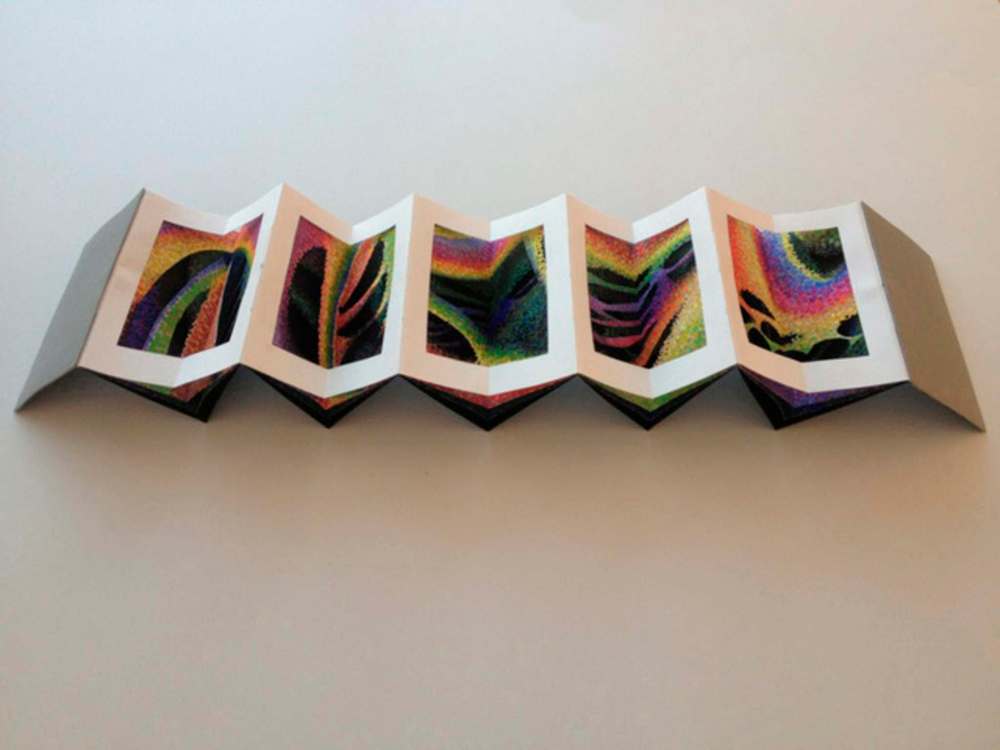

There are different forms of binding, as well as books that use elaborate folded pages and tricky pop-ups. Some bookworks are teeny-tiny, but some go way beyond conventional book size: Huebner once constructed a book so big, people could sit inside.
These works often have to be protected when they are exhibited publicly. But most function best when they are picked up, touched and held. Book art is an intimate medium, encouraging people to slow down, think, look and read.
This interactive quality could be making artists’ books more relevant than ever.
“A lot of people nowadays say that the traditional book is dead because technology is taking over. But because the book is very tactile, it provides some relief from technology. Actually, it’s becoming more of an art object because it contrasts with the technology that surrounds us, which is a good thing,” Stinner says.
This First Fridays’ Art Talk/Art Walk with Ann Stinner, Debra Frances Plett and Erwin Huebner takes place at the Free Press News Café at 237 McDermot Ave., on Friday, Aug. 2 at 6 p.m., with a guided art tour of the Exchange afterwards. Call 204-421-0682 or email wfpnewscafe@gmail.com to reserve tickets, which include dinner and cost $25 plus tax.
Studying at the University of Winnipeg and later Toronto’s York University, Alison Gillmor planned to become an art historian. She ended up catching the journalism bug when she started as visual arts reviewer at the Winnipeg Free Press in 1992.
Our newsroom depends on a growing audience of readers to power our journalism. If you are not a paid reader, please consider becoming a subscriber.
Our newsroom depends on its audience of readers to power our journalism. Thank you for your support.
Studying at the University of Winnipeg and later Toronto’s York University, Alison Gillmor planned to become an art historian. She ended up catching the journalism bug when she started as visual arts reviewer at the Winnipeg Free Press in 1992.
Our newsroom depends on a growing audience of readers to power our journalism. If you are not a paid reader, please consider becoming a subscriber.
Our newsroom depends on its audience of readers to power our journalism. Thank you for your support.
Advertisement Advertise With Us
Advertisement Advertise With Us
History
Updated on Friday, August 2, 2019 10:26 AM CDT: Updates with new beginning date, Aug. 22