Shorter, but far from sweeter

Winnipeg novelist David Bergen's new collection of stories trades in lost faith, violence

Advertisement

Advertise with us

Over the course of the last 20-plus years, Winnipeg author David Bergen has become one of Canada’s foremost novelists. With his latest book, though, the 63-year-old Bergen has returned to the genre in which he had his published debut — short fiction.

Read this article for free:

or

Already have an account? Log in here »

To continue reading, please subscribe:

Subscribe and receive a limited-edition Free Press branded hat or tote.

Digital Subscription

One year of digital access for only $205*

  • Enjoy unlimited reading on winnipegfreepress.com
  • Read the E-Edition, our digital replica newspaper
  • Access News Break, our award-winning app
  • Play interactive puzzles

*First annual payment billed as $205.00 + GST for one year. This annual subscription will automatically renew at $233.00 + GST every 52 weeks (10% off the regular annual price of $259.35). Offer available to new and qualified returning subscribers only. Cancel any time.

To continue reading, please subscribe:

Add Free Press access to your Brandon Sun subscription for only an additional

$1 for the first 4 weeks*

  • Enjoy unlimited reading on winnipegfreepress.com
  • Read the E-Edition, our digital replica newspaper
  • Access News Break, our award-winning app
  • Play interactive puzzles
Start now

*Your next Brandon Sun subscription payment will increase by $1.00 and you will be charged $17.95 plus GST for four weeks. After four weeks, your payment will increase to $24.95 plus GST every four weeks.

Hey there, time traveller!
This article was published 11/03/2020 (2318 days ago), so information in it may no longer be current.

Over the course of the last 20-plus years, Winnipeg author David Bergen has become one of Canada’s foremost novelists. With his latest book, though, the 63-year-old Bergen has returned to the genre in which he had his published debut — short fiction.

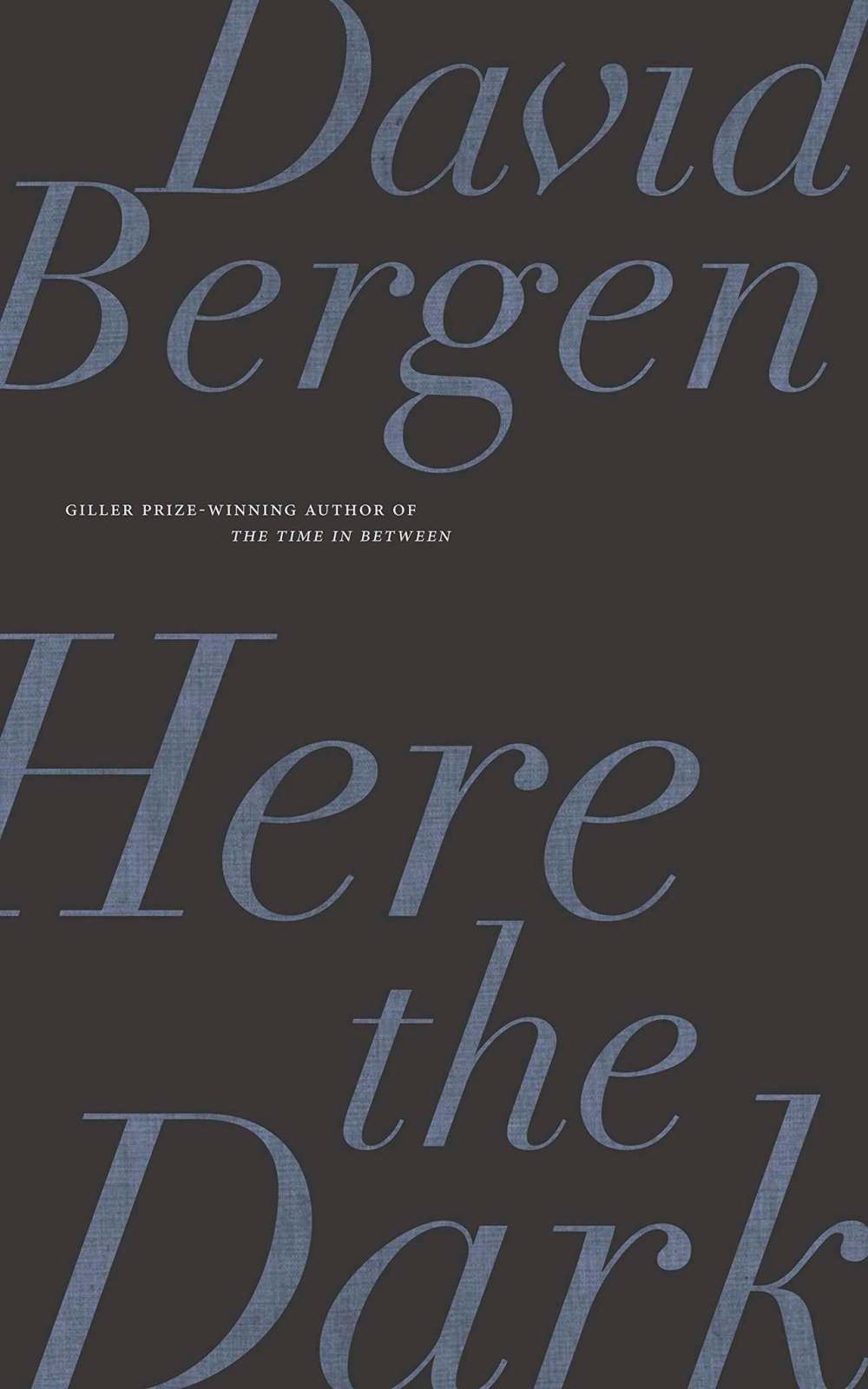
Bergen’s latest book, Here the Dark, compiles seven short stories and a novella that span his writing career. Unlike his novels, Here the Dark was published by smaller publishing house Biblioasis; the collection, released earlier this month, will be launched at McNally Robinson Booksellers’ Grant Park location at 7 p.m. at a free event, where he’ll be joined in conversation by Winnipeg poet and novelist Catherine Hunter.

“In a way I guess it’s like coming full circle — I started off with short stories,” says Bergen, whose first book, Sitting Opposite My Brother, was published in 1993 by Winnipeg publishing house Turnstone Press.
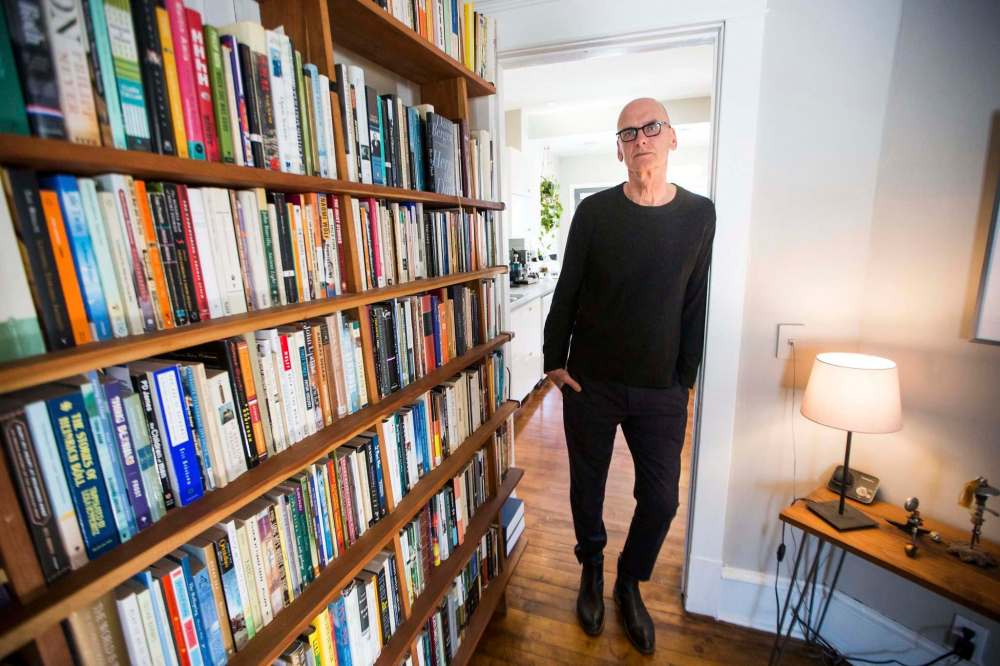
MIKAELA MACKENZIE / WINNIPEG FREE PRESS
David Bergen is best known for his novels, but the Winnipeg writer started his career with short stories.
MIKAELA MACKENZIE / WINNIPEG FREE PRESS David Bergen is best known for his novels, but the Winnipeg writer started his career with short stories.

“For me, learning how to write a short story was a good way of testing the waters. Can I write a 20-page story? Will someone actually read it? Will someone accept it for publication? It was a way of finding my way into writing itself.”

Since his first collection, Bergen has published nine novels, including The Case of Lena S., which was shortlisted for the 2002 Governor General’s Award, the 2005 Giller Prize-winning The Time in Between and the 2012 novel The Age of Hope, which was featured on CBC’s Canada Reads in 2013 and was defended by Hockey Night in Canada host Ron MacLean. Bergen’s most recent novel was 2016’s Stranger.

He finds writing shorter fiction is nearly as time-consuming and taxing as writing novel-length books.

“The short-story form is tough; it can take me a long time to write a short story, which is weird,” he says. “There are times where I think I could write a novel faster than I could a short story.”

The earliest story in Here the Dark, How Can ‘N’ Men Share a Bottle of Vodka, dates back to the late 1990s, and won Bergen the CBC Literary Award for short fiction. Many of the other shorter pieces in the collection feature characters grappling with matters of faith and doubt, some underlying hopelessness and, in more than once instance, violence.

“Thematically, they all kind of fit together,” says Bergen. “I was talking to someone yesterday about (American author) Flannery O’Connor. I’ve always loved her stories — they’re always full of surprise. And there’s violence, and surprising violence, there’s the Bible, there’s grace… if anything she’s been a model.”
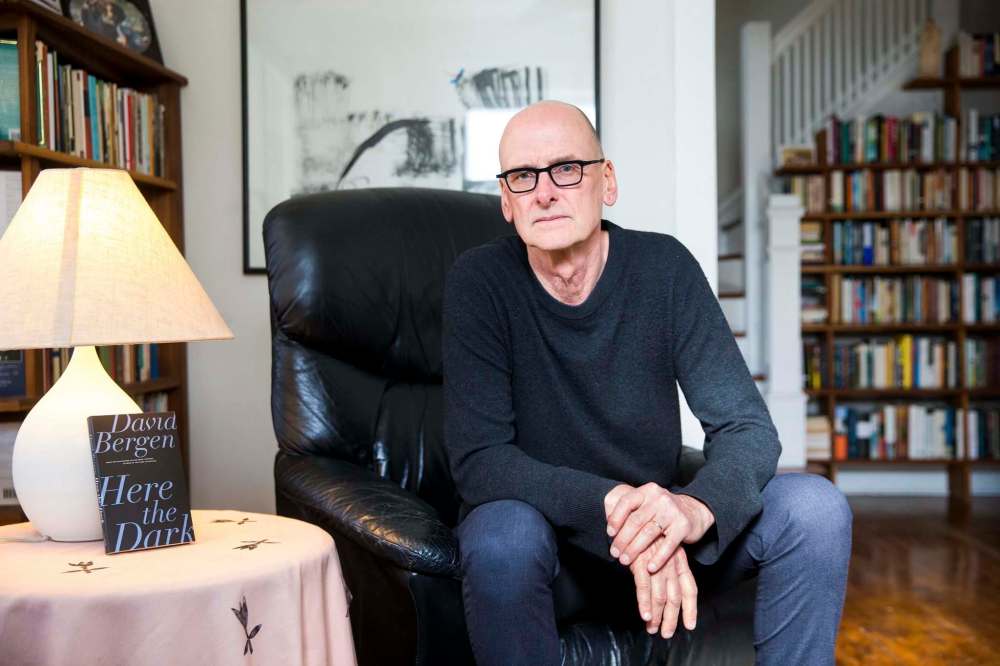
MIKAELA MACKENZIE / WINNIPEG FREE PRESS
Author David Bergen in his Winnipeg home with his new collection of short fiction, Here the Dark.
MIKAELA MACKENZIE / WINNIPEG FREE PRESS Author David Bergen in his Winnipeg home with his new collection of short fiction, Here the Dark.

The most recent writing in Here the Dark is the striking title story, a novella-length piece of fiction that closes the book. It’s the story of Lily, a teenage girl (and later a woman) who comes of age in a religious rural community, struggling with her doubt in the faith, her marriage and her stifling community relative to the “outside world.”

Bergen had attended a birthday dinner in a similar community, and the inspiration came when talking to a local.

“I started wondering: how does someone either accept this community or move away from the community,” Bergen says. “I asked the guy across from me whether they’d ever had anyone move away or doubt, and he said ‘never.’ I thought there was no way — so there’s Lily.”

Bergen also saw similarities in his own upbringing in a religious household. “In some ways it parallels how I moved through life and growing up in a fairly religious home, and finding books, and university and education and realizing there’s a whole world out there to explore, and to ask questions. That’s Lily.”

The novella was written after Bergen had completed Stranger. “It was supposed to be a novel, but as a writer you can see when you’re over-extending. I chopped about 100 pages — it worked better as a novella.”

The format, while not commercially popular, appeals to Bergen, as it offers opportunities more in line with novels that short fiction cannot. “I think a novella can have incredible power. There’s a bit more room to breathe — it allows us to go inside the head of the character a bit more, a chance to explore where the character is coming from.”
Bergen is once again at work writing, having turned back to novel-length fiction that may take a historical bent. He’s in part motivated by having won the Writer’s Trust Matt Cohen Award in 2018, a prize presented to an author in recognition of a lifetime of distinguished work.

“It’s sort of like, ‘die already,’” he says, laughing. “It’s implied that you only support yourself through writing, which is kind of a joke these days because it’s impossible now. But it’s also sort of like a statement of ‘OK, you’re done.’ So it was almost like a bit of a challenge.”

books@freepress.mb.ca

History

Updated on Wednesday, March 11, 2020 11:52 AM CDT: Updates headline.

Report Error Submit a Tip

More Stories

Carney trumps Trump with Gordie Howe bridge deal

Dan Lett 5 minute read Preview

Carney trumps Trump with Gordie Howe bridge deal

Dan Lett 5 minute read Monday, Jul. 13, 2026

This is the reality of dispute resolution with the Trump administration: getting what we want but doing it in a way that gives the wacky, volatile and irrational president some sort of moral victory to parade on social media.

Read
Monday, Jul. 13, 2026

Winnipeg novelist David Bergen's new collection of stories trades in lost faith, violence

Ben MacPhee-Sigurdson 5 minute read Preview

Winnipeg novelist David Bergen's new collection of stories trades in lost faith, violence

Ben MacPhee-Sigurdson 5 minute read Wednesday, Mar. 11, 2020

Over the course of the last 20-plus years, Winnipeg author David Bergen has become one of Canada’s foremost novelists. With his latest book, though, the 63-year-old Bergen has returned to the genre in which he had his published debut — short fiction.

Bergen’s latest book, Here the Dark, compiles seven short stories and a novella that span his writing career. Unlike his novels, Here the Dark was published by smaller publishing house Biblioasis; the collection, released earlier this month, will be launched at McNally Robinson Booksellers’ Grant Park location at 7 p.m. at a free event, where he’ll be joined in conversation by Winnipeg poet and novelist Catherine Hunter.

“In a way I guess it’s like coming full circle — I started off with short stories,” says Bergen, whose first book, Sitting Opposite My Brother, was published in 1993 by Winnipeg publishing house Turnstone Press.

“For me, learning how to write a short story was a good way of testing the waters. Can I write a 20-page story? Will someone actually read it? Will someone accept it for publication? It was a way of finding my way into writing itself.”

Read
Wednesday, Mar. 11, 2020

Nine years for man who kidnapped delivery driver

Erik Pindera 5 minute read Preview

Nine years for man who kidnapped delivery driver

Erik Pindera 5 minute read 2:01 AM CDT

A delivery driver was kidnapped after the break-up of a business partnership involving “grey-market vapes” that were sold at Winnipeg convenience stores, a Manitoba judge has been told.

The Winnipeg Police Service said last week that investigators recently arrested a third suspect in the Oct. 11, 2024 incident, in which three men are accused of kidnapping the 22-year-old driver and holding him at gunpoint for hours as they stole merchandise from a storage facility.

One of the men arrested, 43-year-old Jonathon Ranger, pleaded guilty earlier this year to forcible confinement and two offences related to the stolen gun that was found when he was arrested in December 2024.

In June, he was sentenced to nine years in prison, minus time served, based on a joint recommendation from the Crown and defence as part of a plea bargain.

Read
2:01 AM CDT

Report calls for schools to add more ‘sensory rooms’

Maggie Macintosh 5 minute read Preview

Report calls for schools to add more ‘sensory rooms’

Maggie Macintosh 5 minute read Updated: Yesterday at 9:34 AM CDT

Manitoba schools are being urged to set up more “sensory rooms” and use the spaces — which can feature mood lighting, flexible seating and fidget toys — to address growing concerns about student outbursts and related injuries.

A new report from the Manitoba Federation of Labour is renewing calls to better protect educational assistants, teachers and other public-sector employees.

One of its 10 recommendations, published on Monday, focuses on tackling overcrowding in community facilities and establishing “safe spaces in schools to respond to violence.”

“It’s become the norm: kids having meltdowns that require you have to evacuate the classroom,” said Jane Allison, an educational assistant in Winnipeg.

Read
Updated: Yesterday at 9:34 AM CDT

WestJet cabin crews issue warning

Gabrielle Piché 5 minute read Preview

WestJet cabin crews issue warning

Gabrielle Piché 5 minute read Tuesday, Jul. 14, 2026

Travellers leaving Winnipeg got an unexpected view Tuesday — a line of silent WestJet flight attendants, wearing sunglasses and holding signs protesting unfair wages.

“Ready to Strike” and “Unpaid Work Won’t Fly!” boards faced passersby hurrying into the Winnipeg Richardson International Airport’s departures level.

Some 66 Manitoba-based WestJet workers stood silently outside the terminal for a half-hour, before noon.

Elsewhere, their colleagues cast strike votes. Some 4,400 flight attendants across Canada began voting July 9; the vote closes Wednesday.

Read
Tuesday, Jul. 14, 2026

The next Duff’s Ditch must be medical

Rafiq Andani 5 minute read Preview

The next Duff’s Ditch must be medical

Rafiq Andani 5 minute read 2:00 AM CDT

A runaway rail trolley hurtles towards five people tied to the tracks. You stand at the switch lever. If you pull the lever, the trolley veers onto a sidetrack, where one person is tied down. Do nothing and five die. Pull the lever and one dies by your hand.

A health minister needs no introduction to the weight of that choice. Every budget season, governments confront this dilemma with one cruel modification — the lever switches between today and tomorrow. Down the near track sits this year’s emergency, a crowded emergency department, a surgical backlog, a crisis demanding a decision by Friday. Down the far track, in the distance, over the horizon, waits a geriatric demographic that has not arrived yet. Each year’s budget cannot simultaneously rescue both.

Philosophers treat the trolley scenario as a thought experiment. A health minister calls it Tuesday.

The actual choice is crueller, because both tracks hold real people. The stroke patient in today’s hallway deserves rescue, as do the patients down the line. Two scholars, Guido Calabresi and Philip Bobbitt, analyzed such allocations as tragic choices — scarcity forces a society to preserve one value by sacrificing another. Their darker observation concerned method. Societies rarely make these choices in the open. The lever keeps directing traffic away from the immediate noise, toward the far track.

Read
2:00 AM CDT