

Larger than life
Fictionalized Rob Ford story taps into political zeitgeist

Advertisement
Read this article for free:
or
Already have an account? Log in here »
To continue reading, please subscribe:
Monthly Digital Subscription
$1 per week for 24 weeks*
- Enjoy unlimited reading on winnipegfreepress.com
- Read the E-Edition, our digital replica newspaper
- Access News Break, our award-winning app
- Play interactive puzzles
*Billed as $4.00 plus GST every four weeks. After 24 weeks, price increases to the regular rate of $19.95 plus GST every four weeks. Offer available to new and qualified returning subscribers only. Cancel any time.
Monthly Digital Subscription
$4.99/week*
- Enjoy unlimited reading on winnipegfreepress.com
- Read the E-Edition, our digital replica newspaper
- Access News Break, our award-winning app
- Play interactive puzzles
*Billed as $19.95 plus GST every four weeks. Cancel any time.
To continue reading, please subscribe:
Add Free Press access to your Brandon Sun subscription for only an additional
$1 for the first 4 weeks*
*Your next subscription payment will increase by $1.00 and you will be charged $16.99 plus GST for four weeks. After four weeks, your payment will increase to $23.99 plus GST every four weeks.
Read unlimited articles for free today:
or
Already have an account? Log in here »
Hey there, time traveller!
This article was published 17/04/2020 (2184 days ago), so information in it may no longer be current.
It only seems like forever. But it was just six years ago that Toronto’s mayor Rob Ford departed from that hallowed office after enduring a series of personal scandals — including crack cocaine abuse, drunkenness and sexual harassment.
Ford died of cancer two years later in 2016, but such was his fame, or rather infamy, most people still have a pretty good idea of what Rob Ford looked like — a ruddy, 330-pound human wrecking ball of a man, barely constrained by the shirt-and-tie uniform of the civic politician, which is why he more often favoured sports jerseys.
What Ford did not look like is lean, handsome English actor Damian Lewis, perhaps best known for his work on the series Homeland, and most recently seen in Quentin Tarantino’s Once Upon a Time in Hollywood, in which he was an unexpectedly accurate facsimile of supercool movie star Steve McQueen.
And yet director Ricky Tollman cast Lewis as Ford in his first feature, Run This Town, a fictionalized look at Ford’s downfall from the perspective of a novice newspaper reporter (Ben Platt) trying to track down the elusive crack-smoking video, and Ford’s own executive assistant (Mena Massoud) who is doing his best to prevent that video from leaking.
Tarantino looked at Lewis and saw Steve McQueen. How is it Tollman looked at him and saw Rob Ford?
“I think Damian is one of the most talented actors working today,” says the South African-born Tollman from his home in Toronto. “I wanted to cast somebody who could play more than just a goofy side of the character that people recognize from YouTube videos — a guy stumbling around and knocking over video cameras and saying absurd things.
“In most or all of his roles, (Lewis) has gone from being so incredibly charming to very scary in a matter of moments,” Tollman says. “Those shades were important for me to capture.”
The movie is emphatically not a realistic recounting of those events in Ford’s life. Platt’s character, journalism school grad Bram Shriver, is not a stand-in for Robyn Doolittle, the Globe and Mail reporter who broke the story for the Toronto Star. Rather, Bram — toiling for a made-up news outlet called The Record — represents a modern millennial caught in the orbit of the reckless and powerful.
When he gets the job at the paper, he is assigned an endless series of Top 10 lists, which his employer sees as a means to build online traffic. Bram’s attempts to chase down real stories generally just get him in trouble.
The dynamic may be summed up in one scene in the film, which sees Bram in an underground parking lot for a meeting with the shadowy figure who wants to sell him that notorious video. Tollman acknowledges it’s a deliberate shout-out to a similar scene in the movie All the President’s Men in which Robert Redford meets Hal Holbrook’s Deep Throat in a Washington parking garage.
Except Redford never took a call from his worried mother in the process.
“All the President’s Men is one of my favourite movies and I thought while writing it: What would this be like for a young person who is trying to get into journalism? How would this similar scene play out for them?”
Tollman had his own connection to the world of journalism. His brother went to journalism school but found the work frustrating once he landed a job, writing pithy news summaries for the chyrons of a 24-hour TV news station.
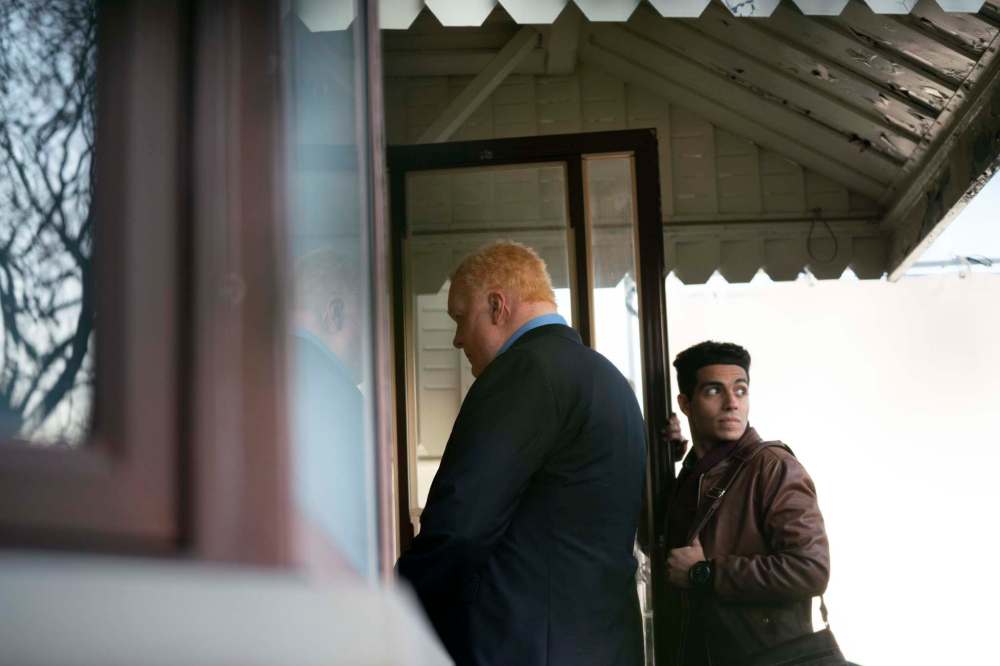
“The job that he had there wasn’t what he expected when he went to study journalism,” Tollman says. “He was editing other people’s stories into 10 words. It wasn’t about his own thoughts. He felt like anybody could’ve done this. He didn’t need specific training for it.
“And that was and is something my peers experience across many industries.”
That ended up driving the story Tollman wanted to tell: a declaration of millennial discontent. But to reporter Robyn Doolittle, it looked, quite understandably, as if the movie had recast the reporter character as a man, and she responded with a devastating tweet: “I’m glad they’re rewriting the fact that it was a female reporter who investigated Rob Ford. Why have a woman be a lead character when a man could do it? Ammaright?”
“When that all happened, we were in our second week of production and I was told that Robyn Doolittle had tweeted that the story was hers and we gender-swapped the roles, which was surprising to me, because that’s not what I did,” Tollman says. “It wasn’t my intention.
“And people that were so angry about it that they messaged me on Instagram and Facebook … people I’ve never spoken to took this up as their political cause.
Tollman says he can understand Doolittle’s perspective in some ways. “I do wish we had an opportunity to speak about the issue, before people were activated in some way, but that opportunity never presented itself.”
Tollman says the controversy resulted in an us-vs-them dynamic that is currently dominating the general discourse.
“It turned into something which is so indicative of the political climate that we’re in, where it’s about divisiveness and finding those wedge issues,” he says.
The movie reflects that divisiveness in the character of Ford, whose career played like a preview of coming attractions for the presidency of Donald Trump.
“Around the time I was tinkering with the idea and putting it down on paper, Trump had announced his candidacy,” Tollman says. “And it felt like I had watched this movie before.
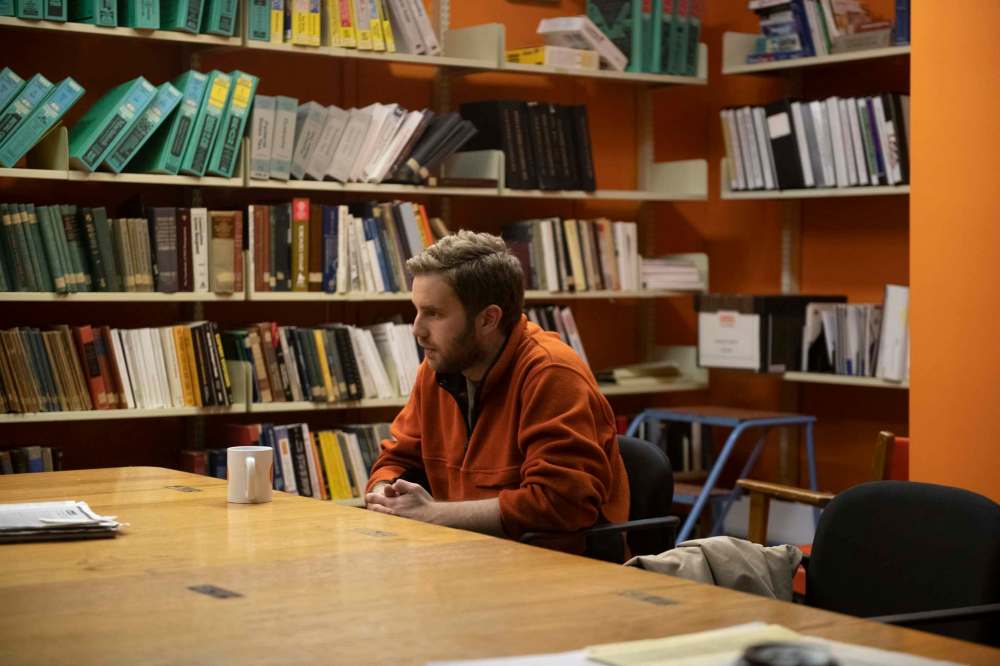
“When we’ve shown the film in the States, the conversation that we had afterwards — whether it was a test screening or a festival screening — always points back to politics in the United States, without any prompting from the film or me,” he says.
“I remember after one of the test screening when we were just asking for general comments, somebody said: ‘I like how you were kind of telling a parable about Trump through the invented character.’ We told them, ‘He’s not invented — he’s an actual person, and this is something that actually happened.’ And they were surprised by that.

Tollman says he thinks the story resonates with audiences beyond those from Toronto or Canada. “I think it’s a message that I thought would connect with people in much of the western world. We’ve seen it in the U.K., we’ve seen it start and almost happen in France and across Europe, Australia.
“There’s this swing to the right that is not unique to North America,” Tollman says. “There’s something in the water and I think Rob was the first to recognize it and tap into it.”
randall.king@freepress.mb.ca
Twitter: @FreepKing
Our newsroom depends on a growing audience of readers to power our journalism. If you are not a paid reader, please consider becoming a subscriber.
Our newsroom depends on its audience of readers to power our journalism. Thank you for your support.
MOVIE PREVIEW
Run This Town
Starring Ben Platt and Mena Massoud
● Available on VOD Tuesday, April 21
● 99 minutes
● PG
Our newsroom depends on a growing audience of readers to power our journalism. If you are not a paid reader, please consider becoming a subscriber.
Our newsroom depends on its audience of readers to power our journalism. Thank you for your support.
Advertisement Advertise With Us
Advertisement Advertise With Us