

Deep roots
Six-part documentary series takes viewers from Africa to the Americas to explore slavery's history and ongoing consequences

Advertisement
Read this article for free:
or
Already have an account? Log in here »
To continue reading, please subscribe:
Monthly Digital Subscription
$1 per week for 24 weeks*
- Enjoy unlimited reading on winnipegfreepress.com
- Read the E-Edition, our digital replica newspaper
- Access News Break, our award-winning app
- Play interactive puzzles
*Billed as $4.00 plus GST every four weeks. After 24 weeks, price increases to the regular rate of $19.95 plus GST every four weeks. Offer available to new and qualified returning subscribers only. Cancel any time.
Monthly Digital Subscription
$4.99/week*
- Enjoy unlimited reading on winnipegfreepress.com
- Read the E-Edition, our digital replica newspaper
- Access News Break, our award-winning app
- Play interactive puzzles
*Billed as $19.95 plus GST every four weeks. Cancel any time.
To continue reading, please subscribe:
Add Free Press access to your Brandon Sun subscription for only an additional
$1 for the first 4 weeks*
- Enjoy unlimited reading on winnipegfreepress.com
- Read the E-Edition, our digital replica newspaper
- Access News Break, our award-winning app
- Play interactive puzzles
*Your next Brandon Sun subscription payment will increase by $1.00 and you will be charged $17.95 plus GST for four weeks. After four weeks, your payment will increase to $24.95 plus GST every four weeks.
Read unlimited articles for free today:
or
Already have an account? Log in here »
Hey there, time traveller!
This article was published 17/10/2020 (2035 days ago), so information in it may no longer be current.
In 2020, we have seen the tragic results of centuries of slavery.
The obvious cases, such as the slaying of George Floyd during an arrest by Minneapolis police on May 25, were there for all to see. Others are shrouded in centuries of sediment and deceit.
Systemic racism against Black people took root late in the 16th century, when Africans were taken against their will, chained and shackled aboard wooden sailing ships and brought to the Americas, where they were sold and became the workhorses of colonial economies.
About 12 million Africans were sold into slavery over more than three centuries and the ramifications persist to this day.
Enslaved, a fascinating and sometimes startling new six-part documentary miniseries on CBC-TV, explores the western coast of Africa and the eastern shores of North America, revealing clues of crimes against humanity perpetrated long before the phrase was invented.
It also focuses on slavery’s forgotten victims, those who died after the ships carrying them sank while crossing the Atlantic Ocean.
The face of the series is actor Samuel L. Jackson, who, along with his wife LaTanya Richardson Jackson, is also executive producer of Enslaved. He takes a journey of discovery with divers off the shores of the Florida Keys and to slave sites in the African nations of Ghana and Gabon.
It’s in Gabon’s rainforests where the Hollywood star learns of his past — one the slave trade ripped from his family.
“I did my DNA ancestry and my ancestors came from Gabon, and they were from the Benga tribe, and I want to see what that means in terms of who I am and where I came from,” Jackson says in the first moments of series’ opening episode, titled Cultures Left Behind.
He lands in the country’s capital, Libreville, where Benga singers and dancers in traditional costumes and contemporary clothing greet the 71-year-old. He is treated like royalty by onlookers as he joins them in selfies.

Jackson’s celebrity facade drops when he confronts the archeological clues of slavery that remain in Gabon. Libreville is a port city, near to where many African slaves were imprisoned before slave ships took them to North and South America. The country’s beauty camouflages a dark past.
Jackson learns of the Benga people and their customs too, as he prepares for a ceremony that will welcome him to the tribe as a long-lost son.
A different side of slavery is told on the other side of the Atlantic Ocean. Diving With a Purpose, a mostly Black group of scuba divers, explores the reefs off the Florida Keys for the Spanish slave ship Guerrero, which ran aground and sank in 1827 while fleeing from a British Navy schooner. Forty-one of the estimated 600 captured Africans aboard drowned.
Dramatizations show what kind of horror the shackled African passengers faced aboard a doomed slave ship. There is no way of knowing how many of the thousands of these sailing vessels that left Africa serve as graves at the bottom of the sea.
“Diving the site brings it closer to reality, closer to those people who were murdered here, captured here, tortured here. The 41 who died here,” Kramer Wimberley, one of the group’s divers, says in the opening episode.
Technological advances from the 21st century help shed light on an 18th-century naval confrontation. These are no murky depths of Jacques Cousteau’s era; the waters off Key Largo are crystal-clear, thanks to high-definition cameras, as the divers find remants of both the British ship, the Nimble, and of the Guerrero, amid the coral of Biscayne National Park.

Computer 3D imagery enhances the clues the divers found, such as an anchor, a cannon and cannonballs. Enslaved will show even more detailed wreckage of sunken ships during the series, including a vessel that carried U.S. slaves who were trying to escape to Canada.
Slavery was abolished in Britain’s colonies, which included Canada, in 1834, three decades before the U.S.
The series is produced and directed by Canadian documentarian and bestselling author Simcha Jacobovici, who specializes in investivative archeology. He has a history of tackling contentious topics, such as the Arab-Israeli conflict (Deadly Current, 1991) and the purported burial site of Jesus Christ (Lost Tomb of Jesus, 2007).
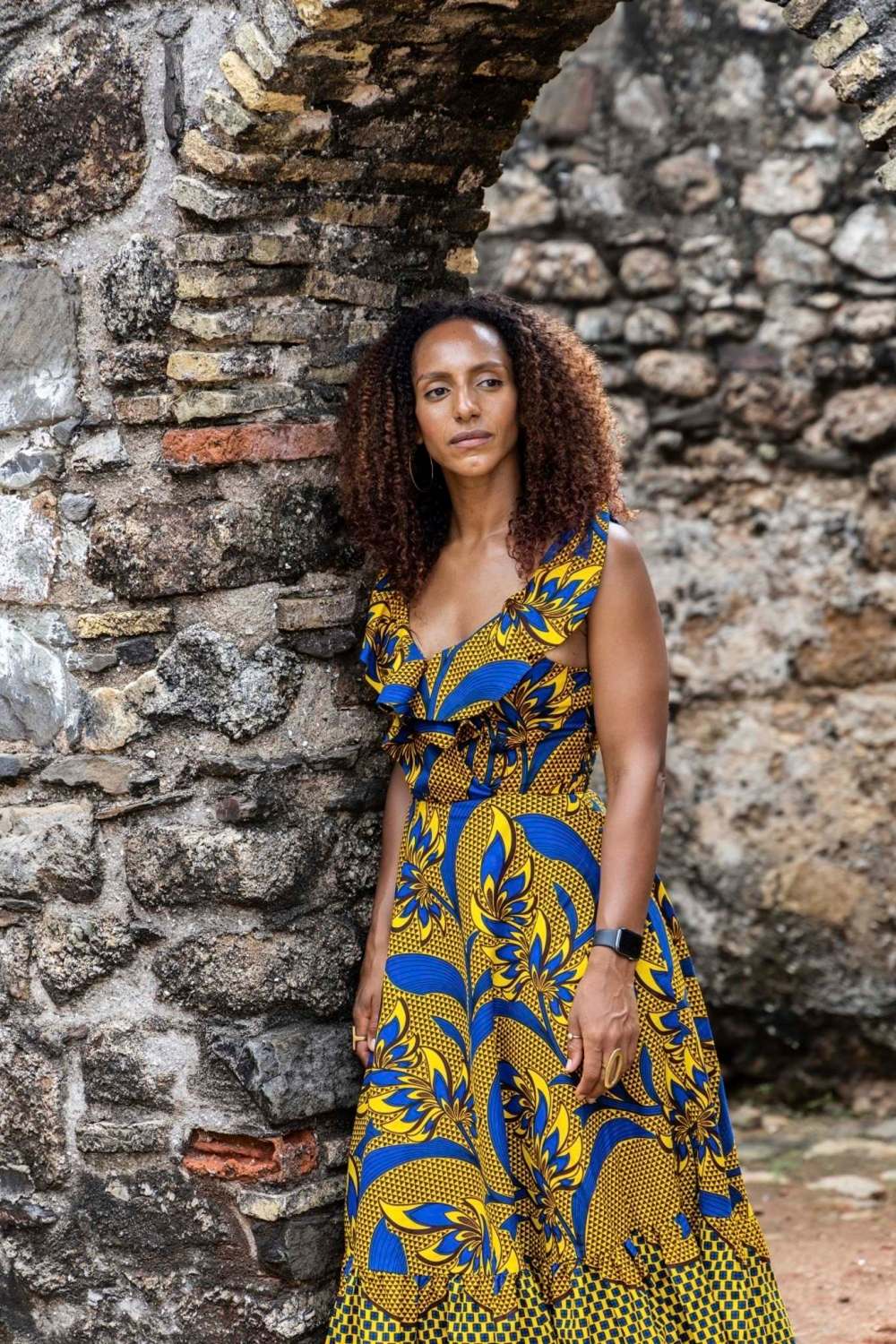
Besides viewing Africa through Jackson’s lens, the director enlists British journalist Afua Hirsch, a former west African correspondent for the Guardian newspaper. She has family ties to Ghana, and will give Enslaved an alternate point of view on slavery’s effects on the world.

Jacobovici ably switches from one scene to another, from glittering ocean expanses to the lushest of African forests to the dusty remnants of prison cells.
In doing so, he shows the forgotten value of the social sciences, such as anthopology, archeology and sociology, which continue to help us learn about one of humanity’s greatest crimes.
alan.small@freepress.mb.ca
Twitter:@AlanDSmall
Alan Small
Reporter
Alan Small was a journalist at the Free Press for more than 22 years in a variety of roles, the last being a reporter in the Arts and Life section.
Our newsroom depends on a growing audience of readers to power our journalism. If you are not a paid reader, please consider becoming a subscriber.
Our newsroom depends on its audience of readers to power our journalism. Thank you for your support.
TV Preview
Enslaved
Starring Samuel L. Jackson
● Sundays, 9 p.m.
● CBC, CBC Gem
★★★★ out of five
Alan Small
Reporter
Alan Small was a journalist at the Free Press for more than 22 years in a variety of roles, the last being a reporter in the Arts and Life section.
Our newsroom depends on a growing audience of readers to power our journalism. If you are not a paid reader, please consider becoming a subscriber.
Our newsroom depends on its audience of readers to power our journalism. Thank you for your support.
Advertisement Advertise With Us
Advertisement Advertise With Us